
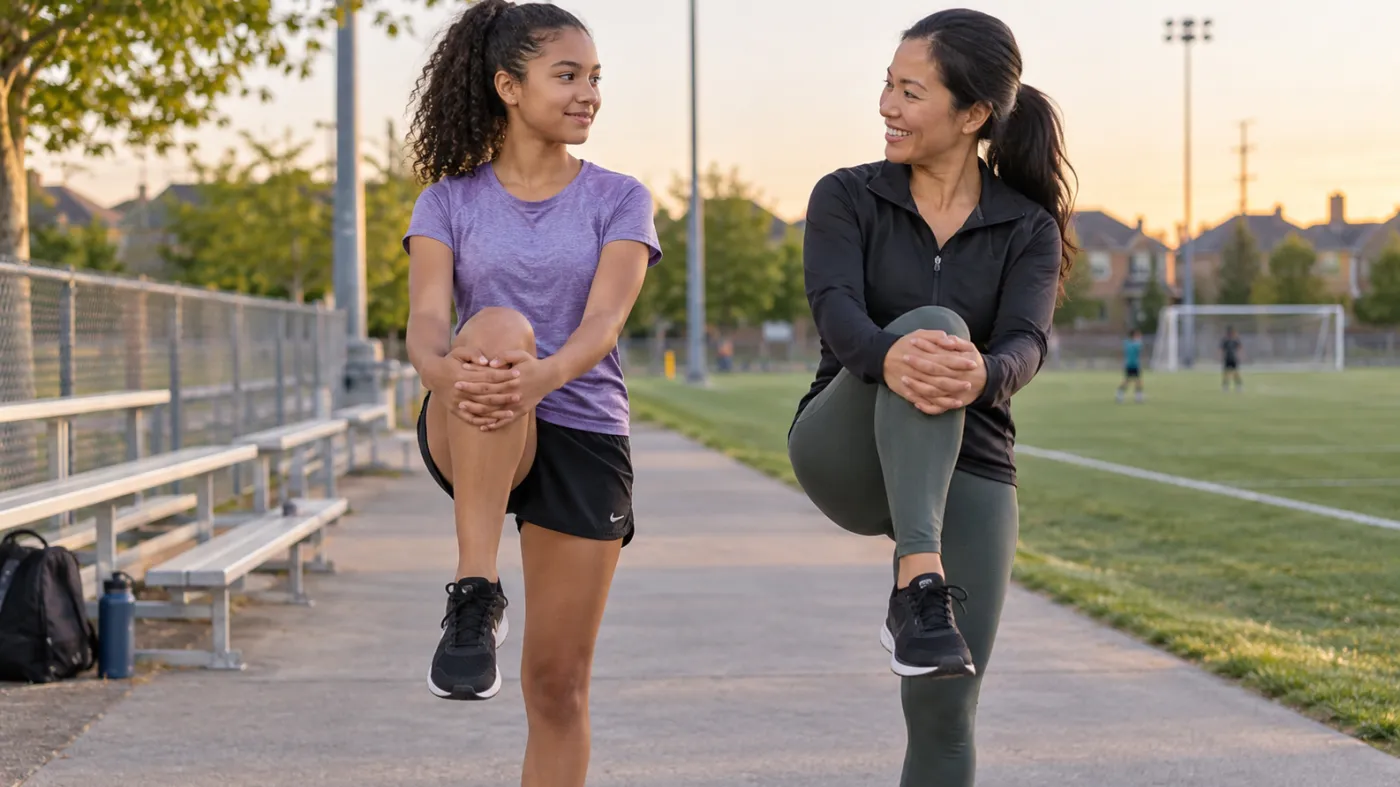
Youth sport can build skill, confidence, friendships and a lifelong relationship with movement. It also asks growing bodies to manage practices, games, school, sleep, travel and sometimes more than one team. Injury prevention is therefore not a single stretch or piece of equipment. It is a way of organizing the whole experience so that challenge increases at a pace the athlete can absorb.
Markham families may move between school teams, community leagues, private training and tournaments across the Greater Toronto Area. A young athlete can accumulate more activity than any one coach sees. Parents and athletes are often the only people with the full picture, which makes communication one of the strongest prevention tools available.
Not every injury can be prevented. Contact, unpredictable landings and ordinary accidents remain part of sport. The goal is to reduce avoidable risks, recognize problems early and keep development broader than the result of the next game.
Growth changes coordination and capacity
Children are not small adults, and adolescents are not physically static. During a growth spurt, bones may lengthen faster than muscles and movement control adapt. An athlete who looked smooth last season may temporarily feel tight, awkward or less precise. This is not laziness; it can be a normal part of development.
Training should respond to the individual rather than age alone. Two 14-year-olds can differ greatly in size, maturity, experience and tolerance. Coaches can scale drills, contact and conditioning, while parents can share relevant growth, health and workload changes.
Pain near growing areas—such as the heel, knee or elbow—deserves attention when it persists or alters movement. Early assessment may allow the athlete to modify selected tasks while remaining active, rather than waiting until every activity hurts.
Count the total workload, not just one team
A soccer coach may see two practices and a weekend match. The athlete may also attend school tryouts, run in physical education class, take a strength session and play basketball with friends. None of those activities is inherently harmful, but the combined jump in running, jumping or throwing may exceed recent preparation.
Keep a simple weekly overview. Record practices, games, tournaments, conditioning and other demanding activity. You do not need a sophisticated formula. Look for abrupt changes: returning from illness directly to a tournament, adding a second league, doubling throwing volume or beginning intense fitness work at the same time as playoffs.
When the week becomes unusually full, reduce optional extras. An easy skills session may replace hard conditioning. A recovery day may be more productive than another private workout. Capacity is built over months and years, not by winning every seven-day period.
Encourage variety, especially in younger athletes
Early participation in different activities exposes children to varied movement problems—running, balancing, catching, rotating, swimming, skating or climbing. Variety can develop broad physical literacy and reduce the monotony of repeating one pattern throughout the year.
Specialization decisions are personal and sport-specific, but families should question the assumption that more organized training always produces better long-term development. Time for unstructured play, school, family and rest is not wasted. A child who is physically capable but emotionally exhausted is not in an ideal performance environment.
Ask the athlete regularly whether the sport is still enjoyable and what part feels stressful. Their answer may reveal schedule pressure, team culture or a physical complaint before performance changes make it obvious.
Use a warm-up that matches the sport
A warm-up prepares attention and movement for what comes next. Begin with several minutes of easy whole-body activity, then include dynamic movements resembling the sport. A field athlete might use progressive running, direction changes and landing practice. A throwing athlete may build from easy arm movements to controlled sport-specific throws.
The warm-up should progress rather than exhaust. Long static holds are not a substitute for rehearsing the speeds and positions required in play. For some sports, structured neuromuscular warm-up programs that include balance, strength, agility and landing control can reduce certain injuries when they are performed consistently and coached well.
Consistency matters more than novelty. A short routine used before most practices and games is more valuable than an elaborate sequence performed twice a season.
Strength training can be appropriate for youth
Properly supervised resistance training is not reserved for adults. Age-appropriate strength work can help young athletes learn technique, improve physical capacity and tolerate sport demands. The program should match maturity and experience, emphasize controlled movement and progress gradually.
Useful patterns may include squatting, hinging, pushing, pulling, stepping, landing and carrying. Body weight, bands, medicine balls, machines and free weights are all tools; none is automatically right for every child. Qualified supervision, suitable equipment and clear rules are essential.
Maximal lifting and constant competition over load are unnecessary. The young athlete should be able to follow instructions and maintain technique. Progress can mean better control, more repetitions or a slightly more complex movement—not only heavier weight.
Recovery is part of training
Adaptation happens between sessions. Sleep supports learning, mood, recovery and decision-making. Canadian 24-Hour Movement Guidelines for children and youth integrate activity, sedentary behaviour and age-appropriate sleep because the entire day matters.
Late practices, homework and early school starts can make sleep difficult. Families may not control the schedule, but a consistent wind-down, a dark quiet room and limits on stimulating screen use near bedtime can help. Persistent fatigue, irritability, reduced enthusiasm and declining performance may signal that the total load is too high.
Nutrition and hydration also support participation. Young athletes generally benefit from regular meals and snacks that provide enough energy and a variety of foods, rather than restrictive plans marketed for performance. Water is suitable for many routine sessions. Longer, hotter or especially intense events may require individualized planning. A registered dietitian is the right professional for concerns involving growth, allergies, disordered eating or sport-specific fuelling.
Equipment should fit now
Protective equipment works only when it is appropriate for the sport, in good condition and fitted to the athlete’s current body. Check footwear, skates, helmets, pads and other gear at the start of a season and during growth spurts. Hand-me-down equipment may be perfectly usable, but size and condition still need review.
No helmet prevents every concussion, and protective gear does not justify unsafe play. Rules, respectful coaching, skill development and prompt reporting remain essential. Athletes should never be encouraged to use equipment as a weapon or to hide symptoms to stay in the game.
Footwear should suit the playing surface and feel secure without crushing the toes. New shoes or cleats should be introduced during practice rather than for the first time at an important tournament.
Teach the difference between effort and a warning sign
Sport includes exertion: breathing hard, warm muscles and temporary fatigue. Pain that is sharp, worsening, localized, associated with swelling or causing a change in running, throwing or landing deserves attention. So does pain that repeatedly returns at the same point in practice or remains the next morning.
Avoid celebrating silence as toughness. A young person may conceal symptoms because they fear losing a position, disappointing adults or missing a tournament. Make reporting routine and neutral: “Anything sore or different today?” is often easier to answer than “Are you injured?”
When pain appears, first reduce or stop the provoking activity. Note when it began, whether there was a specific event and what movements are affected. Do not use pain medication simply to enable continued participation without appropriate guidance. Early assessment can clarify whether modified practice is reasonable or full rest and medical care are needed.
Have a concussion plan before the season
Concussion deserves its own preparation. Canada’s guideline recommends pre-season education, prompt recognition, medical assessment and a structured return to school and sport. Symptoms can follow a blow to the head, face, neck or body that transmits force to the head. Loss of consciousness is not required.
Possible symptoms include headache, dizziness, nausea, confusion, balance difficulty, visual problems, sensitivity to light or noise, and feeling slowed down or “not right.” If concussion is suspected, remove the athlete from play immediately. They should not return to sport that day and should receive appropriate medical assessment.
Call emergency services for red flags such as deteriorating consciousness, repeated vomiting, seizure, increasing confusion, severe or worsening headache, neck pain, double vision, weakness or tingling in the limbs. Do not leave the athlete alone.
Return is a stepwise process guided by symptoms and healthcare advice. Returning to school and daily activity is part of recovery, and full-contact sport comes later. Baseline testing is not a substitute for education, recognition or clinical assessment.
Create a coordinated response to injury
When an athlete is injured, decide who will communicate with the coach, school and healthcare providers. Share functional information: which movements are limited, whether the athlete can attend modified practice and what progression has been recommended. Private medical details should only be shared as appropriate and with consent.
Rehabilitation should rebuild what the sport demands. For an ankle injury, being able to walk may be an early milestone, but return to soccer also requires running, cutting, kicking and responding to unpredictable play. For a shoulder complaint, pain-free daily activity does not automatically mean the athlete is ready for repeated high-speed throwing.
Confidence matters. A gradual progression gives the athlete opportunities to trust the area again. Coaches can support this by avoiding punishment for modified participation and by valuing long-term health over a single result.
Watch the environment and conditions
Field quality, gym clutter, lighting and weather can change risk. Arrive early enough to inspect the playing area. Report holes, wet floors, damaged equipment or unsecured goals. In outdoor Markham seasons, plans may need to change for heat, thunderstorms, poor air quality or icy surfaces.
Heat illness can develop even in fit athletes. Schedule water access, use shade, adjust intensity and allow acclimatization when temperatures rise. Confusion, collapse or altered behaviour is an emergency. In cold conditions, layers and dry clothing matter, and warm-ups may need more time.
Transportation is part of safety too. A fatigued adult driving home after a late tournament is a risk unrelated to the scoreboard. Plan shared driving or accommodation when travel makes the day unusually long.
Keep the athlete at the centre
Adults organize youth sport, but the child experiences it. Include them in decisions about teams, treatment and return to play in a way that suits their age. Ask what goals matter to them. Explain injuries without frightening language, and praise honest reporting and consistent rehabilitation—not only winning or playing through discomfort.
For families involved in youth sports in Markham, prevention is a shared practice: build training gradually, coordinate the whole schedule, use relevant warm-ups, protect sleep and respond early when something changes. These habits cannot eliminate every injury, but they create an environment in which young athletes can learn, recover and keep sport in perspective.
This article provides general education and does not diagnose or treat an injury. Suspected concussion requires removal from play and appropriate medical assessment; emergency warning signs require urgent care.