
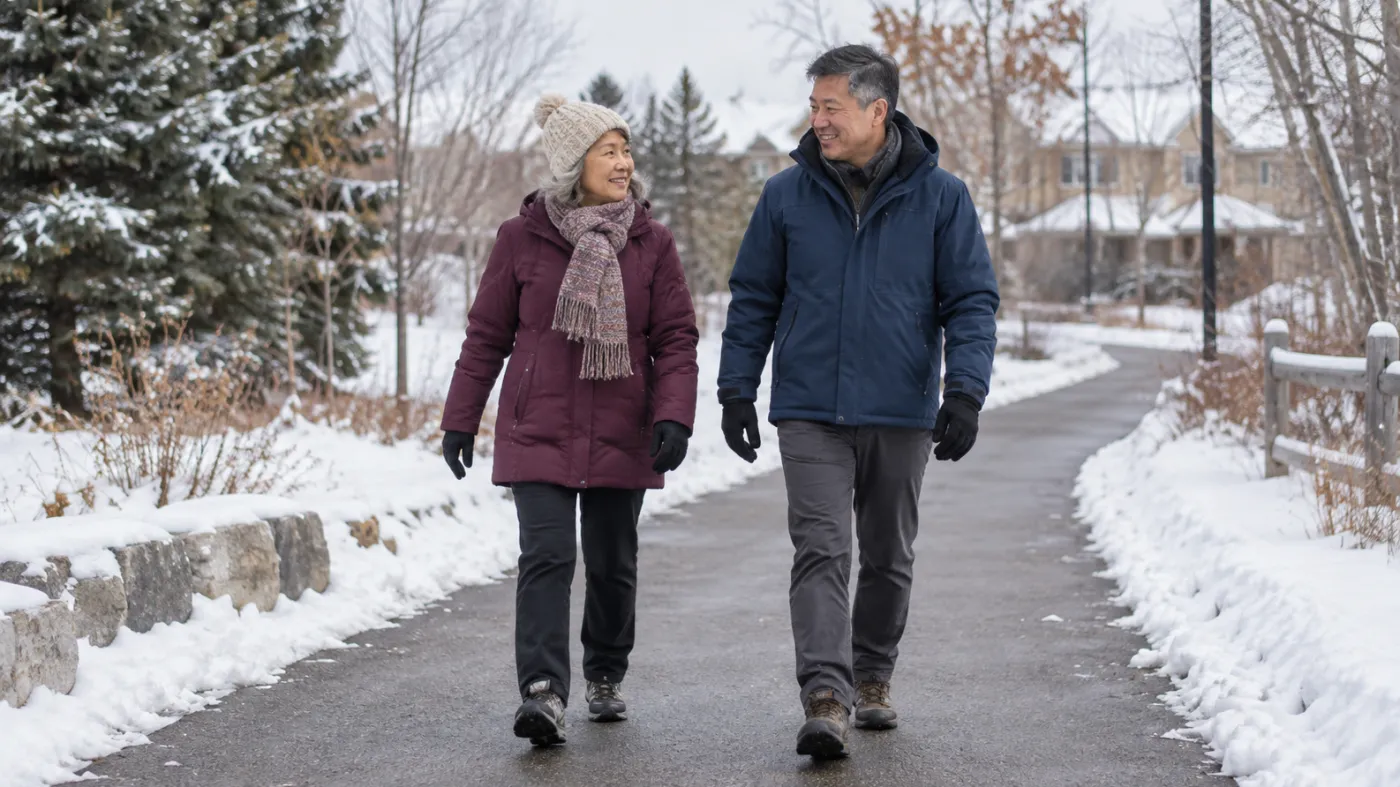
Winter does not have to end a walking routine, but it changes the decisions that make a walk manageable. Snow can cover uneven pavement, melted areas can refreeze, daylight is shorter and cold muscles may need more time to feel comfortable. A route that was effortless in September can require more attention and energy in January.
The aim is not to become fearless on ice. It is to reduce exposure to avoidable hazards while keeping useful movement in your week. That may mean choosing a maintained pathway, walking indoors after freezing rain or shortening the route when footing is uncertain. Adapting the plan is how a year-round habit survives.
Markham maintains roads, sidewalks and selected hard-surface park pathways according to winter service plans. Conditions still vary by location and timing. A recently plowed sidewalk may have windrows at crossings, while a shaded section may remain icy after the rest has dried. Treat municipal maintenance information as a planning tool, not a guarantee that every step is clear.
Check conditions before choosing the route
The most effective slip-prevention decision often happens before shoes go on. Look at the current temperature, recent precipitation and expected changes during the walk. A sunny afternoon can melt snow that becomes hard ice after sunset. Light rain on frozen ground may be more hazardous than a visible snowfall.
The City of Markham’s winter services page and maintenance app provide information about snow clearing. The City notes that sidewalk service begins according to accumulation thresholds and follows a priority sequence, and that selected winter park pathways are maintained after weather events. If a storm has just ended, allow time for crews to work and consider an indoor option.
Choose a route with good lighting, predictable surfaces and places to turn back. A shorter loop near home is useful because you can stop without being stranded far from the starting point. Avoid unfamiliar shortcuts through unmaintained trails when snow hides the edges.
Match footwear to the actual surface
No shoe grips every combination of hard ice, slush, packed snow and wet tile. Look for winter footwear that fits securely, has a broad stable base and uses tread intended for the conditions you expect. Deep tread can help in snow but may still slide on smooth ice. Worn soles lose useful texture.
Try boots with the socks you will wear. Your heel should not lift excessively, your toes need room and the boot should not require a painful break-in period. Heavy footwear changes walking effort, so use it on a short outing before attempting a long route.
Removable traction devices can improve grip in some outdoor conditions, but they require care. Select a device designed for your footwear, install it as directed and check that it remains centred. Many devices become slippery on indoor tile or polished floors, so remove them before entering a store, lobby, vehicle or community centre unless the manufacturer explicitly says otherwise.
Slow down before the slippery section
The Canadian Centre for Occupational Health and Safety emphasizes an appropriate walking pace, suitable footwear, clear walking areas and attention to the surface. In practice, that means changing speed before reaching the uncertain patch rather than braking abruptly on it.
Use slightly shorter steps and place the foot more deliberately. Keep the hands available for balance instead of burying both in pockets. A cross-body bag or backpack may be easier than carrying items that block your view or pull one arm down. If you must carry groceries, use smaller loads or arrange another form of transport during poor conditions.
Give corners, slopes and curb cuts extra space. Painted lines, metal covers and building entrances can be slippery when wet. Do not assume a surface is safe because it looks clear; black ice can be difficult to see.
Keep attention on the path
Winter walking asks for more visual information than a dry summer sidewalk. Scan several steps ahead for changes in texture, piles left by plows and water that may have frozen. At road crossings, also watch vehicles and avoid stepping from a snowbank when it blocks drivers’ view.
Put the phone away while moving over uncertain ground. If you need directions or must answer a message, stop in a stable location. Earbuds should not prevent you from hearing traffic, plows or other people approaching.
Tinted glasses can reduce glare on bright days, but any eyewear must preserve clear vision in shade. At dusk, reflective clothing or a light helps others see you. Visibility is part of fall prevention because it gives everyone more time to react.
Use railings and support deliberately
On stairs, use the installed handrail and take one step at a time when conditions are uncertain. Test the first step rather than assuming the entire staircase has the same traction. Keep entrances at home well lit and clear of snow, ice, loose mats and packages.
Some people benefit from a cane or walking poles, but an assistive device needs the correct height, tip and technique. A standard rubber tip can also slip on ice. A healthcare professional can help fit the device, and an ice-tip accessory should be used according to its instructions.
Do not grab parked cars, unstable fences or another person’s clothing as an improvised support. Those options can move unexpectedly and may pull both people off balance.
Build balance and leg strength away from the ice
Winter confidence is partly about the environment and partly about having enough capacity to respond when the surface changes. Strength and balance training cannot make ice safe, but it may improve stepping control and the ability to recover from small disturbances.
Practice in a stable indoor setting near a counter or sturdy support. Depending on ability, a simple routine could include sit-to-stands, calf raises, step-ups and standing with a narrower base. Progress from using both hands for support to one hand only when that is safe. Balance work should create a manageable challenge without putting you at risk of falling.
Walking itself also builds capacity. If winter activity has dropped, begin with shorter outings rather than waiting for one unusually mild day and attempting the distance you covered in autumn.
Warm up inside, then let the first minutes stay easy
Cold weather can make joints and muscles feel stiff. Before leaving, walk around the home, march gently or complete a few sit-to-stands. The goal is simply to raise comfort and attention, not to work up a sweat that will make clothing damp.
Start the outdoor walk below your usual pace. Breathing cold air can feel uncomfortable, particularly for people with respiratory conditions. Follow your healthcare plan and carry prescribed medication. A scarf or mask over the nose and mouth may warm incoming air for some people, provided it does not interfere with vision or safe breathing.
Allow extra time. Rushing for a bus or appointment is when people are most likely to use long hurried steps on a poor surface.
Dress for movement, not just the thermometer
Layering allows adjustment as effort and wind change. A moisture-managing base layer, insulating middle layer and weather-resistant outer layer are common choices. Keep hands, ears and head protected. Clothing should be warm without restricting the ability to look around, move the arms or see the ground.
Sweat that remains against the skin can contribute to cooling during a stop. Open a zipper or remove a layer before overheating. Choose bright or reflective outerwear in low light.
Watch for signs of cold-related illness. Numb, pale or waxy skin may indicate frostbite. Shivering, confusion, slurred speech or unusual drowsiness can signal hypothermia and require urgent action. Older adults, young children and people with certain health conditions may be more vulnerable.
Create an indoor backup that still counts
Freezing rain is not a willpower test. Indoor walking at a community facility, a controlled home routine or several short movement breaks can preserve the habit without unnecessary exposure. Markham lists indoor walking and running tracks among its recreation options; confirm current schedules and access requirements before travelling.
An indoor substitute does not need to mimic the outdoor route perfectly. Ten minutes of walking, stairs within your ability or a light strength circuit can maintain continuity. The purpose of the backup is to remove the all-or-nothing choice between a risky walk and no movement at all.
If you use a shopping centre or other public indoor space, remain aware of wet entrance areas where snow is tracked inside. Winter footwear that grips outdoors can catch or slide differently on flooring.
Make the home approach safer
Many slips happen close to home, where familiarity reduces attention. Clear snow early enough that it is less likely to be compacted by foot traffic. Apply an appropriate de-icing or traction product according to local rules and product instructions. Keep a shovel and material where they can be reached without crossing the slippery area first.
Drainage matters. Water from downspouts or melting piles can run across a walkway and refreeze. Redirect water appropriately and report persistent hazards to the responsible property owner or authority.
At the doorway, use a stable mat that lies flat and absorbs moisture. Sit to remove wet boots if balance is limited. Do not leave melting footwear where it creates a puddle for the next person.
What to do if you begin to slip
A slip happens quickly, and there is no guaranteed technique that prevents injury. Avoid turning winter walks into fall-practice sessions without qualified instruction. If you feel the foot move, focus on regaining a stable base rather than making a large frantic step toward an uncertain surface.
After a fall, pause and assess before standing. Check for severe pain, head impact, dizziness, confusion, bleeding or inability to move a limb normally. If a serious injury is possible, stay warm, call for help and avoid being moved unnecessarily.
Seek urgent care after a head impact with worsening headache, repeated vomiting, increasing confusion, loss of consciousness, seizure, weakness, fluid from the ears or nose, or use of blood-thinning medication with concerning symptoms. Inability to bear weight, visible deformity, significant neck or back pain, chest pain or breathing difficulty also needs prompt evaluation.
Return to walking after a minor slip
If medical assessment is not required and soreness is mild, keep comfortable movement in the day rather than testing the injured area repeatedly. Swelling, bruising and function over the next 24 to 48 hours offer useful information. A worsening pattern or persistent limitation deserves assessment.
When you return, choose a flat, well-cleared surface and a shorter duration. Fear after a fall is understandable. Rebuilding on predictable ground, perhaps with a companion, is more useful than immediately revisiting the hazardous spot to prove confidence.
Review what contributed without assigning blame. Was the route unmaintained? Was visibility poor? Were you carrying too much or hurrying? The answer may suggest a practical change rather than a problem with your body.
Keep winter walking flexible
A good winter plan has several versions: an outdoor route for clear conditions, a shorter route for cold days and an indoor option for storms or ice. Check the surface, wear footwear suited to it, slow down before hazards and leave the hands available. Combine those environmental choices with strength and balance work completed in a safe setting.
For winter walking in Markham, consistency does not require ignoring the forecast. The flexible walker often accumulates more movement across the season because one unsafe day does not end the routine. Choosing another surface is not giving up; it is the skill that keeps the habit going.
This article offers general education and cannot assess an individual risk of falling. Seek urgent medical attention after a fall with serious symptoms or for sudden neurological, cardiac or breathing concerns.