
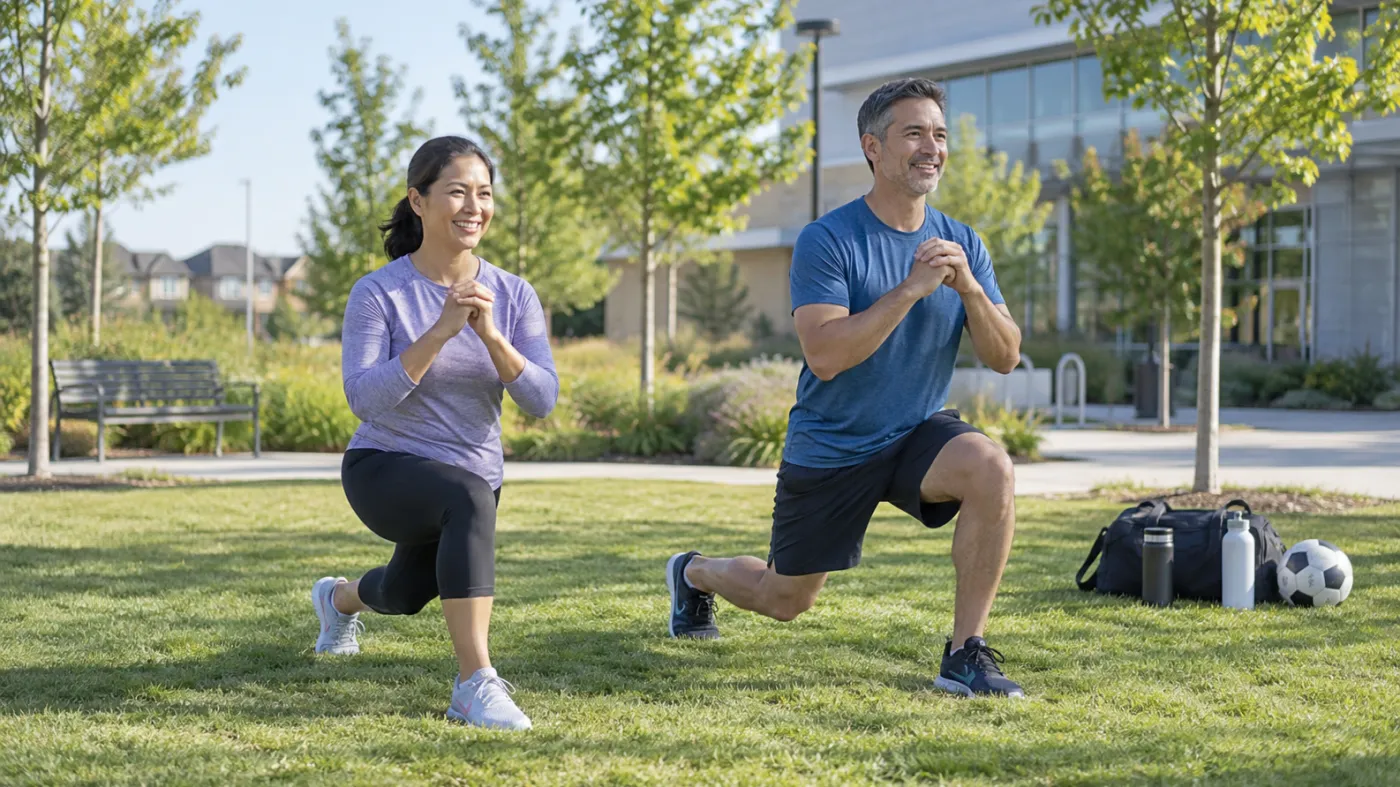
The weekend warrior fits movement into the part of the week that has room. Saturday may include a hard gym session, yardwork and a soccer match. Sunday becomes a long bike ride or hike. Monday returns to commuting and desk work with sore legs and the belief that exercise must wait until the next weekend.
Concentrating activity into one or two days can still contribute to health. The challenge is not the identity; it is the contrast between five relatively inactive days and two very demanding ones. The body adapts to what it experiences regularly. Small weekday exposures can make weekend activity feel less like a surprise.
In Markham, the weekend may offer community leagues, trails, golf, racquet sports and seasonal home projects. A useful plan does not remove spontaneity. It creates enough capacity that saying yes is less likely to lead to a week of recovery.
Map the real weekend load
List everything physically demanding, not only formal exercise. Snow shovelling, moving furniture, gardening, coaching and walking through a large event all count. A Saturday morning workout followed by hours of lifting soil is two sessions, even if only one was logged.
Rate each activity by duration and effort. Identify where similar demands stack together. A heavy lower-body workout before a long run may be less useful than an upper-body session or reduced volume.
Protect the highest-priority activity. If the soccer match matters most, prepare for it and move demanding yardwork to another day where possible.
Use weekdays to maintain contact with movement
Weekday training does not need to be long. Two 20-minute strength sessions and several short walks can maintain familiarity with squatting, hinging, pushing, pulling and carrying. A brief midweek run can preserve running tolerance better than relying only on one long Sunday effort.
Attach movement to existing routines. Walk after lunch, complete calf raises while waiting for dinner or use a short home circuit before a shower. These sessions should be meaningful but not exhausting.
The Canadian 24-Hour Movement Guidelines emphasize accumulating activity across the week, strengthening major muscle groups and breaking up prolonged sitting. A weekend-focused schedule can move toward those recommendations without requiring a daily gym visit.
Build the longest session gradually
The most common mistake is measuring today’s plan against last year’s best. A person who used to cycle 80 kilometres may currently be prepared for 25. Start from recent exposure.
Increase distance, duration, speed or terrain one feature at a time. The jump from flat walking to a steep hike changes more than the number of kilometres. The jump from casual tennis to a tournament adds repeated accelerations and matches.
Recent running evidence suggests that unusually large increases in a single session can be particularly relevant. The broader lesson applies across activities: one heroic day can exceed current capacity even if the monthly goal seems reasonable.
Warm up for the activity ahead
Begin with general movement and progress toward the speed, range and direction the activity requires. A racquet-sport warm-up may include lateral movement and easy hitting. A hike may begin with level walking before steep ground. Heavy lifting should use lighter preparation sets.
The warm-up is a readiness check. If a joint feels unstable, chest symptoms appear or pain increases quickly, change the plan. It is not a ritual that grants permission to ignore warning signs.
Keep it short enough to repeat. Five to ten focused minutes is better than a 30-minute routine that is skipped.
Separate capacity from enthusiasm
Motivation can be highest after a stressful week, but stress and poor sleep may reduce physical readiness. Ask three questions before starting: How did I sleep? What have I done recently? What else must I do today?
Use the answers to select the dose. Shortening a workout before a family hike may preserve more total activity than completing both at maximum effort.
Effort should also reflect heat, cold and air quality. Markham weather can make the same route substantially harder from one weekend to the next.
Strength train the patterns that recur
Weekend activities share foundational demands. Squats and step-ups support stairs and hills. Hip hinges and carries prepare for gardening and equipment. Rows and presses support paddling, racquet sports and lifting.
Choose four to six movements and practise them during the week. One or two working sets can be a starting dose. Progress resistance or repetitions gradually while maintaining control.
Sport-specific training still matters. General strength does not fully prepare someone for sprinting, cutting or hours in a bicycle saddle. Add exposure to the actual activity in smaller doses.
Train deceleration and direction change
Adults returning to court and field sports often prepare with steady cardio but not stopping, landing or changing direction. Introduce these skills progressively in a safe space.
Begin with controlled step-downs, split-stance work and low-speed direction changes. Progress to faster drills only after the movements feel stable. The goal is not an exhausting agility circuit; it is practice producing and absorbing force.
A qualified coach or rehabilitation professional can help when previous knee, ankle or tendon injuries affect confidence.
Use recovery between Saturday and Sunday
If both days are active, Saturday evening becomes preparation for Sunday. Eat a regular meal with carbohydrate and protein, replace fluid, change out of damp clothing and prioritize sleep.
An easy walk or gentle movement may reduce the feeling of stiffness. Aggressive stretching or another hard workout does not accelerate recovery. Massage, foam rolling and compression may change short-term comfort, but their value is secondary to time, food and sleep.
Review Sunday’s plan in the morning. Substantial swelling, limping or severe fatigue is a reason to modify, not a challenge to overcome.
Make Monday an active reset
Returning to a desk and staying completely still often makes weekend soreness feel more noticeable. Use brief walks and position changes on Monday. Keep intensity low and let the body move.
Record what produced the strongest response. Was it distance, downhill work, repeated overhead shots or lifting after fatigue? That information can shape weekday training.
Do not schedule a punishment workout to “flush” soreness. Recovery activity should leave you feeling the same or better, not more depleted.
Distinguish normal soreness from injury
Delayed muscle soreness is generally diffuse, appears after unfamiliar work and improves over several days. Injury is more likely when there was a clear event, focused pain, significant swelling, loss of strength, instability or inability to use the area normally.
Mild symptoms can often be managed by reducing load and maintaining comfortable movement. Pain that changes gait or technique, worsens each session or persists should be assessed.
Avoid using anti-inflammatory medication pre-emptively to complete an activity without medical advice. Masking pain does not create capacity.
Build seasonal transitions
The first spring bike ride, first winter skate and first autumn leaf cleanup are new demands even for an active person. Prepare with related strength and shorter initial sessions.
Equipment also changes the task. New skates, shoes, paddle or golf clubs may alter movement and pressure. Introduce them before the biggest planned outing.
Winter surfaces require route and traction decisions. Summer heat may require earlier starts, more fluid and shorter sessions. Seasonal adaptability is part of training.
Keep competition in proportion
Friendly games can become intense quickly. Decide before playing whether the day is training, competition or social movement. Not every point requires a full sprint or dive.
Choose partners and leagues that match current ability. Rules and fair play reduce preventable contact. Stop when fatigue affects judgment or safe technique.
The objective is to participate again next week. Winning a recreational match is not worth concealing a concussion or unstable joint.
Plan for chronic health conditions
Diabetes, cardiovascular disease, arthritis, osteoporosis and respiratory conditions do not automatically prevent weekend activity, but they may change preparation, medication timing, monitoring and emergency plans.
Discuss vigorous new exercise with an appropriate professional when health status or symptoms make readiness uncertain. Carry prescribed medication and identification. Know where help is available on remote routes.
Build intensity gradually. A sedentary week followed by sudden maximal exertion is not the ideal way to discover a health limitation.
Know urgent warning signs
Stop and seek emergency care for chest pressure, severe or unusual shortness of breath, fainting, sudden neurological symptoms, a severe head injury or an obvious fracture or dislocation. New loss of bladder or bowel control, saddle numbness or rapidly progressing weakness also requires urgent assessment.
Focused bone pain, inability to bear weight, significant swelling, recurring joint giving-way or persistent numbness deserves timely care. Dark urine with profound muscle pain after extreme exertion is another emergency warning.
When in doubt, health takes priority over finishing the activity.
Create a minimum viable week
Build a plan that survives deadlines. A minimum week might include two 15-minute strength sessions, three short walks and one weekend activity. A better week can add volume, but the minimum prevents total inactivity.
Keep equipment visible and sessions simple. Track attendance and function rather than only calories or personal records. The ability to play with less soreness, finish yardwork comfortably or recover by Monday is progress.
Weekend-warrior training in Markham works best when the weekend is supported by the week. Maintain contact with movement, strengthen recurring patterns and resist the single-session leap. Two active days can be valuable; they become more sustainable when the other five days contribute something too.
This article provides general education and is not medical clearance or an individualized training plan. Seek urgent care for severe cardiac, neurological or traumatic symptoms.