
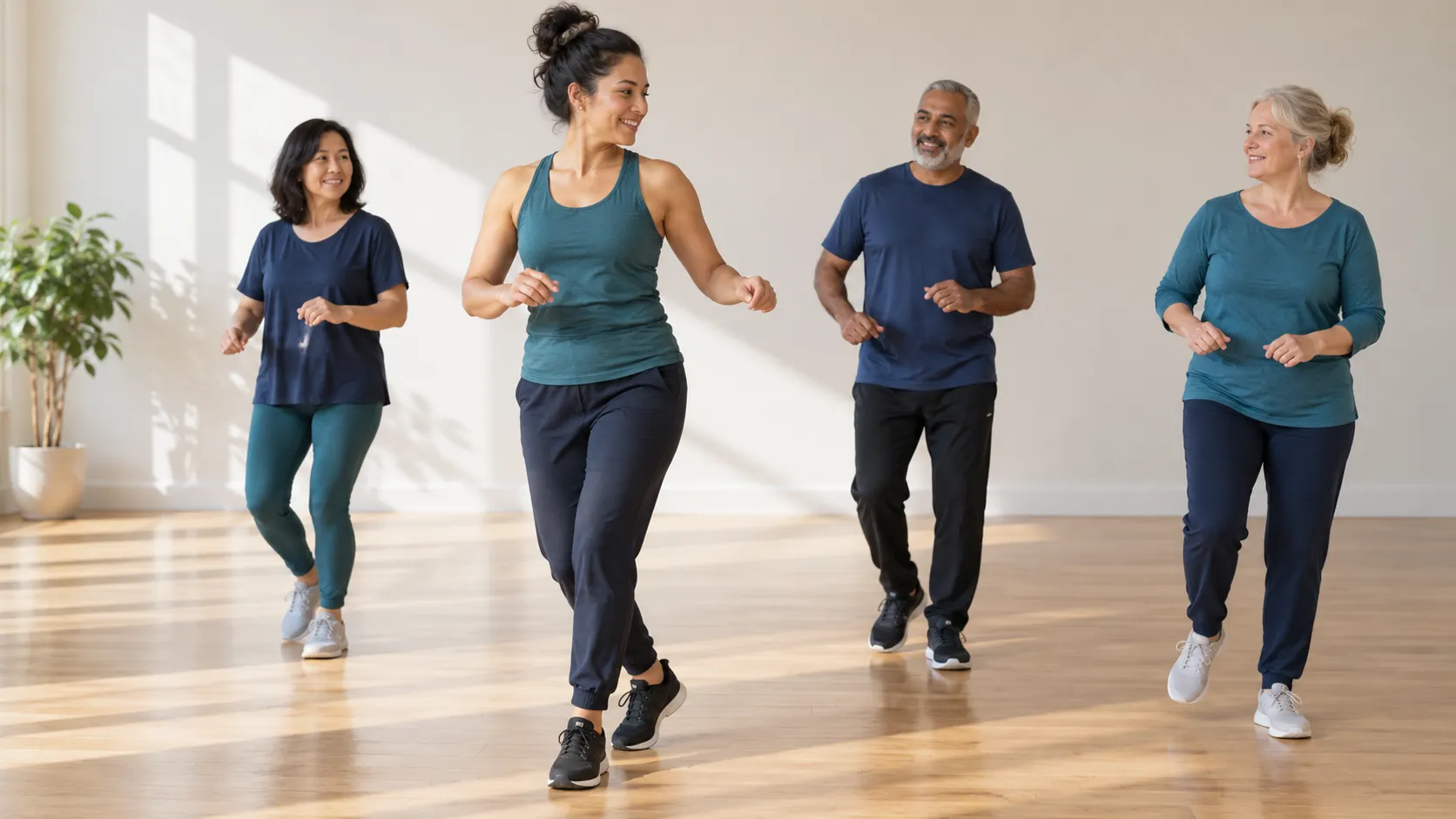
The hardest part of a first dance class may happen before the music begins. You wonder whether everyone else will know the steps, whether you chose the right shoes, and whether you will remember which direction to turn. Those questions are common when learning any unfamiliar skill. They do not mean you need to become fitter, more flexible, or more coordinated before you are allowed to begin.
Starting adult dance in Markham can be a social goal, a creative interest, or a way to make movement more enjoyable. The best starting point depends on what you want from the experience and what the class actually asks participants to do. A little preparation can make the first few sessions easier to understand, while a realistic schedule gives you room to learn without treating every class as a test.
Begin with the experience you want
Dance covers many activities. A class focused on learning a social dance differs from a continuous dance-based fitness session. A technique class may spend substantial time practising a small movement, while another format moves quickly through combinations. Neither is automatically the right choice for every beginner.
Write down what attracts you. Perhaps you want to dance comfortably at family celebrations, enjoy music with a friend, or learn an art form you have admired for years. Use that purpose when comparing descriptions. Ask whether the class teaches complete beginners, whether participants need a partner, and whether it builds across a series. A class labelled open or all levels may still assume knowledge that you do not yet have.
Check the current local information before registering
The City of Markham fitness class information includes descriptions of dance-based fitness formats. Read the current listing and confirm availability, level, location, and registration requirements directly with the provider. Programmes and schedules change, so a familiar class name or an older brochure should not be treated as a current booking guide.
Consider travel and timing alongside the activity itself. A class that requires rushing across the city after work may be harder to attend consistently than one with a less exciting title but a workable schedule. Check what time you can enter, where to change, and whether you need to arrive early for an introduction. These ordinary details can have a large effect on how relaxed the first evening feels.
Have a short conversation with the instructor
Introduce yourself as a beginner and mention any practical concern that affects participation. You might need a clearer view of demonstrations, a lower-impact option, or time to understand a sequence before moving with the group. An instructor can explain how the class handles these needs and whether the format is a suitable match.
If you have an injury or medical restriction, obtain appropriate clinical advice and tell the instructor the relevant limits. You do not need to share private medical details with the whole room. Explain what you have been advised to avoid or modify. The instructor can help with class participation, but they should not be expected to diagnose pain or clear you for activity that a healthcare professional has restricted.
Ask about shoes before buying specialist equipment
Footwear requirements vary with dance style, floor, and class rules. Ask the provider what beginners should bring and whether clean indoor shoes are needed. Avoid buying a specialized shoe solely because it looks like something worn in a performance video. The requirements of a first recreational class may be quite different.
Try the recommended footwear in a familiar setting and check the fit before the class. Tell the instructor if the shoe feels unusually slippery or catches when you attempt an instructed movement. Do not modify the sole with household products or tape based on a casual online suggestion. Our guide to changing footwear in Markham offers additional questions about fit and adaptation, while the dance provider can explain the requirements of its particular floor and style.
Arrive with enough time to settle into the space
Locate the entrance, changing area, and place for personal items before the lesson starts. Put your bag where it will not obstruct movement. Bring water and any personal items you need, then choose a position where you can see the instructor without standing in someone else’s working space. If you are unsure where beginners should stand, ask.
Being early also gives you time to understand the room’s conventions. Some classes travel across the floor; others remain largely in place. The instructor may use mirrors, rotate positions, or demonstrate facing different directions. Knowing this helps you follow the session without rushing to copy the nearest person. You can spend more attention learning the movement and less attention guessing how the class is organized.
Take the warmup seriously without making it a flexibility contest
Dance preparation involves more than trying to reach farther into a stretch. Johns Hopkins Medicine’s dance injury guidance emphasizes warming up, appropriate clothing and footwear, adequate recovery, and attention to symptoms. Follow the instructor’s preparation for the class, and discuss individual limitations rather than forcing a position to match another participant.
If you arrive late, ask how to join appropriately instead of stepping directly into the most demanding part of the session. Likewise, if a warmup movement is unfamiliar, seek a demonstration or an alternative within your clinical advice. Flexibility differs between people, and the purpose of the class is not to prove that you can reproduce somebody else’s range on the first evening.
Learn one layer of the movement at a time
A combination can ask you to remember footwork, timing, direction, and arm movements simultaneously. Ask the instructor which part to prioritize when you become lost. You might first learn the rhythm or the travel pattern, then add another element when it makes sense. This is a learning strategy, not a reason to perform an unapproved version of a difficult movement.
Give yourself permission to watch a demonstration again. Missing a step is information about what needs explanation, not evidence that you are unsuited to dance. If the pace consistently leaves you unable to follow safely, discuss a more suitable level or format. The right class should offer a realistic path into the material, even when the movement itself takes time to become familiar.
Use a smaller commitment to learn what the class requires
Before adding several weekly sessions, understand how one class fits your schedule and how you feel afterward. Include travel, changing, and any practice you do at home. Enthusiasm can make it tempting to register for multiple formats at once, but each introduces different movements and expectations.
Look at the rest of the week as well. A new dance class may sit beside gym work, a sport, or a physically demanding job. If you are following an activity plan for a health condition, discuss how the new class fits it. Build the routine around repeatable attendance and appropriate recovery rather than an ambitious opening week that you cannot comfortably sustain.
Know when symptoms deserve attention
Pain that increases while dancing, changes the way you move, or repeatedly interrupts normal activity should not be treated as a required part of learning. Johns Hopkins advises assessment for concerning pain patterns, including pain that wakes you at night or causes compensatory movement. A clinician can help determine the cause and whether the class needs to be paused or modified.
Tell the instructor when you need to stop. Do not wait until the music ends if you feel unwell or experience a concerning symptom. After a sudden injury with major swelling, deformity, inability to bear weight, or severe pain, seek prompt medical care. General class modifications are not a substitute for assessing an injury, and a reassuring comment from another participant cannot establish that continuing is safe.
Make home practice a clear extension of the lesson
Ask which elements are suitable to practise alone and how much practice the instructor expects. A small, well-understood task may be more useful than replaying a full online routine. Clear space, remove obstacles, and consider whether the surface and footwear are appropriate. A kitchen floor between chairs is not automatically equivalent to the studio.
Avoid attempting lifts, advanced turns, jumps, or partner techniques that require supervision simply because a video makes them look approachable. If you are unsure what a movement should feel like or how to set it up, save the question for class. You can also work on non-physical aspects, such as listening for the beat or reviewing terminology, without turning every free moment into additional movement practice.
Handle partner work with clear communication
If the style involves a partner, ask how beginners establish comfortable contact and communicate a stop. Tell your partner about relevant movement limits without feeling obliged to explain your medical history. Neither person should pull the other into a range or movement that feels unsafe. The instructor can clarify the expected technique and offer a suitable option when needed.
Discuss expectations if you attend with a friend. One of you may learn faster, prefer another class, or want a different pace. Agreeing that each person can choose an appropriate level keeps the activity enjoyable. Social support is helpful when it leaves room for individual decisions, including pausing, asking for help, or changing the plan.
Decide what would make you want to return
After the first few sessions, consider more than whether you remembered every step. Could you hear and understand the instructions? Did the instructor respond to questions? Did the format suit the reason you signed up? A good fit may still feel challenging, but you should be able to see how learning will happen.
If discomfort is interfering with participation, contact Prime Spine to discuss an assessment for a musculoskeletal concern or seek another appropriate healthcare service. This article provides general preparation ideas and does not establish medical readiness for dance. Starting at a suitable level, communicating clearly, and allowing time to learn can help make dance a meaningful part of your routine rather than another performance standard to meet.