
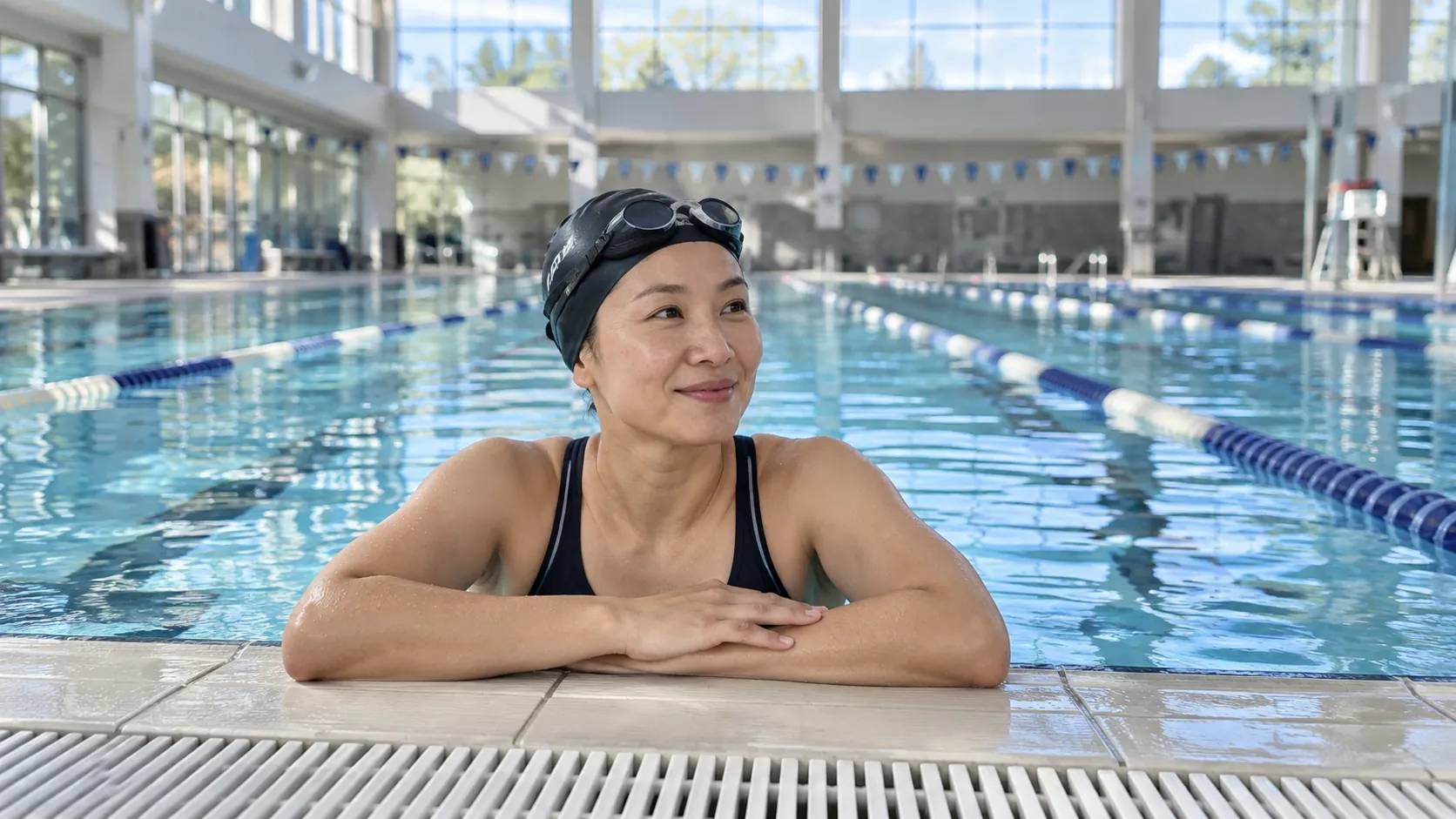
The pool has a way of making an old routine feel immediately familiar. You recognize the lane ropes, adjust your goggles and remember how many lengths you used to complete before work. That familiarity can hide how much time has passed since the shoulder last handled the same amount of swimming. A sensible return begins with today’s capacity, even when the rhythm of the stroke still feels well remembered.
Returning to swimming in Markham may follow a busy season, a shoulder problem or simply a long break from regular exercise. Each starting point deserves a different plan. The purpose of the first few visits is to find a repeatable amount of swimming and learn how the body responds. You do not need to recreate an old personal best to make the trip worthwhile.
Low impact does not mean no demand on the shoulder
Water reduces some of the impact associated with land activities, but repeated swimming strokes still ask the shoulders to work. Shoulder symptoms can be associated with training demands and stroke mechanics. The phrase swimmer’s shoulder is a broad description rather than a complete diagnosis. Hospital for Special Surgery discusses common swimming-related injuries and the importance of describing pain accurately.
If you have current pain, explain when it appears: during the pull, while recovering the arm above the water, when turning or only after the session. Mention whether daily reaching, dressing or sleep is also affected. A shoulder that hurts only near the end of a long swim presents a different story from one that has become difficult to use throughout the day.
After an injury or operation, follow the clearance and restrictions provided by your treating team. Being comfortable in water does not override those instructions. Ask specifically about swimming strokes, entering and leaving the pool and any equipment you hope to use. A general statement that exercise is allowed may not answer all of those questions.
Define what the first visit is meant to achieve
An effective first session has a modest, clear purpose. You might want to see how a short easy swim feels, practise a technique change or regain confidence in the pool environment. Those aims are more useful than an open-ended promise to do as much as possible. They also make it easier to stop while the session is still going well.
Write the plan before entering the water. Include the type of swimming, planned pauses and the sign that will end the session. If a clinician has given symptom limits or a specific programme, use those instructions. Without a plan, it is easy to add more lengths simply because the lane is quiet or another swimmer is continuing.
Consider the whole visit. Carrying the bag, changing clothes, showering and using the pool exit are part of the experience. If the shoulder becomes uncomfortable only when pulling yourself out at the end, that is important information. Plan to use a suitable exit and ask facility staff about available access features when needed.
Choose a setting that lets you control the pace
A crowded fast lane can make an easy return session surprisingly difficult. You may feel pressured to hurry, skip a planned pause or use a stroke that does not suit the current plan. Select an appropriate session and lane, follow the facility’s rules and communicate with staff when you are unsure where to swim.
Check current schedules and access requirements directly with the facility before travelling. Programmes and lane availability can change, and an old routine may no longer fit. Knowing the details in advance reduces the temptation to turn an unsuitable session into the only option because you have already made the trip.
Use supervised swimming areas and avoid swimming alone. Stop if you feel unwell or unable to manage safely in the water. The AAOS swimming safety guidance emphasizes supervision and avoiding swimming when excessively tired. A rehabilitation goal should always fit within ordinary water safety.
Distance is only one way the session can become harder
Two swims with the same total distance may place different demands on the body. Pace, stroke choice, rest periods and equipment can all change the session. A return plan that tracks only metres may miss the reason a seemingly familiar workout feels much more difficult than expected.
For an illustrative comparison, imagine one visit with relaxed lengths and regular pauses, and another with the same distance completed continuously while trying to keep up with a friend. The number in the notebook is identical, but the experience is not. Record enough detail to distinguish those sessions without turning the log into a complicated training project.
A few words may be sufficient: easy pace, frequent rests, familiar stroke, no added equipment. Add how the shoulder felt later and the following morning. This creates a useful record for deciding whether to repeat the session or discuss an adjustment. It also helps a clinician understand what swimming actually means in your routine.
Technique feedback should answer a specific question
An experienced coach can observe features of the stroke that are difficult to notice from inside the water. That feedback may complement clinical assessment when symptoms are related to swimming. Hospital for Special Surgery identifies technique review and communication about symptoms as useful parts of managing swimming demands.
Tell the coach what you are trying to change and any restrictions you have been given. Ask for one or two clear observations rather than a complete rebuild of every part of the stroke in one lesson. Too many new cues can make an easy swim mentally and physically demanding, particularly after a long break.
If video is suggested, follow the pool’s privacy and recording rules. A coach may be able to assess the movement directly without filming. If a recording is permitted, use it to answer a specific question and review it with someone qualified. Repeatedly comparing yourself with an elite swimmer’s technique does not establish what is appropriate for your shoulder or experience level.
Equipment changes the task
Paddles, pull buoys, kickboards and fins are tools, not automatic shortcuts to a safer session. Each changes how the body works in the water. If you are returning after shoulder symptoms, ask whether the equipment fits the current programme rather than assuming that anything labelled as a training aid reduces the demand.
For example, a device that makes you concentrate on one part of the stroke may also encourage you to keep going longer than planned. A familiar tool from an old training routine may no longer suit the purpose of the first return sessions. Leave optional equipment out until you understand how the basic session is tolerated and have appropriate advice about adding it.
Keep the practical setup simple. Make goggles comfortable before starting, place permitted items where they do not obstruct others and know how you will pause safely. Reducing small interruptions helps you focus on the planned swim without repeatedly rushing to recover lost time.
The shoulder’s response continues after leaving the pool
Pay attention to the rest of the day. Does the shoulder remain comfortable while dressing? Is ordinary reaching unchanged? Does sleep become more difficult? The answer can help distinguish a repeatable session from one that exceeds current tolerance. Ask your clinician what response should lead you to reduce activity, stop or seek review.
Do not use the first pleasant hour after swimming as the only measure of success. Equally, avoid treating every unfamiliar sensation as proof that swimming is unsuitable. Look at the pattern across comparable sessions and discuss persistent or worsening symptoms. A brief, consistent record is more useful than an intense examination of the shoulder after every length.
Remember the activities around the swim. A demanding upper-body workout the night before, a long work shift or carrying heavy items afterward can affect the overall picture. Explain those demands during assessment so the return plan is not based on the pool session alone.
Dry-land preparation should fit the same plan
Some swimmers benefit from a programme addressing shoulder and upper-back capacity, selected according to their needs. The AAOS swimming resource discusses general conditioning alongside swimming. For someone with pain, the appropriate exercises and amount should be chosen with an individual assessment rather than copied from a competitive athlete’s routine.
Ask how the land exercises and pool sessions should be arranged across the week. If both are new, starting them at full volume together can make the response difficult to interpret. You should know which part to adjust if the shoulder becomes more irritable. A coordinated plan is easier to follow than separate programmes that each assume they are the only demand on the arm.
Make the home routine practical. Identify the equipment, time and space actually available. If you travel frequently or exercise before work, explain that constraint. An exercise that can be performed consistently and correctly has more value than a theoretically ideal setup you rarely have access to.
Progress should preserve the reason you enjoy swimming
Swimming may be your quiet time, a social activity or a way to feel capable again after a difficult period. Keep that reason visible when setting goals. A session can be successful because it was comfortable and repeatable, even if the distance looks modest compared with an old training log.
When ready to progress, change one feature deliberately. You might discuss a little more total swimming, fewer pauses or a different task. There is no need to increase every variable together. Repeating a successful session is also a valid choice, particularly while learning how the shoulder behaves between visits.
If a friend joins you, explain the purpose of the session before getting in. Agreeing that each person follows their own plan can remove the pressure to match pace or distance. The social benefit of swimming does not require identical workouts.
Recognize when another assessment is needed
Sudden severe shoulder pain, a visible change after an injury, inability to move the arm or new persistent numbness needs prompt medical assessment. Chest pain, faintness or significant breathlessness in or around the pool is an emergency; alert staff and obtain urgent help. Persistent shoulder symptoms that interfere with sleep or ordinary function should also be reviewed. The NHS shoulder guidance outlines concerning changes.
Returning to swimming in Markham works best when the plan is specific enough to repeat and flexible enough to learn from. If pain is affecting your return, book an assessment and bring the details of your usual session. Our return-to-exercise guide offers a broader framework for rebuilding activity after time away.
This article is general education. Individual injuries, medical conditions and surgical restrictions require advice from the appropriate treating professional.