
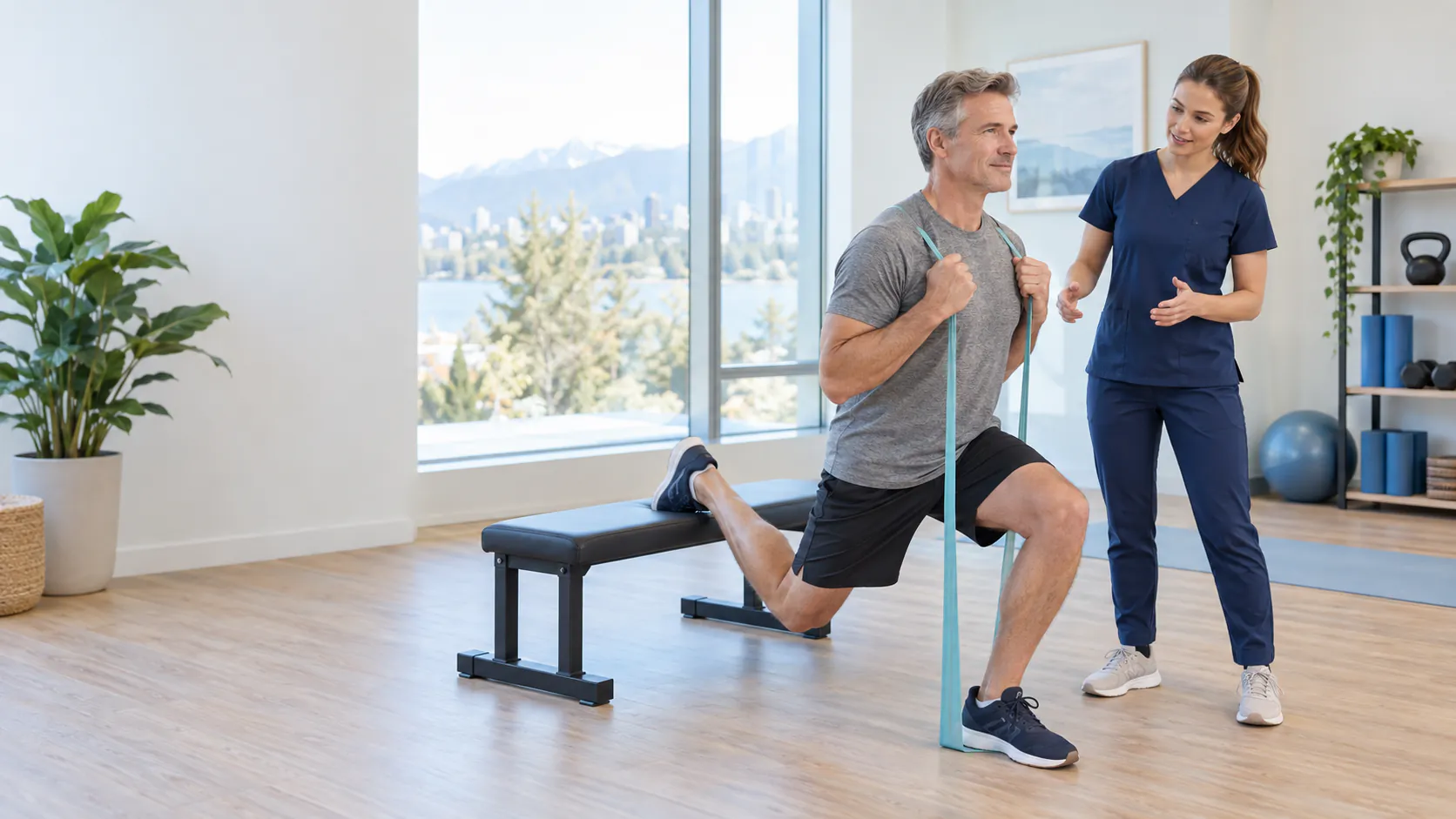
Returning to exercise after an injury can be more difficult mentally than physically. You may feel good during daily life but become uncertain as soon as you pick up a weight, run faster or return to the movement associated with the injury. One side of you wants to catch up immediately; another wants to avoid risk completely.
A useful return plan sits between those extremes. It respects healing and symptoms while recognizing that strength, confidence and skill are rebuilt through appropriate exposure. The goal is not to find a perfectly risk-free date. It is to progress from what you can do now toward what your activity requires, using clear checkpoints along the way.
First, understand what you are returning from
“Injury” covers many situations. A mild muscle strain, fracture, concussion, surgery and nerve injury do not share the same timeline. Before building a generic exercise plan, confirm whether you have activity restrictions or healing milestones from a physician, surgeon or other qualified provider.
Seek assessment before self-directing a return if there was significant trauma, visible deformity, inability to bear weight, major swelling, neurological symptoms, chest pain, shortness of breath, concussion symptoms or rapidly worsening function. After surgery, follow the surgical team’s precautions even if pain is low.
For a straightforward musculoskeletal injury, an assessment can identify what is irritable, what remains strong and which tasks need rebuilding. The diagnosis matters, but so does your destination. Returning to recreational walking requires different preparation from returning to competitive soccer or a warehouse job.
Recovery is not the same as rest
Early protection may be necessary, but complete rest continued too long can reduce capacity and confidence. Muscles, tendons, joints and the nervous system adapt to load. Rehabilitation uses that principle by applying enough challenge to stimulate adaptation without repeatedly overwhelming the area.
The National Institute of Arthritis and Musculoskeletal and Skin Diseases advises stopping an activity when a movement causes pain after a sports injury and seeking care if symptoms persist or worsen. That guidance does not mean every sensation requires weeks of inactivity. It means the exercise dose should fit the stage of recovery and the response should be monitored.
Think of loading as a dial, not an on-off switch. You can change resistance, speed, range, repetitions, surface, direction, rest and frequency. If running is too provocative, brisk walking may be appropriate. If a deep squat is uncomfortable, a shallower squat to a chair may preserve strength and movement.
Stage one: restore everyday confidence
Before sport-specific training, ordinary life should be reasonably manageable. Useful markers include comfortable walking, stairs, dressing, getting in and out of a chair, and completing work tasks. This does not require zero pain, but symptoms should be stable enough that daily activity is not repeatedly derailed.
Begin with frequent, low-dose movement. Gentle range-of-motion work, isometric contractions and easy aerobic activity may be appropriate depending on the injury. The exact exercises matter less than choosing movements you can perform with control and repeat consistently.
Watch the response over twenty-four hours. Mild discomfort that settles shortly after exercise may be acceptable for many conditions. A large increase in swelling, limping, loss of motion, night pain or symptoms that remain significantly elevated the next day suggests the dose was too high.
Stage two: rebuild basic capacity
Once everyday movement is improving, strengthen the patterns beneath your activity. Most sports and active jobs rely on some combination of squat, hinge, push, pull, carry, rotate, balance, accelerate and decelerate.
Start with stable, familiar versions. A runner recovering from knee pain might use a sit-to-stand, step-up, calf raise and hip-strength exercise. A person returning after shoulder pain might begin with supported pulling, pressing in a tolerable range and gradual overhead exposure.
Use a load that allows controlled technique without bracing fearfully or compensating dramatically. Two or three sets of a manageable exercise can be more useful than one maximal effort. Add repetitions before adding a large amount of weight, or increase weight while keeping the total volume stable. Changing one variable at a time makes your response easier to interpret.
Strength on the uninjured side can provide context, but perfect symmetry is not always necessary or realistic. Function, quality, confidence and the demands of your activity all matter.
Stage three: reintroduce speed, impact and complexity
Daily life and gym strength do not fully prepare you for unpredictable sport. A court athlete must react, cut, land and repeat efforts while tired. A gardener may kneel, twist and lift awkward objects. A parent may need to pick up a moving child without a warm-up.
Build complexity gradually. For running, progress from walking to walk-jog intervals, then continuous easy running, faster efforts, hills and finally sport-specific changes of direction. For lifting, move from slow controlled repetitions to heavier loads, faster intent and less predictable positions.
Impact is its own capacity. Calf raises do not automatically prepare the body for repeated jumping. Begin with small two-leg hops if appropriate, then progress height, direction, single-leg demand and fatigue. A clinician can help select tests for your particular injury.
Stage four: practise the activity, not just exercises
Rehabilitation exercises are preparation, but eventually you must practise the real task. A tennis player needs graded serves and groundstrokes. A hockey player needs skating intensity and direction changes. A runner needs the surfaces, footwear and distances they plan to encounter.
Start with a controlled version. Reduce the duration, opposition, intensity or frequency. A recreational soccer player might join warm-up and drills before playing a short, non-competitive shift. A weightlifter might rehearse the main lift with a lighter load before resuming full training volume.
Skill and fitness can return at different speeds. You may remember how to move but lack the conditioning to repeat it. Fatigue changes coordination, so later-stage sessions should eventually include enough duration to reflect real demands.
Use three layers of readiness
Symptoms: Are pain, swelling, stiffness or neurological symptoms stable and predictable? Do they return to baseline within a reasonable period after training?
Function: Can you complete the necessary strength, balance, range, speed and endurance tasks with control?
Confidence: Do you trust the area enough to move decisively, or are you protecting it so strongly that your mechanics change?
No single layer tells the whole story. Low pain does not guarantee readiness for full-speed sport. Good test performance does not guarantee confidence. Fear is not weakness; it is information that the progression may need more graded exposure.
The next-day rule
The response during a workout is only half the data. Check later that day and the following morning. Ask:
- Did symptoms settle back toward baseline?
- Is swelling meaningfully increased?
- Has normal walking or daily function changed?
- Do I feel ordinary training fatigue or a return of the original problem?
If the response is acceptable for several sessions, progress a small amount. If symptoms rise substantially, return to the last successful dose. This is adjustment, not failure.
A training log can help. Record activity, duration, intensity and next-day response in a few lines. You are looking for trends, not trying to eliminate every fluctuation.
Avoid the boom-and-bust cycle
A common pattern is doing very little during the week, feeling better, then attempting a full game or heavy workout on the weekend. Symptoms flare, so activity stops again. Capacity never gets a consistent chance to grow.
Instead, distribute training across the week. Two or three moderate sessions are often easier to adapt to than one heroic effort. Increase weekly load gradually and keep at least one familiar session while adding a new challenge.
Recovery supports training. Aim for regular sleep, adequate nutrition and rest between demanding sessions. Life stress counts as load too. A hard workout during an unusually exhausting week may require more recovery than the same workout during a calm week.
Warm-ups are preparation, not insurance
A warm-up should raise temperature, move relevant joints and rehearse the task. Begin with several minutes of easy aerobic activity, then add dynamic movements and gradually more specific drills. Before lifting, perform lighter sets of the movement. Before running quickly, build through easy running and controlled strides.
No warm-up can guarantee that an injury will not occur. Its value is preparation and practice. Avoid exhausting yourself with a long routine before the activity begins.
When to pause and get reassessed
Stop and arrange reassessment if function is worsening over time, swelling repeatedly increases, the joint gives way or locks, or you develop numbness or weakness. Severe night pain, fever, unexplained weight loss or symptoms after a new significant injury require medical attention.
After a concussion, do not use a generic musculoskeletal return plan. Follow a medically supervised, stepwise return-to-sport and return-to-learn process. Symptoms such as worsening headache, repeated vomiting, confusion, seizure or unusual drowsiness require urgent care.
What a successful return really means
Success is not the absence of every sensation. It is regaining the capacity and confidence to meet the demands of your activity with a manageable response. Some people return at full volume. Others discover that a different schedule, technique or recovery plan makes the activity more sustainable.
Progress will rarely be perfectly linear. Expect to adjust around sleep, workload, illness and training changes. Keep the long view: consistent exposure at the right dose is more powerful than an occasional perfect session.
If you are unsure where to begin, an individualized assessment can turn vague advice into measurable steps. Bring the real goal to the appointment—whether it is running five kilometres, lifting at work, playing with your children or returning to a team. Rehabilitation works best when it is aimed at a life you actually want to resume.
This article provides general education and is not a diagnosis or a substitute for personal medical advice.