
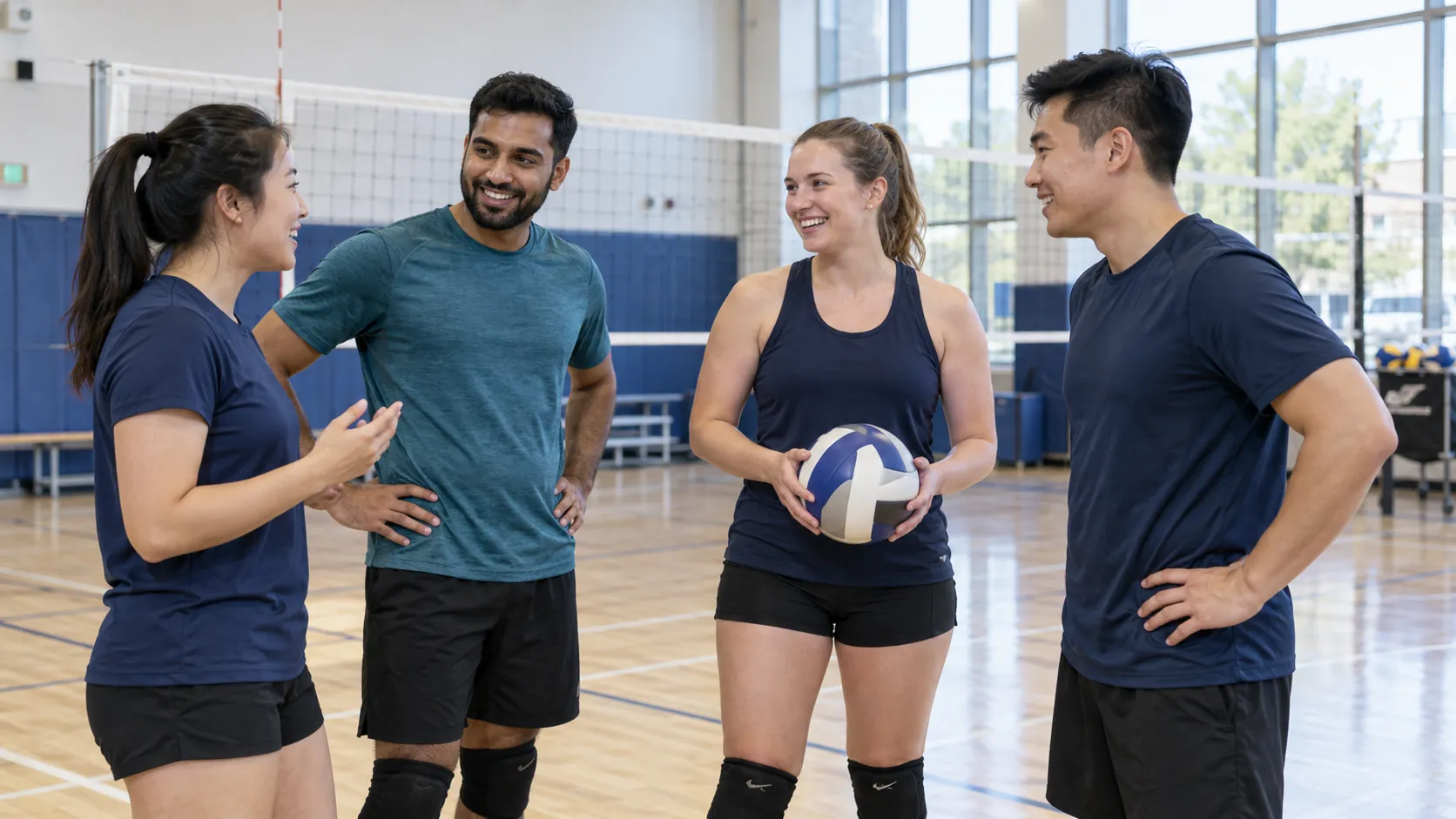
Volleyball can feel familiar within minutes of returning to a gym. The sound of the ball, the rotation, and the conversation between points all come back quickly. Your recent exposure to jumping, landing, reaching, and changing direction may be a different story. Remembering how to play does not necessarily mean that a full evening of play is the best first session.
Preparing for recreational volleyball in Markham starts with choosing an appropriate setting and being clear about what you have done recently. A lesson, a practice, and a competitive league game offer different opportunities to learn and adjust. This guide focuses on the decisions around participation so that your return can be deliberate, enjoyable, and responsive to your current abilities.
Find a session whose expectations match yours
Ask the organizer how the level is described, whether instruction is included, and how teams are formed. Beginner, recreational, and intermediate can mean different things in different groups. Clarify the expected pace and whether a returning player can take breaks or limit participation in a particular drill. These questions are easier to resolve before the first serve.
The City of Markham sports leagues page includes coed volleyball information. Check the current listing, registration details, location, and rules directly with the organizer. A facility hosting volleyball events does not necessarily offer a suitable open session at the time you want to attend. Use current programme information rather than an old schedule shared online.
Describe your recent activity honestly
Think about the last few weeks of movement, including other sports, gym sessions, work, and any time off. Walking regularly is useful activity, but it does not reproduce all of volleyball’s demands. Let a coach know if you have not recently jumped, changed direction quickly, or repeatedly used the arm overhead.
If you are recovering from an injury, discuss the intended return with your treating professional. Explain whether the session involves drills, a full match, or several games in succession. Ask about any restrictions and the criteria for progression. Do not interpret being cleared for general exercise as automatic permission for every sport-specific demand without clarifying what the original advice covered.
Arrive with time to prepare
Allow time to change footwear, organize belongings, and join the planned warm-up. A rushed arrival can leave you trying to understand the group while a rally is already underway. Ask the coach how the preparation connects to the session and raise any movement that is uncomfortable before play begins.
The AAOS volleyball injury-prevention guide discusses preparation, equipment, and court safety. Use those broad principles alongside current coaching and individual clinical advice. A warm-up is not a guarantee against injury, and it does not make a painful movement safe simply because you have completed a routine beforehand.
Learn the court’s practical details
Before joining play, locate boundaries, benches, stored equipment, and the route off the court. Report a wet area, loose item, or other hazard to the organizer. Keep bags and bottles in the designated place so they do not become obstacles. Follow the facility’s rules about footwear, jewellery, and equipment.
If you are unfamiliar with the net setup or a piece of court equipment, ask rather than adjusting it yourself. Do not hang from the net or its supports. The AAOS guide highlights both the playing environment and communication as useful safety considerations. A well-organized session depends on participants understanding how the space is being used, including areas shared with other groups.
Give repeated overhead activity its own attention
Serving and attacking can involve many repetitions over an evening, particularly during practice. Count the informal attempts before games as part of the session when describing what you did. A player who feels comfortable during a few serves may still find a long sequence demanding after time away.
Ask a coach to review technique and help choose a manageable practice plan. If a shoulder or elbow becomes painful, do not simply hit harder to see whether the movement improves. Tell the coach and follow the relevant clinical advice. Our article on shoulder pain in Markham discusses assessment questions when symptoms persist or interfere with activity.
Practise movement before making it competitive
Volleyball involves moving toward a ball, stopping, positioning, and responding to teammates. Ask for instruction in the skills you have not used recently. A controlled drill can give a coach time to observe and provide feedback before the same movement happens under the pressure of a rally.
Avoid inventing a maximal jump or landing test to prove that you are ready. If returning from a knee or ankle injury, follow the assessment and progression agreed with your clinician. Explain any apprehension or instability. A useful starting point should allow learning and observation, not force you to choose between hiding a concern and keeping up with the group.
Make communication part of the skill practice
Calling for the ball helps teammates understand who is moving where. Agree on the group’s usual calls and ask about rotations if they are unfamiliar. A returning player may remember one system while the current group uses another. Clarifying that difference can prevent several people making incompatible decisions at once.
Also establish how to stop a drill when a ball or person enters the playing area unexpectedly. New participants should know whom to tell about a concern. Clear communication is especially useful in mixed-experience groups where players may have different assumptions about how a rally will develop. It is a shared responsibility, not a task left only to the most experienced person on court.
Choose equipment for the surface and the rules
Wear footwear appropriate to the facility and the activity, and check its condition before the session. If knee pads or other protection are required or recommended, confirm the fit and intended use. Equipment that moves around or interferes with normal movement deserves attention before it becomes a distraction during play.
If you have been prescribed an ankle brace, ask how it fits the return-to-sport plan and the shoes you will use. Do not assume that a brace clears you for unrestricted play. Conversely, do not leave it off merely because a teammate does not use one. The advice should be based on your findings and activity needs, with review if the fit or function is not satisfactory.
Avoid letting an attendance problem change your recovery plan
A recreational team may occasionally have fewer players than expected. Decide in advance how you will respond if you are asked to stay longer, cover another role, or play every point. A limited return should not become a full session simply because the group needs numbers. Explain the boundary before teams are assigned.
For example, a player attending only an agreed skills practice can tell the organizer that they will not join the match afterward. That is a practical arrangement, not a lack of commitment. If the session cannot accommodate the restriction, choose another way to participate until the plan changes. Social pressure is a poor substitute for the progression established during rehabilitation.
Take hand and finger injuries seriously
A ball striking a finger can cause more than a brief sting. If an injury produces significant pain, swelling, an altered shape, numbness, or difficulty moving the finger, stop and seek assessment. The NHS finger injury guidance advises emergency assessment for an oddly angled, blue, or numb finger after injury. Do not ask a teammate to pull a finger straight or attempt to put a joint back in place.
Follow the organizer’s first-aid and emergency procedures. Describe what happened and whether you can use the hand normally. Returning immediately because the next point is starting can delay recognition of a problem. An assessment can determine what was injured and what protection, treatment, or follow-up is needed before the hand is used again in play.
Respond to a new injury as a new event
An ankle roll, a fall, or a collision deserves attention even if you have had similar problems before. Leave the court safely and tell the organizer. Do not assume that a previous sprain means the current injury requires the same management. The circumstances and current loss of function matter.
For persistent giving way after ankle injuries, our guide to recurring ankle instability in Markham offers assessment questions. If a head injury is suspected, stop participation and follow the appropriate medical and concussion procedures; returning to the game should not be a decision made by the player alone. Parachute’s Canadian concussion guidance explains assessment and return-to-sport requirements. Know the session’s emergency plan before it is needed.
Review the evening before booking more sessions
Think about the amount of play, the drills, and any extra activity before or after the games. Note symptoms that appeared during the session or afterward. If you are working with a clinician, use those details to discuss the next step. A general statement that you played volleyball may hide meaningful differences in duration and intensity.
Allow the plan to reflect the actual response. If the session was more demanding than expected, repeating it more frequently is not automatically the right next move. Ask about a suitable adjustment, especially when pain, swelling, weakness, or instability persists. Progression should be understandable enough that you know why the next session differs from the last one.
Keep the reason you returned in view
For many adults, volleyball offers a regular social activity as well as exercise. A sustainable routine should fit work, recovery, transport, and other commitments. Choose a group and schedule that let you prepare and participate without making every evening a rushed test of endurance. Enjoyment and clear expectations can coexist with sensible boundaries.
You can contact Prime Spine about a musculoskeletal concern affecting your return to recreation. Bring the details of the session and any previous treatment advice. This article offers general preparation ideas; individualized rehabilitation, injury assessment, and return-to-play decisions require the relevant clinical and coaching input.