
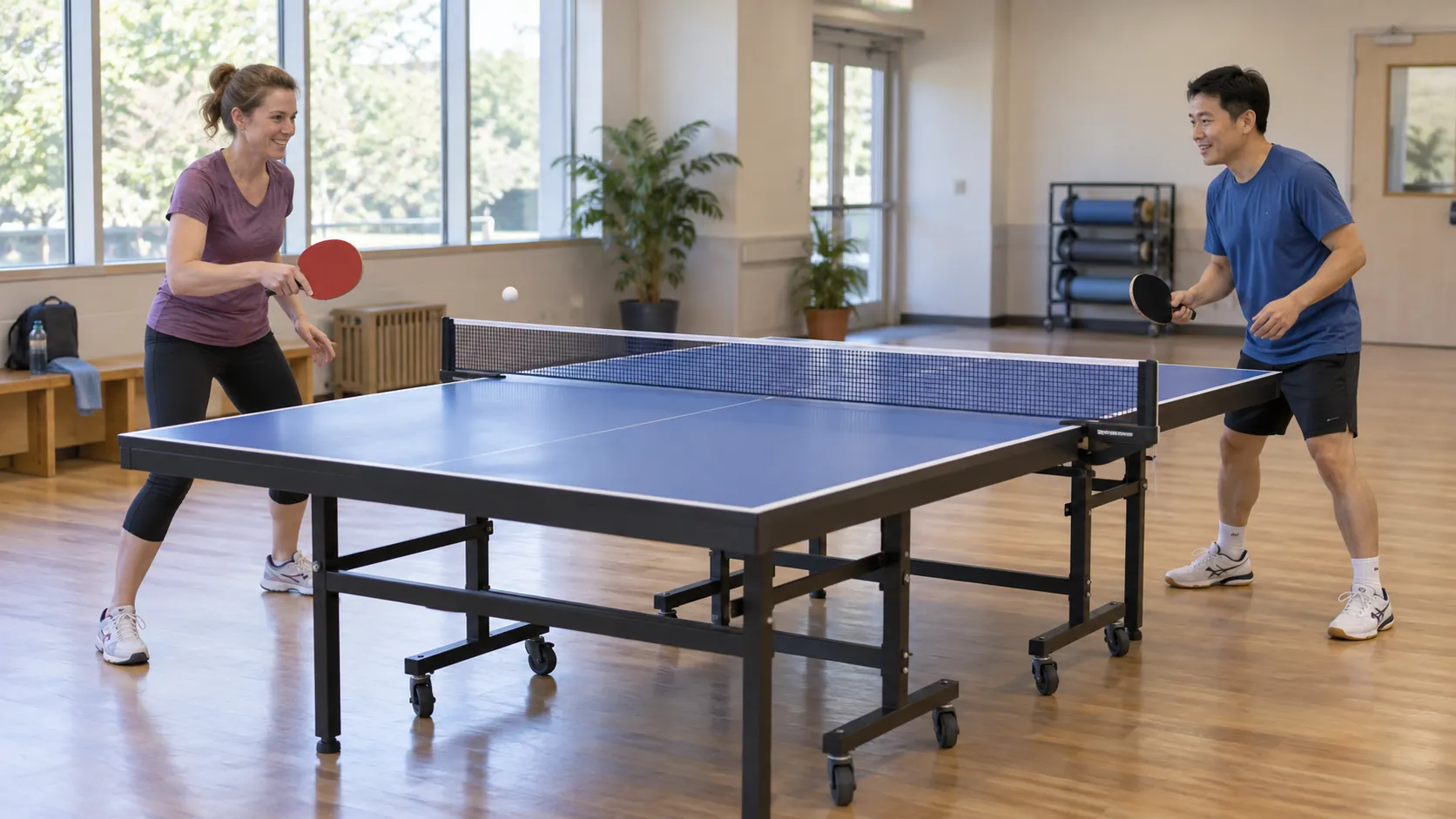
For many people, table tennis begins with a familiar sound: the quick bounce of a ball during a family gathering, a school break, or a visit to a recreation centre. Returning to it as an adult can be both enjoyable and humbling. The table looks familiar, but the ball seems faster than you remember, and keeping a rally going may take more concentration than expected.
There is no need to turn the first session into a test of your old ability. Recreational table tennis in Markham can begin with a simple aim: find a suitable place, learn with someone who respects your pace, and leave knowing what you want to try next. A thoughtful start gives you room to build skill and discover how the activity fits your body and schedule.
Find the right kind of session
Look for a setting that matches what you want to do. A coached introduction, a casual session with a friend, and a competitive club evening offer different experiences. The City of Markham’s Pan Am Centre information lists table tennis among its sport drop-ins. Check current schedules, admission requirements, equipment availability, and the format directly before attending. A drop-in is not necessarily an instructional lesson.
When asking about a session, explain your experience plainly. You might have played socially years ago, be completely new, or be returning after an injury. Ask whether you need to bring a partner and whether there is someone who can explain the setup. Those details can make the difference between a welcoming first visit and an hour spent uncertain about where to stand or whom to approach.
Consider the practical journey as well. Allow time to find the room, change shoes, and store your belongings. If a session immediately after work would leave you rushing, another time may be easier to sustain. The best option is not always the longest session or the largest facility. It is the one that gives you a realistic chance to arrive, participate, and return again.
Agree on what the first visit is for
If you are playing with a friend, choose a shared purpose before you begin. You might practise keeping the ball on the table, take turns trying a basic stroke, or ask a coach to help with positioning. A cooperative aim makes it easier to learn without judging every missed ball as a lost point. There will be time for competitive games when both people want them.
A more experienced partner can help by making the practice predictable and explaining one idea at a time. Trying to demonstrate every kind of spin in the first few minutes may be impressive but difficult to learn from. Tell your partner what you need: slower feeds, a short explanation, or a pause to reset. Clear communication is part of making recreation enjoyable, especially when the two players have different starting points.
For a returning player, avoid letting memories decide the entire session. You may remember a shot while needing time to regain the movement and timing around it. Choose a modest first objective and assess the experience honestly. Finishing with a better understanding of your present ability is useful progress even if the rally count is lower than it once was.
Keep equipment choices manageable
A paddle should feel comfortable to hold and suitable for learning. Ask a coach or knowledgeable supplier about a straightforward option before spending heavily on specialized equipment. Table Tennis England’s equipment guidance describes differences in racket coverings and notes that some are unsuitable for beginners. More complicated equipment does not remove the need to learn control, timing, and a comfortable grip.
If loan equipment is available, use the opportunity to notice what feels manageable. Check the handle, surface condition, and whether the paddle becomes slippery during use. Ask how to care for anything you borrow. For your own equipment, a simple storage routine can prevent it from being left loose among heavy objects in a bag. You do not need an extensive collection to begin understanding what works for you.
Wear comfortable clothing that allows movement and appropriate indoor footwear for the facility. Keep shoelaces secure and change out of wet or dirty outdoor shoes before entering the playing area. Bring water and store it where a spill will not create a hazard. These ordinary preparations support a smoother session without requiring a shopping list of performance accessories.
Learn a grip you do not have to fight
Table Tennis England’s coaching guidance on grip and ready position emphasizes relaxed fingers around the handle rather than an excessively tight grip. Ask a coach to demonstrate and observe your grip during an easy task. A short correction while you are actually holding the paddle can be clearer than trying to reproduce several written instructions at once.
Notice if concentration causes you to squeeze harder as a rally continues. Pause, reset, and ask whether the handle or technique is contributing. Do not repeatedly play through hand or forearm pain to make the grip feel more familiar. Pain is a reason to reassess the task, and recurring symptoms may need clinical assessment rather than another change in paddle angle.
If you have an existing hand condition, describe the activity to your healthcare provider. The duration of practice, the grip, and any rapid movements may matter. A general statement that the equipment is light does not answer every question about suitability. The plan should consider your symptoms and current restrictions, including whether another type of introduction or an adapted setup would be more appropriate.
Give movement room to happen
Before playing, look at the space around the table. Bags, chairs, loose balls, and other people can become obstacles when your attention is on the rally. Ask staff where belongings should go and how the room is organized. If a ball rolls into another playing area, alert the players and wait until it is safe to retrieve it. There is no need to chase a small ball through an active game.
Ask an instructor to teach basic positioning and movement at a manageable pace. Avoid copying the deep stances and rapid reaches of advanced players before you understand how to move safely in your own setting. The aim is to make it easier to meet the ball with control, not to hold a demanding pose for an entire session. You should be able to pause and reset without feeling that the exercise has failed.
In a home setting, do not assume that a table fitting into the room means there is enough room to play. Consider the space beyond the ends and sides, the floor condition, lighting, and nearby furniture. Follow the manufacturer’s instructions for table setup and storage. Ask for help with moving or unfolding heavy equipment rather than making that task an unexpected part of your warm-up.
Start with a pace that supports learning
Ask a coach to guide a suitable warm-up and begin with simple practice before increasing speed. A predictable ball can let you focus on one skill. When the task becomes too complex, you may spend more time retrieving misses than learning the intended movement. Simplifying the practice is a useful adjustment, not a sign that you are unsuited to the sport.
Use breaks to notice what is becoming difficult. Is your attention fading, are you reaching farther because your feet have stopped moving, or are you gripping harder? You can shorten the next practice period, return to an easier task, or finish the session. Agreeing on these options with your partner makes them feel like normal parts of the plan rather than interruptions that need an apology.
Be careful about adding a new session to an already crowded activity schedule. A first evening of table tennis after several other demanding days may not tell you much about how the sport fits when you are rested. Give yourself time to observe the response. A consistent, manageable routine is easier to learn from than alternating long enthusiastic sessions with gaps caused by discomfort or exhaustion.
Make the rules part of the conversation
When you are ready to play games, ask someone to explain serving, scoring, and the order of play. Table Tennis England’s rules resources provide a reference for the basic and formal rules. You can learn the essentials without memorizing a competition handbook. Agreeing on the rules before a game also prevents an avoidable disagreement from taking the enjoyment out of a social session.
Doubles adds another person on each side, so ask for instruction in positioning and turn-taking before assuming it is easier because each person hits fewer balls. Partners need room and communication. Start with a format that both players understand and can manage. If you are unsure where to move, stop and clarify rather than trying to work it out at full speed while everyone else continues.
For a mixed-experience group, consider rotating between practice and games so that newer players have a chance to learn. Keep feedback specific and welcome questions. A person who feels comfortable asking for a slower rally is more likely to have a useful session than someone who spends the evening pretending to understand. The social atmosphere is a practical part of whether the activity becomes a lasting habit.
Respond to symptoms without guessing the diagnosis
Stop for significant pain, an injury, or feeling unwell. Seek assessment for symptoms that persist, recur, or affect ordinary tasks. Shoulder, elbow, wrist, and back discomfort can have several explanations, and the fact that you noticed it after table tennis does not establish the cause. Describe the session, any sudden event, and the tasks that now feel different when speaking with a clinician.
If you are returning after treatment, follow the advice for your condition and ask how table tennis fits the next stage. Our article on returning to exercise after injury offers a way to organize those questions. Permission for one activity does not necessarily cover every drill, game format, or length of session. The practical details help your provider give advice that applies to what you intend to do.
Leave with a reason to come back
After the session, identify one thing you enjoyed and one thing you would change. Perhaps you liked cooperative rallies but need a quieter time, a lesson, or a more comfortable paddle. Keep the next step small enough to arrange. You can build a satisfying recreational routine through repeated ordinary visits without making competition or rapid improvement the measure of success.
If discomfort is getting in the way, contact Prime Spine in Markham to discuss assessment and appropriate support. Bring a description of the playing setup and the symptoms you notice. Table tennis can be a social activity, a learning project, or simply a pleasant reason to leave the house. A thoughtful introduction helps you find the version that fits your life.