
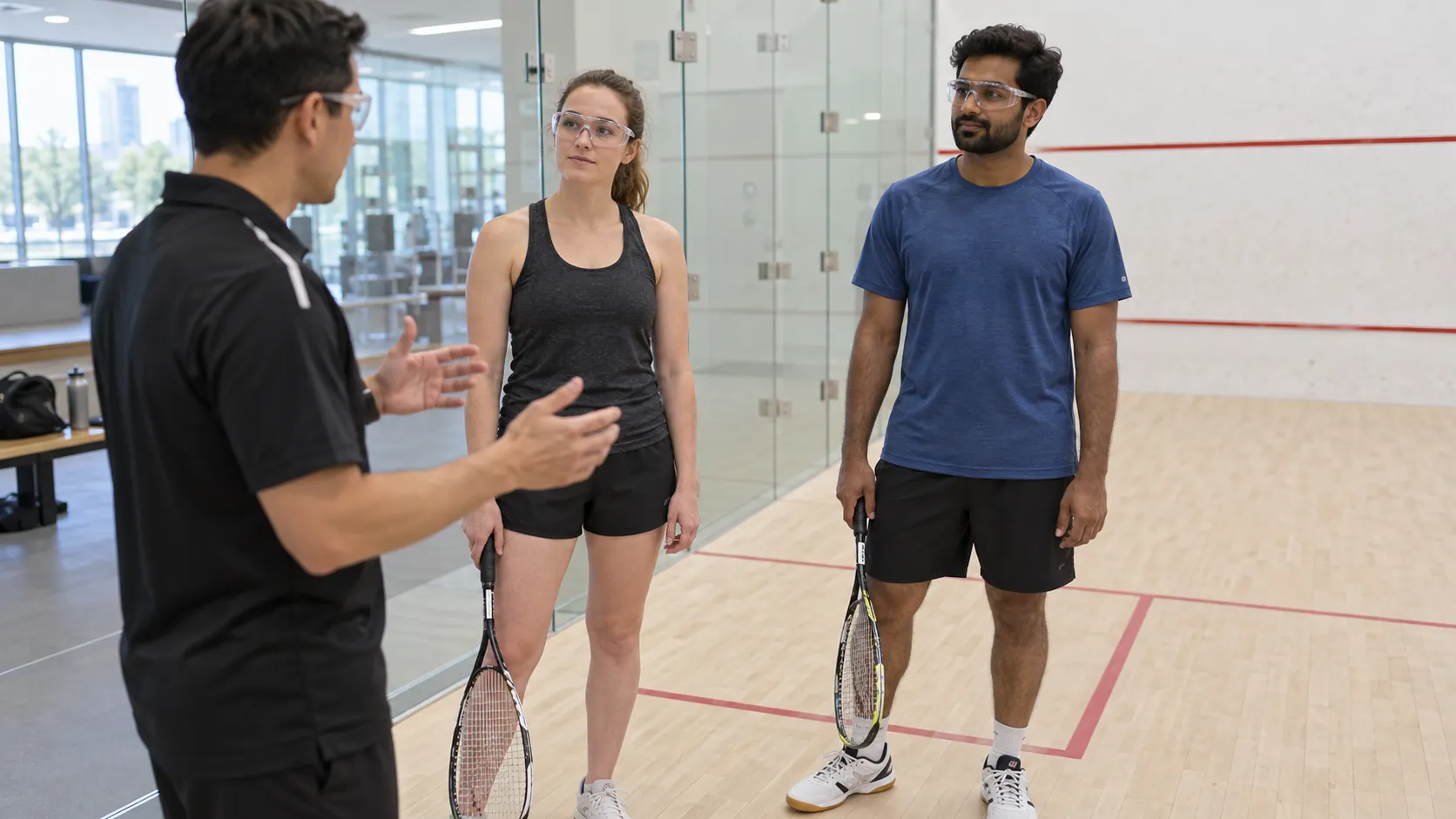
Squash has an appealing simplicity: two players, a ball, a racquet each, and a court protected from the weather. Once a rally begins, however, the game asks you to judge the ball, move, stop, and share space with another person. That combination can feel unfamiliar when you are new to the sport or returning after a long break. A good first session makes room to learn those demands.
For recreational players in Markham, preparation need not become a complicated fitness project. Start by choosing the right setting, arranging the necessary equipment, and agreeing on what you want the session to accomplish. Learning to move and communicate comfortably is a worthwhile outcome. You can leave the court pleased with your progress even if the session contains more instruction and short practice periods than competitive games.
Choose a learning environment before a match
Ask a facility about introductory instruction, coaching, or suitable ways to meet players at your level. The City of Markham fitness information lists squash among its facilities. Check current booking arrangements, eligibility, equipment requirements, and available instruction directly before making plans. Having access to a court does not automatically mean that a supervised introduction is included with the booking.
Tell the instructor whether you are entirely new, returning from another racquet sport, or revisiting squash after years away. Those are different starting points. A person familiar with tennis may understand striking a ball but still need to learn how to share a confined court. A former squash player may remember the tactics while needing a gentler physical introduction. The session should fit the person arriving today.
If you book with a friend, agree on the purpose beforehand. You might both want to practise simple shots and learn safe positioning. That agreement makes it easier to stop for questions without feeling that you are interrupting a match. Choose a partner who is willing to respect the plan. A large difference in experience can work when the experienced player helps create a manageable session instead of testing every weakness.
Bring current health concerns into the plan
An unresolved injury, recent surgery, or medical advice limiting exertion should be discussed with your healthcare provider before you begin. Explain that squash involves repeated changes of direction, reaching, and racquet work. Asking whether you can do sport in general may not give the clinician enough information. If you already have a rehabilitation plan, clarify which parts of a squash session fit the current stage.
You do not need to prove readiness through an improvised maximum-effort workout at home. Instead, identify the questions that remain: whether you can tolerate the planned session, what modifications are appropriate, and what symptoms should prompt a pause or reassessment. Our guide to returning to exercise after injury offers a broader way to organize those discussions. Sport-specific advice still needs to reflect your individual situation.
Be equally practical about an ordinary busy week. A first lesson squeezed between a demanding shift and several errands may feel different from one scheduled with time to arrive and recover. Choose a day that gives the new activity a reasonable place in your routine. This is about making participation manageable, not waiting until every condition is perfect before allowing yourself to learn.
Sort out protective eyewear early
Squash Canada recommends appropriate protective eyewear during play. Ask the facility or a knowledgeable supplier about eyewear certified for squash and check its current requirements. Ordinary prescription glasses are not a substitute for suitable sports eye protection. If you need vision correction, arrange a compatible option before the first session rather than discovering at the court that your equipment does not work together.
Try the fit while moving your head and looking in different directions. Ask how to adjust and care for the model you choose. If it slips or fogs, stop in a safe place to address the problem instead of removing it while continuing to hit. Keep the eyewear accessible in your bag so it becomes part of preparing to play, rather than an item remembered only after the warm-up begins.
Keep the rest of the equipment straightforward
Squash Canada’s equipment guide describes clean indoor shoes with non-marking soles, racquets with different handling characteristics, and balls intended for different playing levels. Ask for a suitable beginner or improver ball rather than assuming the ball used by professionals is the best choice. A trial racquet can help you understand what feels manageable before committing to a purchase. Confirm what the facility lends and what you must bring yourself.
Separate court shoes from the footwear you use outdoors. Pack them where they will stay clean, and leave time to change before the booking begins. Check the racquet grip and tell the instructor if it feels slippery or difficult to hold. Do not compensate for an awkward setup by gripping as hard as possible throughout the session. Equipment questions are a normal part of learning the sport.
Bring water, a small towel, and whatever the facility requires for storage or entry. Put loose belongings where staff direct you, clear of the playing area. A simple packing list can prevent repeated last-minute problems, particularly if you travel directly from work. The aim is to arrive ready to learn, with fewer decisions competing for your attention once you step onto the court.
Learn space and communication as skills
Squash is unusual because players use the same space while taking turns striking the ball. The World Squash rules address interference, access to the ball, and room for a reasonable swing. Ask an instructor to explain these situations on court. If a swing or shot may endanger the other player, stop rather than trying to complete it. Learning when to stop is part of learning to play.
A demonstration is more useful than trying to memorize rule wording without context. Ask where to move after a shot, how to recognize that the other player needs space, and how to communicate when a rally must pause. Practise those decisions at a speed where you can notice what is happening. A short, controlled exercise can teach more than a frantic rally in which both players are guessing.
Avoid treating near misses as amusing evidence of effort. If you repeatedly find yourselves too close, pause and ask for help with the setup or drill. The solution may be simpler instructions, a different practice task, or more coaching before free play. Your partner should feel able to raise the same concern. Comfortable communication makes it easier for both people to participate without pretending that uncertainty has disappeared.
Let the session build in stages
Ask the instructor to lead an appropriate warm-up and introduce the movements gradually. Leave room for practice before competitive scoring becomes the focus. You may spend time learning how to hold the racquet, judge a rebound, or move to a predictable ball. These tasks deserve attention even if you have enough general fitness to keep moving for longer. Skill and conditioning are related, but they are not interchangeable.
Keep early practice periods manageable and use pauses to ask questions. If you become too tired to follow the instructions or maintain awareness of your partner, the session needs to change. More effort is not always more useful practice. You might return to a simpler drill, take a break, or finish for the day. Agreeing that these are acceptable options before starting helps prevent an unnecessary contest with the clock.
For a returning player, familiar shots can create pressure to resume the old pace immediately. Give yourself permission to assess what feels comfortable now. Avoid using the score against a previous opponent as your only measure of progress. A session in which you learn the current limits of your movement, equipment, and concentration can provide a better foundation for the next visit than one completed at any cost.
Have a clear response to symptoms and incidents
Stop if pain changes the way you move, if you feel unwell, or if an injury occurs. Seek appropriate medical assessment for persistent or significant symptoms instead of repeatedly testing them through play. If a blow or collision raises concern about concussion, leave play and obtain medical assessment; do not make a same-day return decision by seeing whether you can finish a rally. Squash Canada’s concussion resources explain the need for recognition and managed return.
Before playing, know how to contact staff and where help is available. Keep your phone accessible outside the playing area rather than loose in a position where it could fall onto the court. If you are attending with someone new, make sure each person knows how to reach assistance. These details are easier to sort out calmly before an incident than while somebody is hurt or distressed.
Use the first visit to plan the second
After the session, make a few practical notes. Which part was enjoyable? Did the footwear work? Were you comfortable communicating with your partner? Was the booking length or time of day sensible? These observations can guide the next visit without turning recreation into a formal performance review. Keep the focus on changes you can actually make, such as another lesson or a more suitable practice partner.
Notice how you feel later and the following day. If symptoms interfere with normal tasks or keep returning, seek advice rather than assuming they are required evidence of a good workout. Describe the movements and duration of the session when you do. Our article on tennis elbow and forearm pain in Markham discusses one possible upper-limb concern, but pain after squash can have several explanations and should not be diagnosed from the sport alone.
Build a schedule that leaves space for your other responsibilities and activities. You may prefer regular coached practice, social games, or a mix as confidence grows. If discomfort is making that choice difficult, contact Prime Spine in Markham to discuss assessment and suitable support. The purpose of preparation is to help squash become an enjoyable part of your week, with enough skill, awareness, and flexibility to keep learning.