
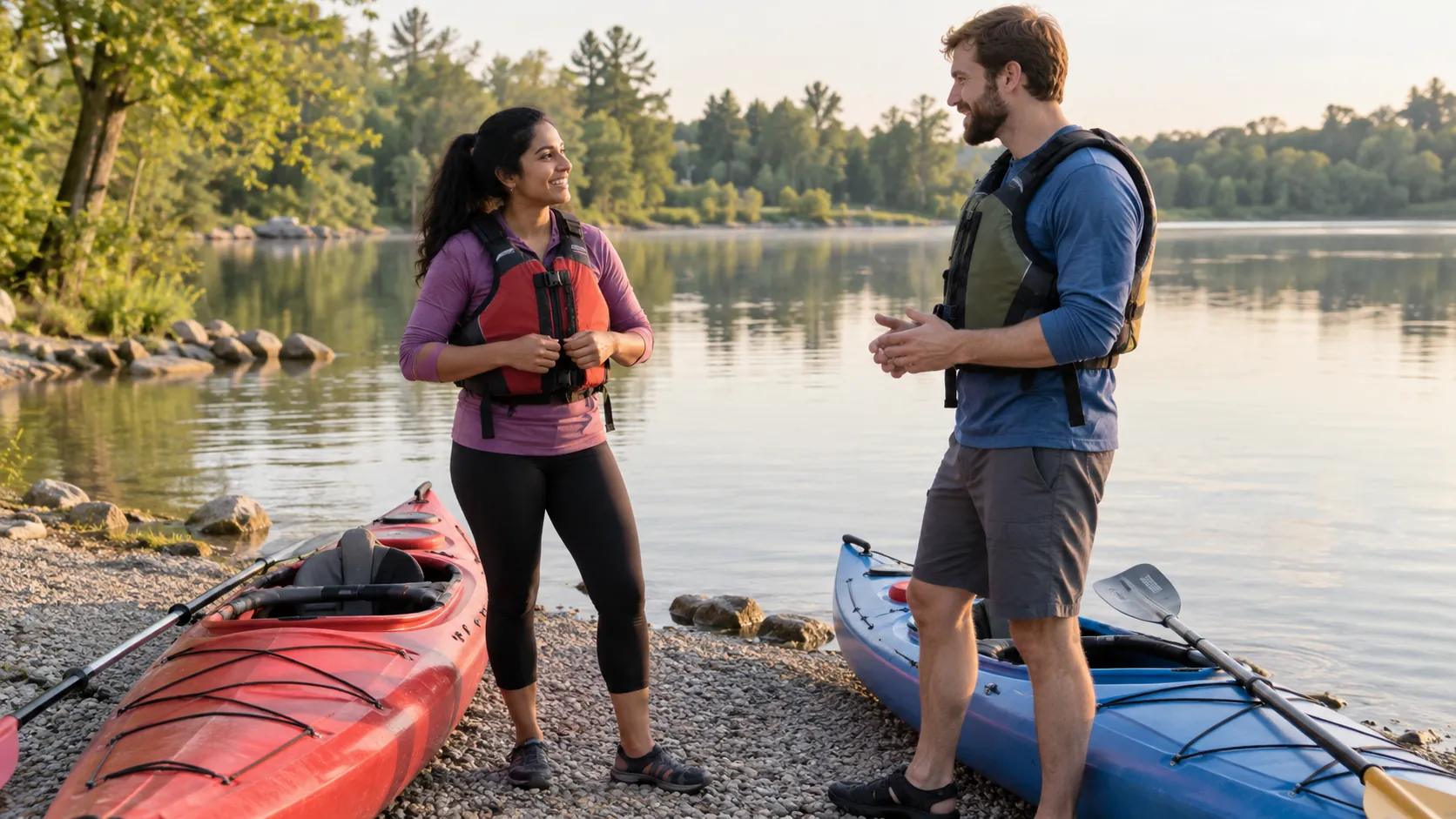
A calm-water photograph captures only one part of kayaking. Before that moment come the decisions about where to go, how to transport the boat, what to wear, and how to get in and out. Afterward, the equipment still needs to return to the vehicle. Those less photogenic details can make a substantial difference to how manageable the outing feels.
For adults interested in recreational kayaking in Markham, preparation should include both paddling skills and the practical demands around the activity. This article is intended for planning, not as an on-water instruction manual or a recommendation for a particular launch site. A qualified instructor and current local information are essential when choosing an outing that fits your experience and abilities.
Start with the kind of outing you want
There is a meaningful difference between an introductory lesson, a short guided session, and an independent trip. Decide which experience you are seeking before buying equipment or agreeing to a friend’s route. Tell the organizer about your actual experience, including whether you have practised entering, exiting, and responding to a capsize under instruction.
Ask what the session includes and what participants are expected to manage independently. A description such as beginner friendly does not explain every physical or safety demand. Clarify the meeting point, duration, equipment, and support available. If the answers do not fit your needs, choosing another session is more useful than arriving with assumptions that only become visible at the shoreline.
Get instruction before adding distance
Learning how to control the boat and respond to problems is a separate task from building endurance. Transport Canada’s boating safety resources provide current guidance and links to the Safe Boating Guide. Use appropriate training to learn practical skills rather than treating a written article as sufficient preparation for independent paddling.
A lesson also gives you a place to ask questions about comfort. Tell the instructor if the seat, foot position, grip, or movement feels difficult. Ask for an explanation of the technique being taught and time to practise it. Avoid relying on a distant memory of a school outing when the equipment, water conditions, and people involved may be different now.
Check access instead of assuming every shoreline is a launch
When planning from Markham, verify the destination’s current rules, permitted activities, launch arrangements, and operating conditions with the responsible authority or provider. A pond or reservoir visible from a path is not automatically available for kayaking. Photographs and map pins do not establish legal access, suitable water conditions, or the presence of help.
Include the distance from parking to the launch in the plan. Ask about the surface, slope, and any steps or other obstacles. If you need assistance carrying equipment or entering the boat, confirm it in advance. An outing that looks modest on the water can still be difficult to access when those details have been overlooked.
Wear suitable flotation and understand the equipment
Use an approved, properly fitted lifejacket or personal flotation device and wear it correctly on the water. Transport Canada’s flotation-device guidance explains selection, fit, and why wearing the device matters. Have the instructor or provider help you check the fit rather than leaving unfamiliar adjustments until after launch.
Confirm the required safety equipment for the craft and planned activity. The federal guidance on human-powered craft explains that these vessels remain subject to safety requirements. Ask how to use the equipment provided, not simply whether it is somewhere inside the boat. Know where essential items belong and keep them accessible as instructed.
Take conditions seriously even when the air feels pleasant
The decision to paddle depends on the water and weather, not only the temperature at home. Ask the instructor or trip leader how conditions are assessed, what clothing is appropriate, and what would lead to cancellation or an early return. Cold water, wind, and changing conditions require preparation beyond ordinary outdoor exercise clothing.
Do not treat being a competent swimmer as a replacement for paddling training or appropriate equipment. Review the relevant guidance with the provider and follow decisions about whether the outing should proceed. If the session is postponed, resist the temptation to recreate it independently in a nearby location without the same assessment and support. The conditions that changed the plan still need to be respected.
Include a trip plan in the preparation
Transport Canada recommends leaving a trip plan with a responsible person, including the route and expected return. That person should know what to do if you are overdue. Let them know when the trip is finished so an unnecessary search is not started. This applies to short recreational outings as well as longer journeys.
For a group session, ask how that process is handled and what information you need to provide. Confirm communication arrangements and the emergency plan before leaving the launch. A phone carried somewhere in the group is not, by itself, a complete plan. Equipment and procedures should match the location, and everyone should understand their part.
Treat boat transport as its own task
A kayak may be manageable once floating but awkward on land. Before lifting it, establish how it will move from storage to the vehicle and from the vehicle to the launch. Use appropriate help or equipment and follow the manufacturer’s transport instructions. Do not improvise a roof-loading method because the first plan turns out to be difficult.
The Canadian Centre for Occupational Health and Safety’s team-handling guidance emphasizes coordination when people move a load together. Apply that principle by agreeing on the route, commands, and place to set the boat down before starting. If the task exceeds what the group can manage safely, change the arrangement rather than relying on a sudden stronger effort.
Check fit while help is available
Ask the instructor to show you the seat and foot-support adjustments that apply to the boat. Explain any limitation that affects sitting, bending the knees, or reaching. The goal is to understand the fit and the required movements before you are committed to an outing, including how you will exit safely under the conditions being taught.
Avoid stuffing loose cushions or improvised supports into the cockpit without the instructor’s approval. An item added for comfort could interfere with movement or exit. If a setup cannot be made suitable, discuss another boat or activity format. Equipment fit is a practical question to resolve early, not something you must endure silently because the group is ready to leave.
Make the first session about learning the movement
Paddling asks you to repeat a skill while managing the boat and observing the surroundings. Give yourself room to learn rather than measuring the outing only by distance covered. Follow the instructor’s technique guidance, and ask for feedback if you feel that you are straining or gripping harder as the session continues.
If you are returning after a shoulder, wrist, or back problem, obtain individual clinical advice about participation. Describe the whole outing, including lifting and entering the boat. A clinician may need more information than the statement that kayaking is a seated activity. Bring any restrictions to the instructor so the session can be evaluated honestly before you get on the water.
Plan breaks as part of the route
Ask where breaks can occur safely and how the group will make decisions about returning. A place that looks inviting from the water may not be an appropriate landing. Follow the leader’s plan and avoid separating from the group to rest without communication. The opportunity to stop should be considered before fatigue or discomfort makes the decision urgent.
Be clear about the pace and purpose of the outing with companions. One person’s relaxed paddle can be another person’s demanding effort. Agreeing on expectations beforehand reduces pressure to continue farther than planned. If symptoms or conditions change, communicate early so the group has options. The return journey and the final landing still require attention and energy.
Save enough capacity for the work after landing
Once ashore, there may be equipment to carry, clean, secure, and unload again at home. Include that sequence when deciding how much activity is reasonable for the day. Arrange help where needed rather than assuming that the physical work ends when the paddle is put down. Follow the provider’s instructions for handling rented equipment.
Afterward, note which parts of the outing were comfortable and which were difficult. Was the main issue the carry, the seated position, the repeated movement, or the duration? Specific observations help you discuss the next session with an instructor or clinician. Persistent pain, weakness, or other concerning symptoms should be assessed rather than dismissed as the inevitable price of trying a new activity.
Make the next outing a considered choice
If you borrowed or rented equipment, record the model and the adjustments that worked while you still remember them. That gives the provider a useful starting point next time without committing you to a purchase. Note any difficulty with fasteners or reaching stored items, too. Small practical observations can guide a better conversation about fit than simply asking for the same boat again because the outing was enjoyable overall.
Review what you learned before increasing the challenge. You may need another lesson, a different equipment fit, a shorter route, or clarification of a physical concern. Enjoying the first session is a good reason to continue learning; it is not evidence that every waterway or weather condition is now within your skills.
Our guide to shoulder comfort when returning to swimming explores another activity-specific planning conversation. You can contact Prime Spine about a musculoskeletal concern affecting recreation. This article offers general preparation ideas; paddling instruction, water safety decisions, and individual medical advice should come from the appropriate qualified professionals.