
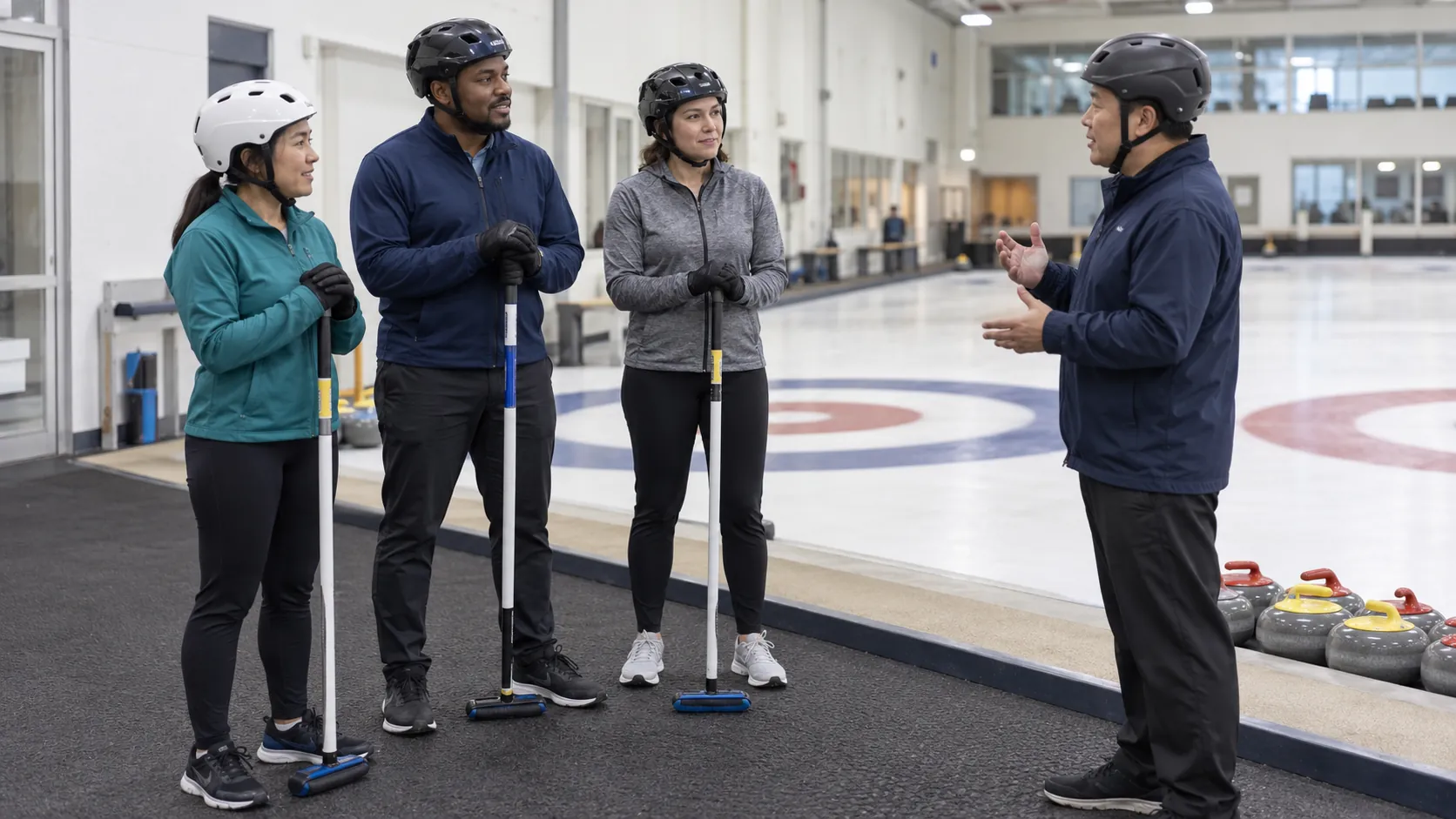
Watching a curling match gives you a sense of the strategy, but it does not show every decision involved in a first visit to a club. There are shoes to change, unfamiliar equipment to fit, an ice surface to learn, and instructions that may sound new even when the game looks familiar. Giving those details time can make the introduction much more enjoyable.
Recreational curling in Markham can offer a social way to learn a skill and participate in regular activity. Preparation should reflect your experience, balance, health, and the session you are joining. This article helps organize the questions to ask before and during a lesson. It does not replace instruction on the ice or determine whether a particular activity is medically appropriate for you.
Choose instruction that fits your starting point
If you are new, look for an organized introductory or learn-to-curl programme rather than assuming a regular game will include enough teaching. Ask what the session covers, how equipment is provided, and what participants are expected to do independently. Tell the organizer about previous experience, including if it was many years ago.
Unionville Curling Club lists information about adult learning opportunities and membership for the Markham area. Check current programme details, availability, and requirements directly with the club. An older event notice or a friend’s previous registration does not establish the arrangements for your visit. Confirm the session before planning around a date or assuming equipment will be available.
Explain relevant physical concerns before arriving
If you have a recent injury, a condition affecting balance, or restrictions from a treating professional, discuss participation before stepping onto the ice. Describe curling’s different tasks when seeking clinical advice: moving on the surface, delivering a stone, sweeping, and standing during play. The fact that the sport is recreational does not answer those questions by itself.
Tell the instructor about any agreed limitations so they can assess whether the session can accommodate them. Ask about the setup rather than promising that you will simply avoid anything difficult once the lesson begins. Early communication gives the organizer time to explain options and identify where additional advice is needed. It also avoids putting you under pressure to make an unfamiliar decision in front of a waiting group.
Check the equipment list before buying anything
Ask what you should bring, what is supplied, and which items need to meet the club’s requirements. Clothing should allow the instructed movements, and footwear needs to be appropriate for the activity. Follow the club’s directions about clean indoor shoes and changing areas. Do not assume that ordinary winter footwear is suitable because the sport takes place on ice.
Curling Canada’s introduction to curling explains the roles of basic equipment. A beginner can use that background to ask better questions without purchasing a complete kit immediately. If you borrow equipment, have the instructor check fit and condition. The right starting arrangement is one you understand and can use as taught.
Treat head protection as part of preparation
Curling Canada’s Safety First guidance recommends helmets for people new to the sport and others at increased risk, alongside appropriate footwear and grippers. Follow the club’s current requirements and ask which approved head protection is suitable. Have the fit checked and fasten it correctly before going onto the ice.
Do not make the decision by looking at what experienced players happen to wear. Their practice is not a personal assessment of your risk or a substitute for the programme’s rules. If the required item is uncomfortable, ask for help with fit or a suitable alternative. Removing protection because it needs adjustment leaves the original problem unresolved.
Learn how to move around the sheet first
The instructor should explain entering and leaving the ice, moving between positions, and where to wait. Listen before concentrating on the stone itself. Curling Canada advises keeping grippers in good condition and avoiding stepping over stones or hacks. These ordinary movements deserve attention because much of a session occurs between deliveries.
Ask for another demonstration if you are unsure which foot or piece of equipment is being discussed. There is no benefit in pretending to understand a new term and discovering the difference while moving on the ice. Stay within the instructed area and let the coach know if balance feels unreliable. Learning the environment is part of learning the sport.
Understand the equipment changes during a lesson
Sliders, grippers, brushes, and delivery aids have different purposes. Have the instructor explain when each item is used and how transitions are handled in that programme. Do not change footwear or remove a gripper merely because another participant has done so. Follow the instruction intended for your stage of learning.
Before the next drill begins, check that you know what you are expected to do. If a device slips, feels loose, or seems damaged, stop and tell the instructor. Do not improvise a repair on the ice. A short pause to resolve equipment uncertainty is easier to manage than trying to complete a skill while also wondering whether the setup is correct.
Ask about delivery options without treating them as a lesser game
Traditional delivery is not the only way people participate. Curling Canada’s learning materials describe delivery aids and delivery sticks as options that can help some participants. Ask an instructor to explain what is available and whether it is suitable for your abilities, the programme, and any clinical restrictions. The option needs instruction, not simply a piece of equipment handed over at the start.
If bending into a delivery position is difficult, explain the reason as clearly as you can. Pain, balance, limited movement, and uncertainty may need different responses. Avoid forcing a position to match another player. A useful introduction should help you find an appropriate way to participate while keeping the physical and safety questions visible.
Give sweeping its own learning time
Sweeping combines a skill with movement alongside play. Ask the coach to demonstrate the task and observe you practising the version appropriate to the lesson. Focus on understanding the technique and communication before trying to reproduce the speed or effort seen in a televised match. An introductory session is a place to learn, not to prove maximum output.
Tell the instructor if your shoulder, wrist, back, or knee becomes uncomfortable. Do not silently alter the movement to keep pace without feedback. If symptoms persist, obtain clinical advice and describe the task specifically. Our guide to returning to exercise after injury discusses how activity details make a rehabilitation conversation more useful.
Arrive with enough time for the whole introduction
Plan the journey, parking or transit connection, check-in, and clothing change. Ask where to meet and how early the organizer wants participants to arrive. The first few minutes may include essential information that is difficult to reconstruct once everyone is already on the ice. Avoid making your first session a rushed entrance directly into a drill.
Bring only what you need to the designated areas and store belongings as instructed. Know where personal items, drinks, and outerwear belong. If you need a particular accessibility arrangement, confirm it beforehand. Practical preparation can remove distractions and leave more attention available for the new surface, equipment, and skills.
Agree on how to pause or leave a drill
Ask the instructor how to signal that you need a break and where it is safe to wait. A person unfamiliar with the sport may not know when stepping away could interfere with another activity. Clear instructions make it easier to respond to fatigue, discomfort, or uncertainty without guessing how to move through the group.
If you are attending with friends, explain any planned limit in advance. You may be joining for instruction without committing to every later activity. The social side can remain enjoyable without allowing the group’s enthusiasm to override your agreed care plan. If the session cannot accommodate a necessary restriction, discuss another option rather than trying to hide the limitation.
Know the response to a fall or possible head injury
Report a fall to the instructor and follow the club’s emergency procedures. Do not assume that getting back up means no assessment is needed. If a concussion is suspected, stop participation and obtain medical assessment; return should follow appropriate clinical guidance. Parachute’s Canadian concussion guideline explains the assessment and return-to-sport process.
Know who is responsible for first aid and how emergency help is summoned. You do not need to become the group’s medical expert, but you should know whom to alert. If you have a significant injury, do not continue because the session is nearly finished. The decision should be based on the injury and appropriate assessment, not the number of ends remaining.
Review the experience before increasing commitment
After the session, identify what you enjoyed and what needs clarification. Was the main challenge balance, understanding instructions, a particular movement, or the overall duration? These details can guide the next conversation with the instructor. A short note is enough; the purpose is to learn from the experience rather than judge yourself against established players.
If physical symptoms persist or limit ordinary activity afterward, seek assessment before adding more sessions. Describe both the lesson and other activity that week. Returning participants may also need to account for the time since their last season. Familiarity with rules and strategy can return faster than recent exposure to the sport’s physical demands.
Build a routine that you can sustain
Once the introductory questions are answered, consider how curling fits your week. Include preparation, travel, changing, and any recovery needs alongside the time on the ice. Ask about the expectations of a league before joining so that attendance, experience level, and support are clear. A good fit makes it easier to keep learning and enjoy the social side.
You can contact Prime Spine about a musculoskeletal concern affecting recreation. Bring any medical restrictions and a description of the curling activities you hope to do. This article offers general preparation ideas; ice skills require qualified instruction, while injury assessment and individual return-to-activity decisions belong with the appropriate healthcare professional.