
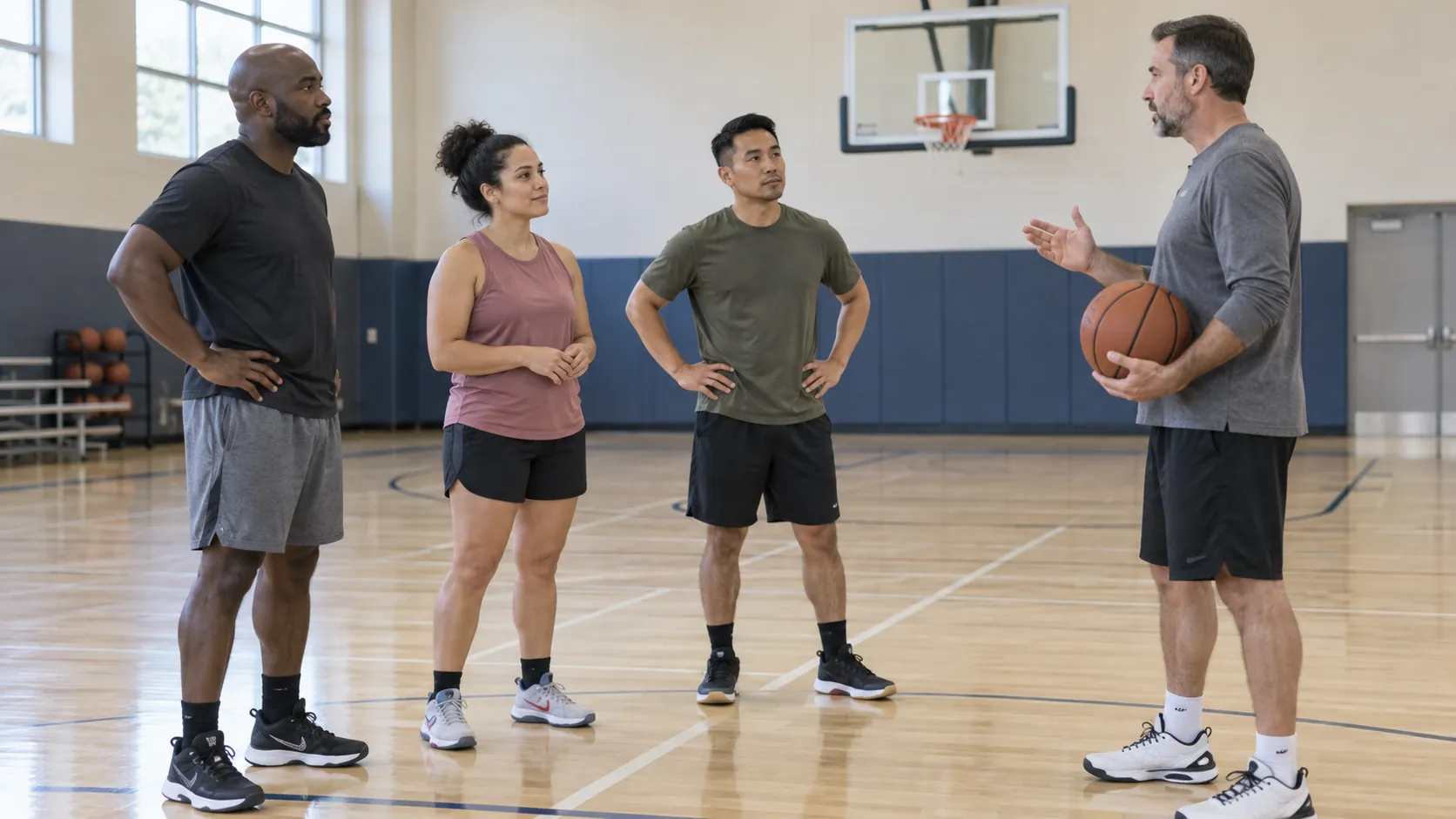
The invitation sounds simple: a few friends are playing basketball, and there is room for one more. You remember the rules and may still remember your favourite shot. What is less obvious is how the evening will unfold. Will it be relaxed shooting, short half-court games, or a competitive run with little time off? Those details matter when you are new to the sport or returning after a long break.
Recreational basketball in Markham can be a social reason to move, learn, and spend time with other people. A good first session does not require proving that you can play exactly as you once did. It requires choosing a setting that fits your current abilities and making room to build from there. Preparation begins with the format of the session, not with buying the most expensive shoes.
Find out what you are joining
Ask the organizer about the group before arriving. Clarify the expected experience level, how teams rotate, whether substitutions are easy, and whether the session includes coaching. A beginner lesson and an open pickup game can share a court while offering very different experiences. Knowing the arrangement helps you decide whether it matches your goal for the evening.
The City of Markham’s drop-in program page is a useful starting point for current recreation information. Check the actual listing for age requirements, registration, location, and session details. Schedules and access arrangements can change, so avoid relying on a friend’s memory of a program from a previous season. Confirm the details before planning transport and the rest of your day.
If you are organizing a private group, agree on expectations in advance. State whether the purpose is learning, casual exercise, or competition. Make it easy for someone to sit out without leaving a team short or attracting unwanted comments. A clear rotation can reduce the pressure to keep playing simply because everyone else wants another game.
Compare current activity with basketball’s demands
Basketball involves more than steady running. Players accelerate, stop, turn, reach, and react to other people. A regular walking routine is useful background, but it does not tell you exactly how you will respond to those court demands. Think about what you have actually done recently rather than using your best season from years ago as the starting point.
The AAOS basketball injury prevention guidance recommends building activity gradually, preparing before play, using suitable equipment, and checking the playing environment. It identifies common injuries involving the ankle, knee, fingers, and other areas. These precautions can help inform preparation, but they do not make basketball risk free or replace individual advice after an injury.
If you have a health condition, unexplained symptoms during exercise, or a recent injury, ask an appropriate healthcare professional what preparation is suitable. Describe the intended basketball session rather than saying only that you want to exercise. The pace, contact, and duration may affect the advice. Existing restrictions should carry into the court setting until the professional directing your care changes them.
Choose a first session you can control
For a returning player, a session with opportunities to pause and practise selected skills may be easier to manage than an uninterrupted game. Ask whether you can begin with a shorter period or observe part of the session. That choice is about controlling exposure and learning how the group operates. It is not a universal rule about a safe number of minutes.
Decide your plan before the score becomes interesting. Tell a friend when you expect to take a break and how you will handle an invitation to stay longer. If you tend to lose track of time, use an ordinary reminder. A plan that depends on making a calm decision in the middle of a close game may be harder to follow than one agreed before play begins.
A hypothetical example is someone returning after several inactive months. They might choose a coached session with breaks and finish at the planned time, then consider how the evening affected the following day. Another person with an established training routine may start differently. The point is to match the first outing to recent experience rather than copy another player’s workload.
Allow time before the game starts
Arrive early enough to change, check the space, and prepare gradually. Rushing directly from a car or desk into a fast game leaves little opportunity to notice how you feel or understand the session. Ask the coach about an appropriate warm-up and practise the movements expected in that setting at a manageable level before the pace increases.
Use this time to check basic equipment as well. Shoes should fit securely and suit the playing surface. Tie laces so they do not trail, put personal items away, and keep your drink where it will not become a court hazard. If you use prescribed supports or protective equipment, follow the advice you were given rather than changing the arrangement because another player prefers something different.
Preparation is also social. Learn the names of the people coordinating the session and how they signal substitutions or stoppages. If you are unfamiliar with a drill, ask for an explanation before joining at full speed. Understanding where to go and what others expect can make the session more manageable without requiring you to become an expert player first.
Look beyond the basket
Check the floor and the space around the court. Loose objects, wet patches, bags near the boundary, and an unexpectedly crowded area deserve attention before play. Tell the organizer about a hazard and wait until it is addressed. Do not assume that an indoor court is automatically ready simply because the lights are on and other people have begun shooting.
Outdoor play adds changing light, weather, and surface conditions. Decide whether the court is suitable on that particular day. A familiar location can still have debris or a slippery area after rain. If the setting is unsuitable, change the plan rather than allowing the effort of getting there to become the reason for continuing.
Know how to reach facility staff and where to get help if someone is injured. For an informal group, establish who has a phone and knows the location to give emergency services. This need not become a complicated briefing. A few clear arrangements are more useful than assuming that somebody else will know what to do when a problem occurs.
Let technique develop without rushing competition
New and returning players may benefit from coaching on passing, catching, footwork, and awareness of other people. Ask for a drill that matches your experience rather than repeatedly trying a difficult move at game speed. A coach can help explain the task and organize practice, while a healthcare professional addresses injury-related restrictions. Those roles can complement each other.
Be explicit about the level of contact expected. Recreational enthusiasm does not excuse pushing, tripping, or crowding someone who has asked for a less competitive session. If the group repeatedly ignores its own expectations, choosing a different setting is reasonable. The right session is one in which you can participate with confidence in the rules and the people around you.
Avoid measuring the evening only by points scored. Learning a rule, communicating clearly, and completing the planned amount of play can all be useful outcomes. A focus on those details makes it easier to notice whether the session fits your goals. It also leaves room for enjoyment when your shooting is inconsistent or you are still learning the flow of a game.
Count the rest of the week
Basketball may arrive on top of gym sessions, running, physical work, and family responsibilities. Write down the activities around the proposed game, including what happens the following morning. A late session before an unusually demanding workday may need a different plan from the same session before a quiet day. Looking at the whole week makes those choices visible.
After the first few outings, note how the amount and pace of play fit your routine. If you change something, make the change clear enough to evaluate. Staying longer, joining another weekly session, and adding a hard workout at the same time makes it difficult to know which demand mattered. Progress can involve greater consistency before it involves more sessions or longer games.
Make practical recovery arrangements too. Bring water, allow time to eat according to your usual needs, and plan transport so you are not rushing afterward. If a late game consistently disrupts the rest of your schedule, consider a different session. A sustainable basketball habit should work with ordinary life, not require every following day to be reorganized around it.
Take an injury out of the game
If an injury occurs, stop and assess the situation with appropriate help. Do not ask teammates to pull a deformed finger or joint back into place. Severe pain, visible deformity, inability to bear weight, or new loss of sensation or circulation calls for prompt medical attention. A suspected concussion requires removal from play and medical assessment; do not return to the same session to see whether symptoms settle.
After an injury, ask for a return plan that addresses basketball specifically. Being comfortable during normal walking does not answer every question about cutting, jumping, contact, or repeated play. Discuss the stages of practice, any restrictions, and what findings should be reviewed before a full game. The AAOS resource emphasizes appropriate recovery and medical clearance where indicated, particularly after concussion.
If recurring pain is limiting your participation, contact Prime Spine in Markham to discuss assessment and an appropriate rehabilitation or referral plan. Bring details about the session and the particular movements that cause difficulty. With clear expectations, suitable preparation, and a schedule you can maintain, recreational basketball can become a regular part of your week at a pace that fits you.