
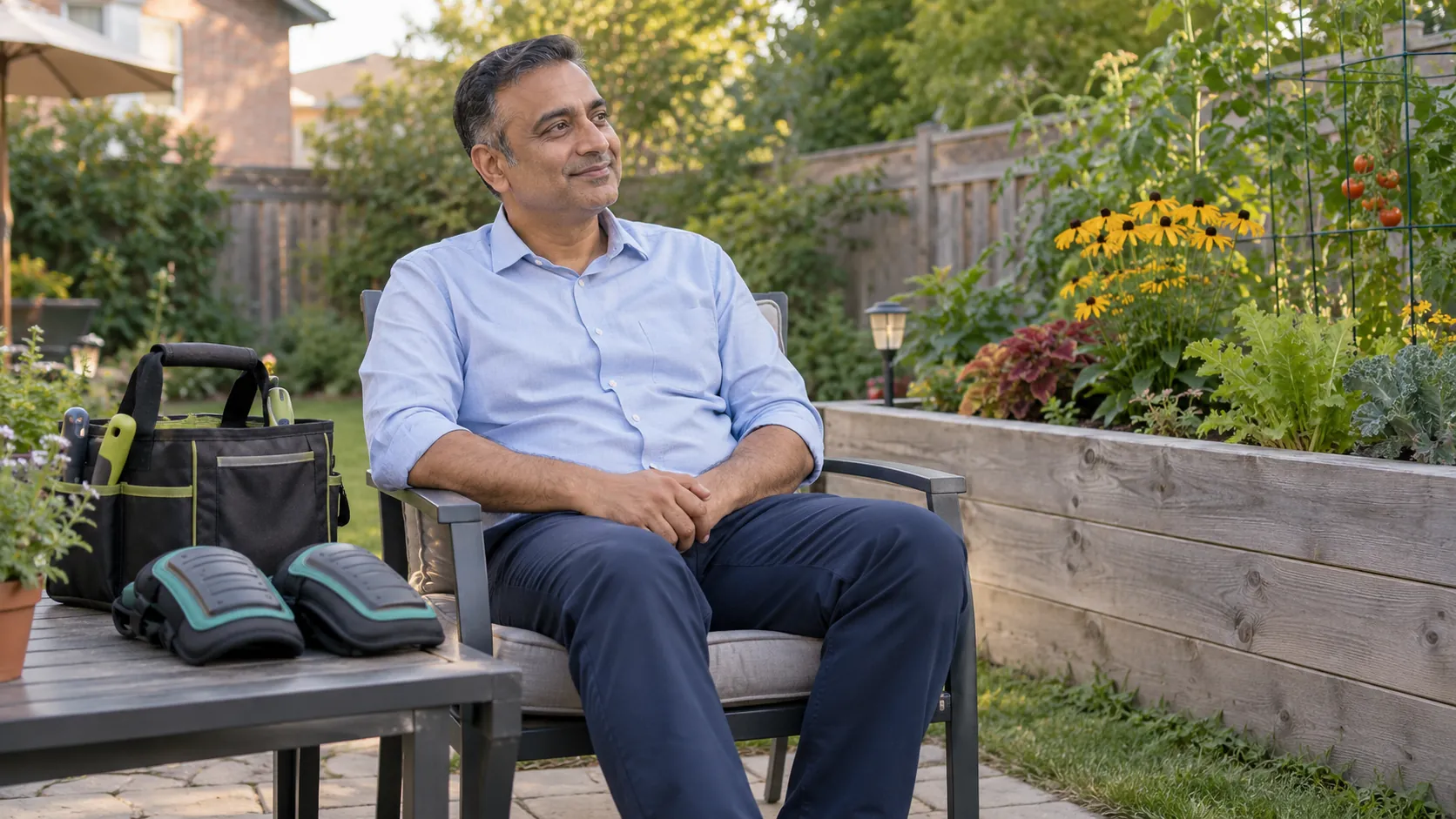
Swelling directly over the kneecap can be surprising, particularly when it appears after a period of kneeling or a bump you initially considered minor. The knee may look noticeably different even though you can still walk. That appearance deserves an explanation. Being able to get around does not establish what is swollen or whether the problem can be managed with a simple change in activity.
Prepatellar knee bursitis in Markham is one possible cause of this pattern. An assessment can help distinguish it from other knee problems and check whether infection or another condition needs medical treatment. The practical goal is to understand the swelling, address the activities that matter in your day, and know which changes should lead to prompt care.
What is the prepatellar bursa?
A bursa is a small fluid-containing structure that helps reduce friction between tissues. The prepatellar bursa lies in front of the kneecap, beneath the skin. When irritated, it can become swollen. The AAOS kneecap bursitis guide explains how repeated kneeling or a direct impact can be associated with this problem.
The location matters. Swelling over the front of the kneecap is different from simply feeling pain somewhere around the knee. Point out where the change appears and describe whether it developed suddenly or gradually. Avoid repeatedly pressing on the area to compare it with the other side. An examination can assess the swelling without turning the day’s routine into repeated checks of how tender it feels.
Know when the knee needs urgent medical attention
A hot, red, increasingly painful swollen knee, especially with fever or feeling unwell, needs prompt medical assessment because infection is a concern. Severe pain, inability to move the knee, inability to bear weight, or a major change after injury also warrants urgent advice. The NHS knee pain guidance outlines symptoms that should not wait for routine self-care.
Tell the provider about any cut, scrape, puncture, or broken skin near the swelling, as well as relevant health conditions or recent procedures. Do not assume that a small skin injury is unrelated. Do not attempt to drain the swelling, insert a needle, or squeeze fluid out at home. A suspected infection requires medical assessment and appropriate treatment, not a more intensive version of a home remedy.
Reconstruct the activity before the swelling appeared
Think about the days leading up to the change. Were you gardening, laying flooring, cleaning low surfaces, working on equipment, or spending time on the floor with children? Describe how long the activity lasted and whether the knee was resting on a hard surface. Include a direct knock even if it did not seem important at the time.
This history provides context; it does not prove that the task is the only cause. Tell the clinician about previous episodes, other joint symptoms, and medical conditions they ask about. A familiar label should not prevent consideration of a new problem. If this episode is hotter, more painful, or associated with feeling unwell, explain that difference clearly.
Ask what the examination needs to clarify
The clinician will consider the history and examine the knee. Depending on the findings, medical testing may be needed to investigate infection or another cause. The NHS bursitis information describes assessment and the possible use of fluid sampling or other tests. Ask what question a proposed test would answer in your case.
If fluid is removed by a qualified medical professional, clarify the care instructions afterward and when results or follow-up will occur. Do not assume that less visible swelling means the underlying issue has been fully resolved. Understand whether treatment is aimed at irritation, infection, or another diagnosis, because the next steps can differ substantially.
Identify the kneeling task that needs changing
An instruction to avoid pressure on the knee is easier to follow when attached to a specific task. Describe what you are doing, where the work is located, and whether kneeling is essential. Sometimes the object can be brought to a different level; sometimes the task needs another person or a different approved tool.
For a home project, consider postponing the kneeling stage while completing a separate task that fits your clinical advice. Do not replace kneeling with an unstable crouch, an awkward reach, or standing on unsuitable furniture. A useful change should make the activity manageable overall. It should not solve the knee-pressure problem by introducing another obvious difficulty elsewhere.
Treat knee pads as equipment with limits
Padding may be discussed for tasks involving kneeling, and the NHS bursitis guidance includes using padding and breaks to reduce repeated pressure. Ask when it is appropriate to resume the task and whether the chosen protection suits the setting. A pad is not permission to kneel on an actively painful or unassessed swollen area.
Check fit, cleanliness, and whether straps create pressure or irritation. Workplace protection must meet the relevant task requirements. If the pad moves around, interferes with safe movement, or fails to make an approved activity manageable, seek a different solution. Do not keep adding layers or tightening straps in an attempt to overcome a problem that needs reassessment.
Make gardening plans around the task height
Gardening may involve several different activities in the same session. Planting low beds, tending containers, watering, and sorting supplies do not require identical positions. Choose tasks that fit the advice you have received and arrange help for the parts you cannot manage. A raised planter may be useful in some settings, but it still needs a comfortable reach and stable access.
For a Markham homeowner preparing a seasonal garden, a practical plan might separate low-level planting from other work rather than finishing everything in one afternoon. That is an example of organization, not a rehabilitation prescription. Our guide to gardening comfort in Markham discusses broader task planning. Persistent swelling still deserves clinical attention regardless of the garden setup.
Discuss work requirements in concrete terms
If kneeling is part of your job, explain the surfaces, duration, protective equipment, and available alternatives. Advice intended for an occasional household task may not address a full shift. Ask the clinician to clarify functional limits and use the workplace’s normal process for temporary adjustments or an ergonomic review.
Possible discussions might involve task rotation, approved equipment, or a change in sequence, but the appropriate choice depends on the job. Do not modify machinery or safety equipment without authorization. Agree on a review point so the arrangement can reflect recovery and medical findings. A vague instruction to be careful leaves too much room for different interpretations during a busy day.
Keep ordinary movement separate from pressure on the swelling
Ask which daily activities are appropriate and whether any movement needs to be limited temporarily. The answer may depend on the cause of the swelling and whether there was an injury. Do not assume that avoiding kneeling means the entire leg must be kept still, or that comfortable walking clears you for every other activity.
If an exercise programme is recommended, clarify its purpose and starting amount. Tell the provider if a movement directly presses on the swollen area or increases symptoms. A routine chosen for another knee diagnosis may not fit this problem. The distinction is especially important when an exercise is commonly performed on hands and knees or with the front of the knee against the floor.
Ask about symptom relief in the context of your health
Discuss pain relief with the clinician or pharmacist, including other medicines and relevant conditions. If cooling or another comfort measure is recommended, follow instructions for duration and skin protection. More intense or prolonged treatment is not automatically more helpful. Avoid using symptom relief to make it possible to continue the same irritating task without review.
If antibiotics or another medical treatment is prescribed, follow the plan and clarify what response should be expected. Know when to contact the provider if symptoms are not improving or are worsening. Do not share medication or use leftovers from a previous illness. The treatment should address the assessed cause, with follow-up appropriate to that diagnosis.
Measure progress by more than appearance
At review, describe pain, warmth, swelling, movement, and the tasks you can manage. Note whether the knee is improving while you follow the recommended changes. Avoid repeatedly testing kneeling just to see whether the swelling has settled enough. Ask what criteria should guide resuming the task and how to introduce it appropriately.
A brief record can help when symptoms fluctuate. You might note the activity performed, whether direct pressure occurred, and any change afterward. There is no need to photograph the knee constantly or press on it to generate a score. Report significant changes promptly rather than waiting for a scheduled appointment simply to complete a longer record.
Review recurrent episodes instead of accepting them as normal
If swelling keeps returning, bring the pattern back to a clinician. Describe whether it follows the same task, appears without a clear trigger, or has changed over time. Recurrent symptoms may require another look at the diagnosis and the management plan. Repeatedly buying new padding without reassessment can leave the central question unanswered.
If specialist treatment is discussed, ask why it is being considered and what alternatives remain. Understand any procedure’s purpose, risks, and practical recovery requirements. The appearance of a swollen bursa alone does not determine the right next step. The decision should reflect the findings, symptoms, health background, and response to appropriate initial care.
Make the first change easy to carry out
Before leaving an appointment, identify the most important activity adjustment, any medical treatment, and the follow-up arrangements. Tell the provider if work or home responsibilities make the advice difficult to follow. It is better to solve that problem together than to leave with a plan that cannot be used in your actual day.
You can contact Prime Spine about an appropriate assessment for a musculoskeletal concern. Hot, red, severely painful swelling or symptoms suggesting infection require prompt medical care. This article provides general education; the cause of kneecap swelling and the appropriate treatment must be established through individual assessment.