
Pregnancy changes how movement feels, but it does not create one posture that every pregnant person must maintain. The body adapts across months: the centre of mass shifts, joints may feel different, breathing changes and energy can vary from one day to the next. A position that was comfortable in the first trimester may become impractical later, and an exercise that felt unfamiliar early on may become a valued part of the week.
The most useful approach is adaptable rather than corrective. You do not need to hold the shoulders back, flatten the lower back or avoid bending. You do need to consider symptoms, medical history, balance, heat, fatigue and the physical demands of work and caregiving.
For pregnant people in Markham, movement may happen at a community facility, on neighbourhood paths, at work or at home. The Canadian guideline provides a strong starting point, while an obstetric care provider and qualified exercise professional can individualize it.
Begin with screening, not fear
The joint Society of Obstetricians and Gynaecologists of Canada and Canadian Society for Exercise Physiology guideline recommends that pregnant individuals without contraindications be physically active throughout pregnancy. CSEP’s Get Active Questionnaire for Pregnancy helps identify the smaller group who should consult an obstetric healthcare provider before beginning or continuing activity.
This is different from requiring every pregnant person to obtain blanket “clearance.” Most can be active, but screening matters because some medical and obstetric conditions change the plan.
Share relevant symptoms, pregnancy complications, medications and previous activity with your provider. If advice is to restrict exercise, ask what types and intensities are restricted, for how long and what movement remains appropriate.
Understand the Canadian activity target
The guideline advises pregnant individuals without contraindications to accumulate at least 150 minutes of moderate-intensity activity per week over at least three days, while encouraging daily activity. It recommends combining aerobic and resistance training, with yoga or gentle stretching as possible additions.
This is a weekly target, not a pass-fail test. Someone previously inactive can begin below it and build gradually. Activity can be divided into manageable sessions. A ten-minute walk still contributes.
Moderate intensity generally means breathing is more noticeable while conversation remains possible. Heart-rate formulas can be less useful than individual response, medication and clinical guidance.
The first trimester may be limited by symptoms, not size
Early pregnancy may not visibly change movement, yet nausea, fatigue, dizziness and breast tenderness can alter the day. Reduce session length, choose cooler environments and schedule activity when energy is usually better.
Previously active people may continue many familiar activities when there are no contraindications, but the goal is health rather than achieving peak competition fitness. People beginning exercise can start with walking, stationary cycling, light resistance or another comfortable low-risk option.
Hydrate and avoid exercising on an empty stomach if that worsens nausea. Severe vomiting, inability to keep fluids down or marked dizziness requires medical advice.
The second trimester often invites adjustment
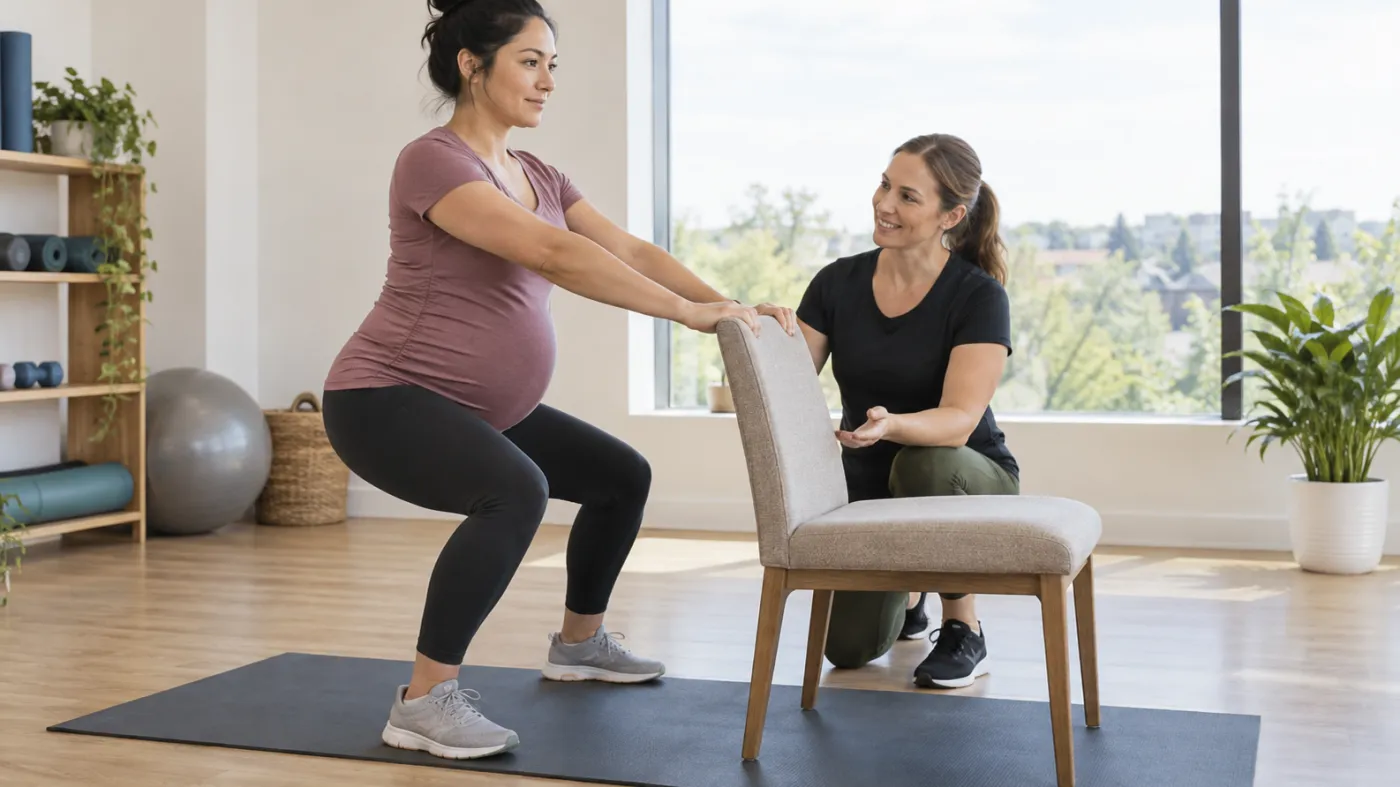
As the abdomen grows, balance and exercise setup may change. Widening the stance can make squats more comfortable. A chair, wall or rail can provide support for split-stance and balance work. Reduce range when a movement causes pressure, instability or pain.
The guideline notes that pregnant people who feel light-headed, nauseated or unwell while exercising flat on the back should modify the position to avoid supine exercise. Use an incline, side-lying position, seated option or standing alternative according to comfort and professional advice.
Do not apply a single calendar rule without considering symptoms. The key is to respond promptly if lying flat causes discomfort or circulation-related signs.
The third trimester may favour shorter, more frequent sessions
Later pregnancy can bring breathlessness, pelvic pressure, sleep disruption and reduced tolerance for long sessions. Several brief walks or strength blocks may be more practical than one continuous workout.
Use stable surfaces and allow more time for transitions. Avoid environments where a fall would have serious consequences. Activities with collision risk, uncontrolled speed or a high chance of falling may no longer be appropriate even if they were familiar before pregnancy.
Intensity and duration can decrease without the movement losing value. Maintaining the habit and comfort may be the appropriate goal near delivery.
Strength training can support daily demands
Resistance exercise is included in Canadian recommendations. Useful patterns include squatting to a chair, rows, presses, step-ups, hip hinges and carries with manageable loads. These reflect tasks such as stairs, lifting groceries and preparing to carry baby equipment.
Use a resistance that allows smooth breathing and controlled repetitions. Adjust stance and range for comfort. Machines, bands and free weights can all be used when setup is safe.
Avoid breath-holding and maximal-effort lifting unless specifically advised and supervised within an appropriate athletic context. Pregnancy is not the time to prove an old personal record. Experienced lifters may maintain more training than beginners, but both need individual monitoring.
“Posture” should mean options
The growing abdomen can change the apparent curve of the lower back and position of the rib cage. These are ordinary adaptations, not evidence that the body is failing. Trying to tuck the pelvis or brace the core constantly may create more tension.
Use several comfortable positions. Sit back with support, perch forward briefly, stand, walk and change sides. At a desk, bring the keyboard and screen close enough that the work does not require a prolonged reach. A footrest can help when chair height leaves the feet unsupported.
The best posture is often the next tolerable posture. Movement breaks are more realistic than holding one ideal shape.
Adapt lifting rather than banning it
Bending and lifting remain part of life, especially for people caring for another child. Bring the object close, create a stable stance and use legs, hips and back together. Turn with the feet when moving a substantial load rather than twisting quickly while planted.
As the abdomen grows, carrying directly in front may become awkward. Divide loads, use two hands or carry balanced smaller items. Store frequently used objects between knee and shoulder height where practical.
When lifting a toddler, invite the child to climb onto a stable surface first when age and safety allow. A high chair or crib should be adjusted according to manufacturer instructions, not improvised in a way that creates another hazard.
Use breath and abdominal pressure without chasing a flat stomach
The abdominal wall expands during pregnancy. A midline bulge or doming may appear during some tasks, but its meaning depends on context and symptoms. Rather than fearing every visible change, use an exhale during exertion, reduce load or range if needed and seek pelvic-health guidance when concerned.
Core training can include carries, controlled limb movements, supported squats and other whole-body exercises. Traditional abdominal exercises are not universally forbidden, but position, comfort and individual factors matter.
Pain, significant pelvic pressure, urinary leakage or a sense of heaviness should prompt a conversation with a qualified provider rather than more bracing.
Pelvic-floor training needs coordination
The Canadian guideline notes that pelvic-floor muscle training may be performed daily to reduce urinary incontinence risk and recommends instruction for correct technique. More squeezing is not always better. The muscles need to contract and relax, coordinate with breathing and respond to daily tasks.
A pelvic-health physiotherapist can assess symptoms such as leakage, pelvic pain, heaviness, painful intercourse or difficulty relaxing. Generic instructions may not suit someone with an overactive or painful pelvic floor.
Pelvic symptoms are common, but “common” does not mean they must be silently accepted.
Modify walking and standing for comfort
Walking is accessible and easy to dose. Choose a predictable surface, supportive footwear and a route with turn-around options. Shorten the stride or duration if pelvic or back symptoms rise. A support belt helps some people temporarily, but fit and purpose should be discussed with a provider.
At work, alternate standing with sitting and walking. A standing desk does not require all-day standing. If a job involves long shifts, lifting or safety-sensitive duties, request an occupational assessment and appropriate accommodations.
Markham’s weather matters. In heat and humidity, use cooler times or an indoor setting, drink appropriately and avoid overheating. In winter, choose cleared routes or indoor walking when ice changes fall risk.
Find sleep positions that are workable
Sleep can become difficult due to reflux, fetal movement, urinary frequency or discomfort. Pillows may support the abdomen, between the knees or behind the back. Side sleeping is commonly recommended later in pregnancy; discuss individualized concerns with the obstetric provider.
Do not panic after waking in a different position. People naturally move during sleep. Reposition comfortably and return to rest.
Persistent insomnia, loud snoring, gasping or severe daytime sleepiness deserves medical attention. Sleep problems are not always solved with another pillow.
Manage back and pelvic-girdle discomfort
Back pain and pelvic-girdle pain can occur during pregnancy, but the experience varies. Avoid language that the pelvis is unstable or “out.” The joints remain supported, and symptoms do not mean the body cannot cope with pregnancy or birth.
Modify the aggravating dose while maintaining comfortable activity. Shorter walks, a different stance, reduced asymmetrical carrying or more frequent breaks may help. Strength and mobility work can be individualized.
Manual therapy may provide short-term relief for some people when appropriately assessed and consented, but it should be part of a broader plan that includes education and self-management. The practitioner should understand pregnancy-related precautions and communicate with the obstetric team when needed.
Know when to stop exercise and contact a provider
Stop activity and seek prompt obstetric advice for vaginal bleeding, regular painful contractions, amniotic fluid leakage, persistent dizziness, chest pain, severe shortness of breath before exertion, calf pain or swelling, severe headache, muscle weakness affecting balance or other symptoms identified by your care team.
Reduced fetal movement later in pregnancy, signs of pre-eclampsia or feeling significantly unwell require timely medical assessment. Follow the emergency instructions provided by your obstetric team.
These warning signs are not included to make movement frightening. They help separate normal exercise sensations—warmth, increased breathing and muscle effort—from symptoms that need care.
Plan for activity after birth before it arrives
Recovery is individual and influenced by delivery, complications, sleep, pelvic-floor symptoms, feeding and support. The return to activity should not be driven by pressure to “bounce back.” Ask about postpartum movement guidance, warning signs and pelvic-health resources during pregnancy.
The 2025 Canadian Guideline for Physical Activity, Sedentary Behaviour and Sleep throughout the First Year Postpartum now provides current national recommendations. It can support conversations with the healthcare team after delivery.
Arrange practical help for lifting, meals and rest. Social support is part of physical recovery.
Choose support that respects pregnancy
A qualified professional should ask about gestational stage, complications, symptoms and previous activity. They should explain recommendations and avoid guaranteeing easier labour or a pain-free pregnancy. No single posture, adjustment or exercise can promise an outcome.
Care should make you feel informed and capable. You can ask for modifications, decline a technique and involve your obstetric provider. The plan should change as pregnancy changes.
Pregnancy-related movement and posture in Markham is not about keeping the body aligned to a fixed ideal. It is about continuing appropriate activity, adapting tasks and recognizing when symptoms need medical input. Movement can remain a source of strength and confidence when the plan respects both the pregnancy and the person living it.
This article provides general education and does not replace prenatal screening or advice from your obstetric healthcare provider. Urgent pregnancy symptoms require prompt medical care.