
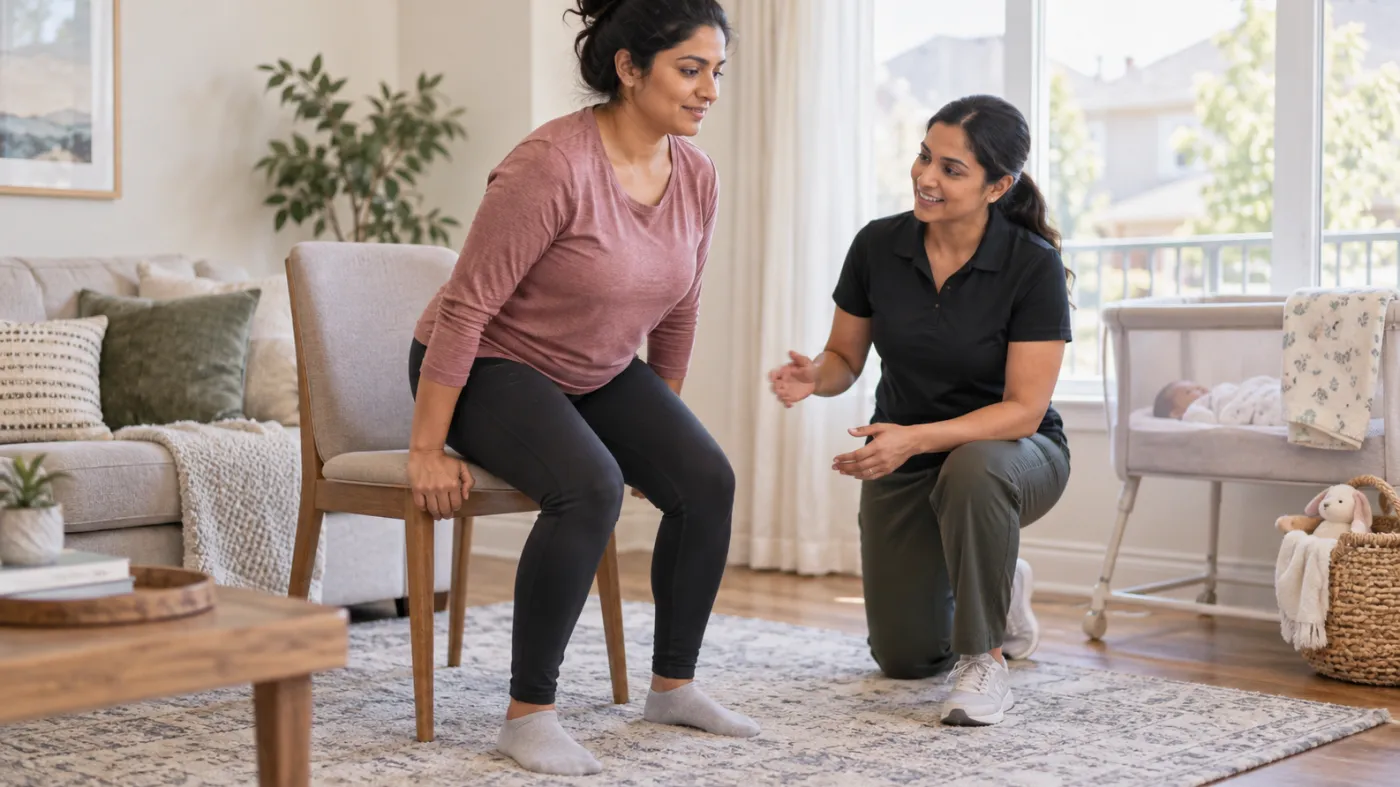
The weeks after birth combine physical healing with a new workload that has no tidy training schedule. Feeding positions may be held for long periods. A baby, carrier and supplies are lifted throughout the day. Sleep is interrupted, and recovery occurs while the body is already being asked to adapt.
Back, pelvic and neck discomfort can be part of this period, but pain should not be dismissed as something every new parent must simply tolerate. The details matter: the type of birth, healing tissues, pelvic-floor symptoms, previous health, feeding demands and available support all influence what feels manageable.
For families looking for postpartum back and pelvic comfort guidance in Markham, there is no universal six-week reset. Recovery is individual and often non-linear. The most useful plan respects medical healing, reduces unnecessary strain in daily tasks and gradually rebuilds the capacity needed for caregiving, work and personally meaningful activity.
Postpartum recovery is more than a date on the calendar
A routine follow-up date does not mean every tissue has finished healing or that everyone should resume the same exercise. Vaginal birth, assisted birth and caesarean birth place different demands on the body. Perineal tears, abdominal incisions, bleeding, anemia and medical complications can change the early plan.
Someone who trained throughout an uncomplicated pregnancy may still need a gradual return. Someone who was less active before birth can also begin moving without having to “get fit” immediately. Current capacity, symptoms and medical guidance matter more than comparison with social-media timelines.
Think in phases rather than deadlines. The first phase may focus on comfortable breathing, short walks and basic self-care. Later phases restore strength, impact tolerance and longer activity. Moving between phases should be based on response, not pressure to reclaim a previous body.
Know the postpartum warning signs
Musculoskeletal advice should never obscure medical concerns after birth. Seek urgent medical care for chest pain, difficulty breathing, seizure, fainting or thoughts of harming yourself or the baby. Heavy bleeding that soaks through pads rapidly, clots larger than expected or bleeding that suddenly increases needs prompt assessment.
Contact a medical professional urgently for a severe or worsening headache, vision changes, marked swelling, upper abdominal pain, fever or feeling very unwell. Postpartum blood-pressure complications can occur even when pregnancy blood pressure was normal.
One-sided calf swelling, warmth, redness or pain can indicate a blood clot. Increasing incision redness, opening, drainage, foul-smelling discharge or worsening pelvic pain may indicate infection or healing problems. New loss of bladder or bowel control, numbness around the saddle area or rapidly progressing leg weakness also requires urgent assessment.
Mental health is health. Persistent hopelessness, severe anxiety, frightening intrusive thoughts or inability to function deserves prompt support. In an immediate crisis, call emergency services. A person does not need to wait for a scheduled postpartum visit to ask for help.
Begin with a realistic symptom map
Notice where discomfort occurs and which task brings it on. Back pain during prolonged feeding may require a different strategy from pelvic heaviness during walking. Incision sensitivity with rolling out of bed differs from sharp leg pain that travels below the knee.
Record urinary leakage, urgency, bowel difficulty, painful intercourse, pelvic pressure or a feeling of bulging. These symptoms are common enough to discuss openly, but “common” does not mean they must be ignored. Pelvic health physiotherapy or medical assessment may help.
Include the daily workload. How many stairs are used? Is the changing surface on another floor? Is a heavy stroller lifted into a vehicle? Is there another child to carry? Rehabilitation should fit the home and caregiving demands rather than exist only as a separate exercise routine.
Make getting out of bed more comfortable
After abdominal surgery or when the trunk is sore, a side-rolling strategy may reduce effort. Bend the knees, roll as a unit toward the side, let the legs move over the edge and use the arms to press into sitting. Pause before standing if light-headed.
This is a comfort option, not a rule that the spine must never twist. As healing progresses, natural movement can return. Early on, keeping commonly used items within reach may reduce repeated awkward reaching during the night.
Getting down to a very soft sofa can also be difficult. A firmer chair with arm support may make early sit-to-stand transfers easier. Add cushions only if they remain secure and do not create a fall risk while carrying the baby.
Set up feeding around the parent
Breastfeeding, chestfeeding and bottle-feeding can all involve sustained positions. Bring the baby toward the body with pillows or other support rather than repeatedly bending the head and trunk toward the baby. Support the forearms so the shoulders do not hover.
There is no single perfect feeding posture. Upright sitting, side-lying or a reclined position may each be appropriate depending on healing, infant needs and professional feeding guidance. Alternate positions when possible so the same tissues are not loaded in the same way every session.
Place water, phone and burp cloth within reach before beginning. After feeding, take a brief movement break: stand, let the arms relax and move the neck gently. The aim is variation, not a posture correction ritual.
Persistent breast or nipple pain, fever, redness or feeding difficulty should be discussed with the appropriate medical or lactation professional. A neck exercise cannot resolve every source of feeding discomfort.
Lift the baby with a simple sequence
Before lifting, move close enough that the baby is not reached for at arm’s length. Place the feet in a stable position, exhale gently during the effort and use the legs and hips as comfortable. Keep the baby supported close to the body during the transition.
This does not require one rigid technique. Sometimes a lunge stance suits a low surface; at other times a squat or hinge works better. Use the strategy that respects current healing and the furniture layout.
When lowering into a crib, keep the baby close until the last practical moment and use the rail only as designed. Do not stand on an unstable object to compensate for a deep crib. If the setup is persistently difficult, review safe manufacturer settings and ask another adult to help while strength is rebuilding.
Treat the car seat as equipment, not a handbag
An infant car seat plus baby can be an awkward, asymmetrical load. Whenever possible, carry it with two hands close to the body for short distances or use a compatible stroller system. Avoid long carries with the seat hanging from one elbow if they provoke back, wrist or shoulder symptoms.
When placing the seat in a vehicle, turn the whole body toward the door and get close. Use a split stance and reposition the feet rather than twisting while reaching. The exact method depends on vehicle height and the seat system.
Practise with the empty seat first. A small setup change—moving another bag, opening the door fully or parking with more space—can reduce awkward load more than a cue about abdominal bracing.
Understand the pelvic floor beyond “do Kegels”
The pelvic floor supports pelvic organs and contributes to bladder, bowel and sexual function. Pregnancy and birth can affect its strength, endurance, coordination and ability to relax. A stronger squeeze is not the answer for every symptom.
Some people need help learning an effective contraction. Others have a pelvic floor that is overactive, painful or unable to relax fully. Repeated tightening may aggravate those presentations. Pelvic pain, difficulty emptying the bladder or bowel, painful intercourse and persistent pressure deserve individualized assessment.
A gentle starting point may involve noticing breath and allowing the pelvic floor to respond without straining. During an exhale, some people can practise a small lift; during inhalation, the area should be allowed to soften. Avoid holding the breath or gripping the buttocks as hard as possible.
The Public Health Agency of Canada’s postpartum guidance supports pelvic-floor exercise and targeted care for ongoing incontinence. Technique and follow-up matter. An assessment by a pelvic health physiotherapist can clarify whether strengthening, relaxation, coordination or another medical referral is appropriate.
Put abdominal separation in context
Diastasis recti describes increased distance between the two sides of the rectus abdominis along the midline connective tissue. It is a common pregnancy-related change. The width of the gap is only one feature; tension, function, symptoms and the person’s goals also matter.
Avoid fear-based instructions that ban every sit-up, plank or rotation forever. Early exercise can begin with breathing, comfortable limb movement and functional tasks, then progress based on pressure control and response. Doming or bulging may help adjust exercise difficulty, but it is not proof that damage is occurring.
If there is persistent pain, significant functional difficulty, pelvic-floor symptoms or uncertainty about the abdominal wall, seek an individualized assessment. A binder may provide temporary comfort for selected people, particularly after surgery, but it does not replace progressive strength.
Reconnect breathing and effort
Breath-holding can increase internal pressure and make a task feel more forceful. Practise exhaling during the hardest part of a sit-to-stand or lift. The inhale can occur during the easier return. This is a coordination strategy, not a requirement to breathe perfectly during every movement.
Begin with normal, quiet breathing. Aggressive abdominal hollowing can create more tension without improving function. The trunk needs to generate different amounts of pressure for different tasks; rehabilitation helps rebuild that adaptability.
If dizziness, unusual shortness of breath or chest symptoms occur with light activity, stop and seek medical advice. Postpartum fatigue should not automatically explain concerning cardiopulmonary symptoms.
Use walking as a gradual re-entry
Walking is accessible, but a stroller outing can still be a substantial load soon after birth. Start with a distance that feels manageable during the walk and later that day. A five- or ten-minute loop near home may be enough initially.
Watch for increasing pelvic heaviness, leakage, pain, bleeding or pronounced fatigue. These responses suggest that duration, pace, hills or pushing resistance should be reduced. They are information, not personal failure.
Markham weather and sidewalk conditions influence the dose. Indoor walking may be a better choice during extreme heat, ice or poor air quality. A stroller does not provide guaranteed balance on slippery ground; prioritize cleared routes and appropriate footwear.
Increase one feature at a time. Add a few minutes before adding hills and speed together. Rest days or lighter days remain useful even when a short walk felt good.
Rebuild strength from everyday patterns
Sit-to-stands, supported squats, rows, light carries and step-ups can prepare the body for caregiving. Start with a stable setup and a range that respects healing. A light resistance band or household object may be enough.
Strength training should leave the person able to care for the baby afterward. An exhausting session that makes every lift difficult for two days is not an efficient starting point. Two brief sessions in a week may be more realistic than one long workout.
Progress can mean using less hand support, adding a repetition or increasing resistance slightly. It can also mean performing the task after a walk or while managing an ordinary home setup. Capacity grows through repeatable challenges.
For caesarean recovery, follow surgical guidance and obtain medical clearance where appropriate. Incision pain, opening, drainage or increasing redness should be medically reviewed rather than trained through.
Return to running and impact in stages
Running adds repeated impact and requires lower-limb, trunk and pelvic-floor capacity. The calendar alone does not establish readiness. Begin with comfortable walking, strength and lower-level impact such as controlled marching or small hops when appropriate.
Symptoms such as pelvic heaviness, urine leakage, pain, bleeding or a feeling of poor support indicate that the current dose needs assessment. Leaking during exercise is not a sign that someone must give up running, but it is a reason to seek pelvic health guidance.
A return may use walk-run intervals on a level route. Keep the first sessions short, leave recovery time and avoid increasing speed, distance and hills simultaneously. Supportive clothing or footwear may improve comfort but cannot substitute for progressive capacity.
Athletes should resist using pre-pregnancy performance as the first-week target. A staged return protects consistency and can ultimately support stronger training.
Include the upper body in recovery
Postpartum discomfort is not limited to the pelvis and back. Wrists and thumbs may become irritated by repeated feeding, lifting and phone use. Alternate hand positions, support the baby’s weight through the forearm when possible and avoid holding the wrist at its end range for long periods.
Shoulders and upper back benefit from rows, gentle presses and varied reaching as tolerated. Do not assume the upper body only needs stretching. It also needs strength for carrying and feeding.
If hand numbness, marked weakness or dropping objects persists, seek assessment. Swelling and nerve sensitivity can occur during and after pregnancy, but the pattern should still be evaluated.
Use support as part of the physical plan
Recovery is affected by whether someone can rest, eat, attend appointments and share caregiving. Asking another adult to manage laundry, carry the stroller or take one feeding shift is not separate from rehabilitation. It changes the physical dose.
Place supplies on more than one floor to reduce stair trips. Use a lightweight basket rather than carrying many loose items. Accepting help can create the recovery space needed for movement practice and sleep.
Partners and family members can also learn the exercise plan so it is easier to protect a short practice window. The person recovering should not have to earn support by first reaching exhaustion.
Work with interrupted sleep, not against it
Sleep deprivation can increase pain sensitivity, reduce coordination and make exercise feel harder. Advice to “get eight hours” is often unrealistic with a newborn. Focus on opportunities: share night tasks when possible, rest during a predictable window and reduce optional workload.
On a very poor sleep day, use a shorter walk or lighter strength session. Maintaining the routine at a reduced dose can be more helpful than forcing a hard workout or abandoning movement for the week.
Persistent insomnia even when the baby sleeps, severe anxiety or mood changes should be discussed with a healthcare professional. These symptoms deserve support, not another posture strategy.
What an individualized assessment can offer
A postpartum musculoskeletal assessment may review transfers, walking, lifting, abdominal-wall function, hip and trunk strength and the tasks that provoke symptoms. A pelvic health assessment may also address bladder, bowel, prolapse and sexual function with explicit consent.
The clinician should explain every proposed examination and respect the right to decline. Internal pelvic examination is not required for every concern and should never occur without informed consent. Trauma-informed care gives the patient control over pace and options.
The care plan should coordinate with the obstetric, midwifery or primary-care team when medical healing or complications are involved. Chiropractic or other manual care may be considered for selected musculoskeletal symptoms after appropriate screening, but it should complement education and active rehabilitation.
Measure progress by participation
Useful measures include walking duration, comfort feeding, ease rising from the floor, leakage frequency and confidence lifting the baby. Weight, appearance and abdominal-gap width do not capture the whole recovery.
Check progress weekly rather than comparing every day. Feeding clusters, growth spurts and poor sleep can change symptoms temporarily. A flare after an unusually demanding day does not erase adaptation.
Return to the previous tolerable dose, review what changed and progress again. Seek reassessment if symptoms are worsening, function is shrinking or the plan does not address the activities that matter.
A practical next step in Markham
Choose one caregiving task and one personal activity you want to make easier. That might be lifting the car seat and walking for 20 minutes, or feeding comfortably and returning to a beginner strength class. Note the symptoms that currently limit each task.
Bring that information, the birth history and current medical guidance to an appropriately qualified professional. Ask for a staged plan and clear signs for progression or reassessment.
Postpartum recovery is not a race back to an earlier version of the body. It is a period of healing and adaptation while learning an entirely new set of physical demands. With practical support, progressive exercise and care that listens, parents in Markham can rebuild comfort and capacity at a pace that fits their real lives.