
The first few steps out of bed can be the hardest part of plantar heel pain. The heel may feel sharp or bruised, improve after moving, then become sore again after a long day on the feet. That pattern can make walking feel unreliable even when the foot looks completely normal.
Plantar heel pain is often called plantar fasciitis, although the condition is not always a simple inflammatory problem. The plantar fascia is a strong band of tissue that helps support the arch and transmit load during walking. Symptoms commonly develop when the demand placed on the foot changes faster than its current capacity.
For someone managing plantar heel pain in Markham, the most useful plan is usually broader than rolling the foot on a ball. It considers recent activity, calf and foot strength, footwear, work demands and the dose of walking or running. Recovery can take time, but a clear progression makes the process less mysterious.
Recognize the common pattern
Typical plantar heel pain is felt near the inside underside of the heel. It is often most noticeable with the first steps after sleep or a period of sitting. The area may loosen after several minutes, then become more sensitive with prolonged standing, walking or running.
The pattern matters more than one tender point. Note whether discomfort is directly under the heel, farther into the arch or behind the heel near the Achilles tendon. Burning, tingling or numbness may suggest nerve involvement rather than a straightforward plantar-fascia presentation.
Record recent changes. A new job on hard floors, more daily steps, a sudden increase in running, different shoes or a return to sport can all raise demand. Weight change, reduced sleep and recovery from illness may also affect how much load is tolerated.
Heel pain has more than one possible source
Not every sore heel is plantar fasciitis. The heel pad can become irritated. The Achilles tendon, a small nerve, a joint or bone can produce overlapping symptoms. Inflammatory arthritis and other medical conditions sometimes involve the feet.
Pain after a significant fall or impact, inability to bear weight, marked swelling or a visible change in shape requires prompt assessment. A hot, red foot with fever needs urgent medical care. People with diabetes, reduced circulation, loss of sensation or a wound should seek timely professional review rather than relying on self-treatment.
Constant night pain, unexplained weight loss or symptoms that do not behave like a loading problem also warrant medical assessment. Sudden calf swelling, chest pain or shortness of breath is an emergency and should not be treated as a foot issue.
What an assessment may include
A clinician should ask where the pain is located, when it is worst, how long it has been present and what changed before it began. Work, sport, footwear and previous ankle injuries are relevant. The examination may include walking, ankle range, calf strength, foot movement and tenderness.
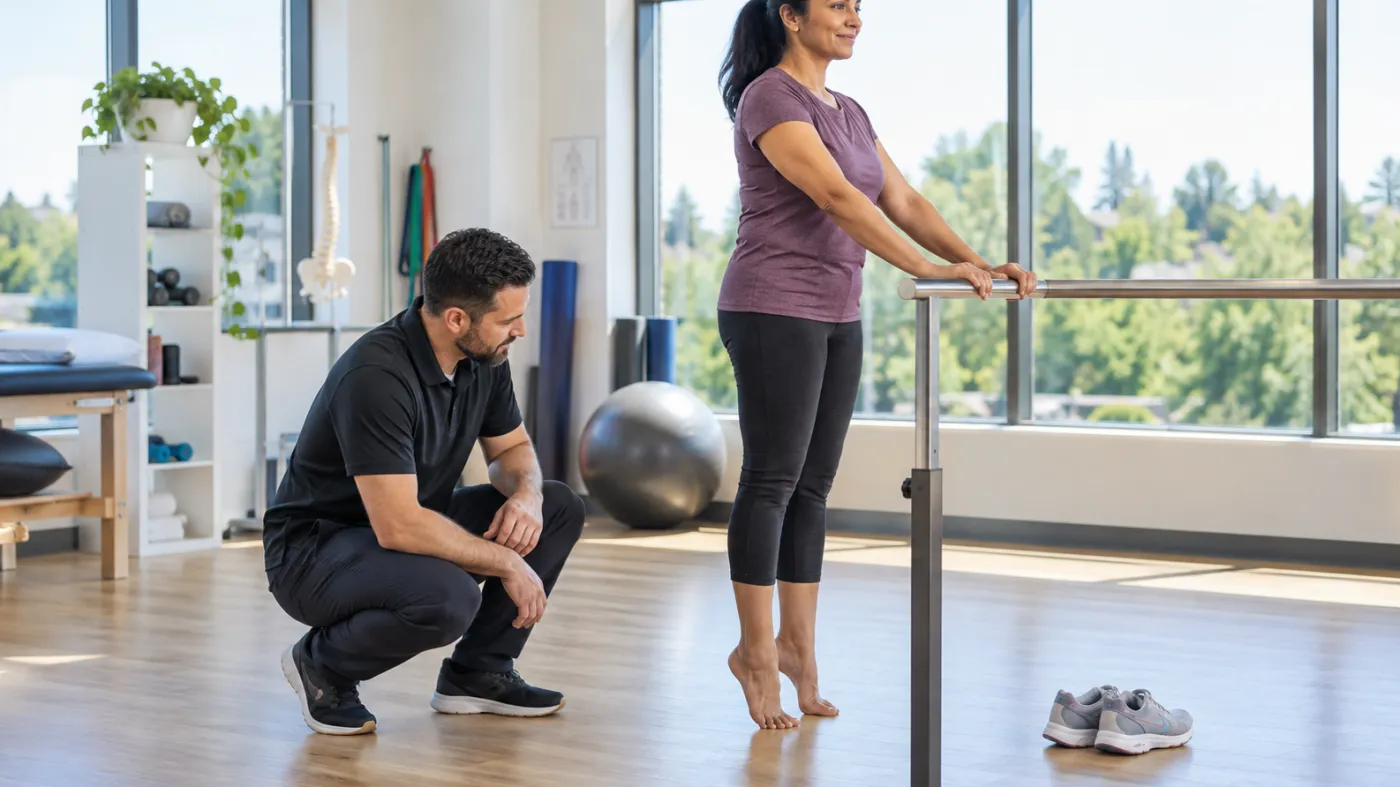
Single-leg balance and a calf raise can show how the foot and ankle handle load. The clinician may compare how many controlled raises each side can perform, but the test should not be pushed to a severe flare. Hip and knee function may also be considered because walking is a whole-leg task.
The 2023 clinical practice guideline for heel pain recommends using functional measures and considering other diagnoses when the presentation does not fit. A good assessment should explain both the likely pattern and the reasons another condition is less likely.
Imaging is not automatically required
Plantar heel pain is often diagnosed from the history and physical examination. X-rays may reveal a heel spur, but spurs can exist without pain and do not prove that a sharp piece of bone is causing every step to hurt.
Imaging may be considered after trauma, when a stress fracture or other condition is suspected, or when symptoms do not respond as expected. Ultrasound and MRI can show soft tissues, but a picture should answer a clinical question rather than substitute for one.
Ask how the result would change the plan. If exercise, footwear changes and load management remain appropriate regardless of the image, starting those measures may be more useful than waiting for a scan.
Map the full weekly load
People often count workouts but miss the rest of the demand. Standing through a shift, walking through a large workplace, coaching on weekends and doing errands all load the heel. A new running session may be only one part of the total.
For one week, estimate time on the feet and note the surfaces involved. Identify the busiest day and whether symptoms are worse that evening or the next morning. This gives a starting point for modification.
The answer is rarely complete rest. Reduce the sharpest spike while preserving tolerable activity. Shorter walks spread through the day may be easier than one long outing. A runner may temporarily choose flatter routes, reduce speed or use run-walk intervals.
Use the next-morning response as information
The heel can feel acceptable during activity and become more painful after rest. For that reason, judge a new exercise or walking dose both immediately and the following morning.
A small, short-lived increase does not necessarily mean harm. A major increase in first-step pain, a new limp or symptoms that remain elevated for several days suggests that the dose was too high. Return to the last manageable level, then progress in a smaller step.
Avoid testing the heel with repeated hard presses throughout the day. Tenderness can persist even while function improves. Walking tolerance and recovery are more useful measures.
Stretch the plantar fascia and calf with purpose
The 2023 guideline supports plantar-fascia-specific and calf stretching for short- and long-term pain reduction. A plantar-fascia stretch can be performed by gently pulling the toes back until tension is felt along the sole. It is often used before the first morning steps or after sitting.
Calf stretching may address limited ankle dorsiflexion. A straight-knee variation emphasizes one part of the calf; a slightly bent-knee version changes the emphasis. The heel stays supported and the stretch should feel firm but not sharp.
Long, aggressive stretching is not required. Use a tolerable hold and repeat consistently. If stretching creates burning, tingling or a prolonged flare, stop and seek guidance because the presentation may not be a simple flexibility problem.
Build calf and foot capacity
Stretching can help symptoms, but the foot also needs strength for repeated steps. A supported calf raise is a practical starting point. Rise slowly through the forefoot, pause briefly and lower with control. Begin with both legs if a single-leg version is too demanding.
Progress by reducing hand support, shifting more weight to the symptomatic side, increasing repetitions or adding resistance. Change one variable at a time. The goal is a calf that can repeatedly manage walking or running, not one heroic set.
Foot-strengthening work may include controlled toe movements, arch control or short-foot exercises. These should not become cramping contests. They complement, rather than replace, larger calf and leg strengthening.
Squats, step-ups and balance exercises may be added because the foot functions within the entire lower limb. A runner will eventually need hopping or faster work; a retail worker may need endurance for prolonged standing.
Choose footwear for comfort and context
There is no universal best shoe for plantar heel pain. A comfortable, secure shoe with enough room and a sole appropriate for the surface is a reasonable starting point. Some people prefer more cushioning during an irritable phase; others feel better in a firmer platform.
Avoid changing several footwear features at once. Switching abruptly from a supportive work shoe to long periods barefoot, or from a higher-drop running shoe to a minimalist one, changes load. Transitions should be gradual even when the new shoe is marketed as corrective.
At home, consider whether hard floors and prolonged barefoot time increase symptoms. A supportive indoor shoe or slipper may help temporarily. This does not mean the foot must be protected forever; barefoot tolerance can be rebuilt later if it matters to the person.
Understand orthoses and taping
Prefabricated or custom foot orthoses may improve symptoms for selected people, especially when combined with other care. They are not a permanent realignment of the skeleton. The 2023 guideline advises against using orthoses as an isolated treatment.
Taping can provide short-term relief and may help someone walk or exercise more comfortably. It is a trial, not proof that the arch is failing. Stop if the skin becomes irritated, numb or discoloured.
An expensive custom device is not automatically superior for every case. The choice should reflect comfort, footwear, foot shape, occupation and response to a less costly option. Reassess whether the device is helping a meaningful activity.
Consider night splints selectively
For people with persistent first-step pain, a clinician may recommend a night splint for a limited period. It keeps the ankle and toes in a gently lengthened position during sleep. Some people find it helpful; others cannot sleep comfortably in it.
Sleep disruption can outweigh a small benefit. The fit should not cause numbness, pressure or skin irritation. A night splint is one component of care and does not replace strength or load progression.
Make standing work more manageable
On a long shift, vary stance and tasks when possible. Use a safe footrest to alternate which leg is supported. Short walking breaks may feel better than standing still, while brief sitting can reduce total load.
Anti-fatigue matting may improve comfort at a fixed workstation, but it should lie flat and not create a trip hazard. Rotate shoes only if both pairs are comfortable; a second painful shoe is not useful simply because it is different.
Discuss temporary changes when work demands are driving a substantial flare. Reducing one block of continuous standing may preserve the rest of the shift and support a faster return to full duties.
Return to running through exposure, not a single test
Before running, establish a base of tolerable walking and calf strength. A first session might alternate short easy runs with walking on a level route. Leave enough recovery time to judge the next-morning response.
Increase total running time before adding hills, speed and consecutive days. If the heel becomes progressively more painful within the session or alters the stride, stop and revise the dose.
Warm up with easy walking and a few controlled calf raises. There is no need for aggressive pre-run stretching. The purpose is to prepare, not fatigue, the foot.
Be cautious with quick-fix procedures
Medication and injections require an individualized medical discussion. Corticosteroid injection may offer short-term relief in some cases but also has potential risks. Shockwave therapy or other procedures may be considered for persistent cases, depending on diagnosis and local expertise.
No procedure removes the need to manage load and restore capacity. If a treatment reduces pain, use the improvement to progress walking and exercise thoughtfully rather than immediately returning to the previous peak demand.
Surgery is uncommon and generally reserved for persistent, well-assessed cases after appropriate conservative care. A prolonged course does not mean the foot is permanently damaged, but it does justify revisiting the diagnosis and plan.
Measure the recovery that matters
Track first-step pain, comfortable walking duration, work tolerance and the number of controlled calf raises. Review weekly rather than judging each individual step. The trend matters more than one difficult morning.
Progress may appear as a shorter warm-up period, less limping or the ability to finish a shift without escalating symptoms. Tenderness under direct thumb pressure may remain after everyday function improves.
If symptoms become more widespread, neurological features appear or consistent care produces no change, seek reassessment. A different diagnosis or additional medical factor may need attention.
A practical next step in Markham
Begin with a seven-day record of first-step symptoms, time on the feet, exercise and footwear. Choose one activity you want to restore, such as walking a local trail, completing a work shift or returning to a weekly run.
An individualized plan can then connect stretching, strength and load progression to that goal. Plantar heel pain often improves gradually rather than overnight. The right question is not whether the heel can be completely avoided, but how to help it tolerate one more useful step at a time.