
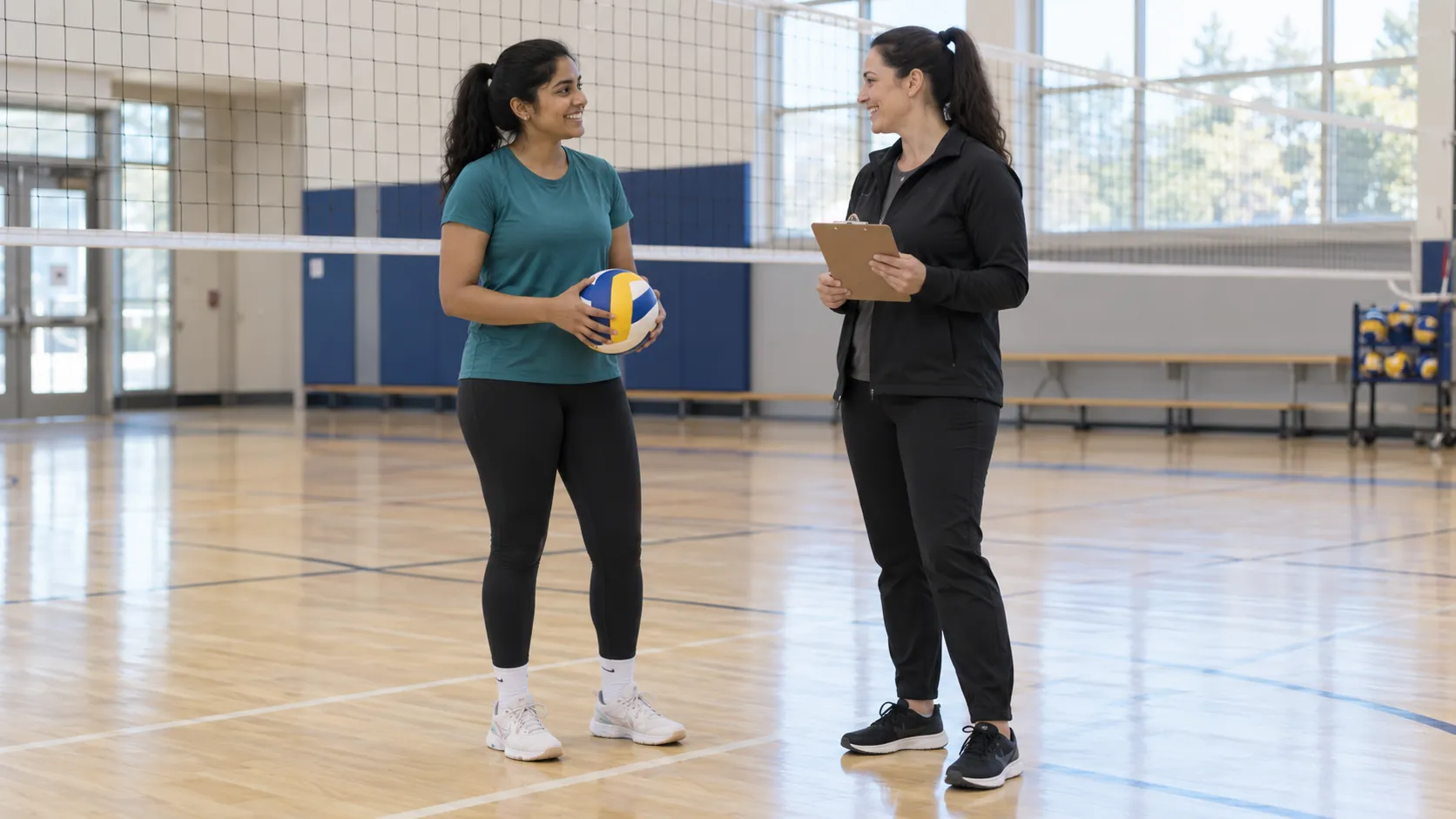
You may first notice pain below the kneecap after a volleyball evening or a series of basketball games. It is tempting to judge the problem only by whether you can finish the next session. Yet finishing a game does not tell you why the knee hurts, how the week of activity is contributing, or what changes would make a return more manageable.
Patellar tendon pain in Markham often needs a conversation about the whole routine: recreational sport, gym work, commuting, and the ordinary tasks between them. This guide helps you organize that conversation. It explains the terminology, offers a practical way to describe training demands, and outlines questions that make rehabilitation advice easier to use. A diagnosis and individualized exercise plan still require an appropriate assessment.
Where the patellar tendon sits
The patellar tendon connects the kneecap to the upper part of the shin bone and works with the thigh muscles during tasks such as running, jumping, and climbing stairs. Patellar tendinopathy refers to a painful tendon condition in this region. It is sometimes called jumper’s knee, although a sporting label cannot diagnose the cause of knee pain. The NHS My Joint Health Hub overview describes the location and common activity-related symptoms.
Be precise about where your discomfort occurs. Pain around the edges of the kneecap, deep inside the joint, or at the back of the knee may raise different questions. You can point to the area without pressing repeatedly to prove that it is tender. Explain whether there was a sudden injury or a gradual onset, because that distinction matters more than choosing the correct medical term before your appointment.
A sudden loss of function deserves a different response
Seek urgent medical advice for a very painful or badly swollen knee, inability to move it or bear weight, a changed shape, locking, or concerning giving way. A hot, red knee with fever also needs urgent assessment. The NHS knee pain guidance describes these warning signs. Use appropriate local medical services in Ontario rather than the UK contact options listed there.
Do not assume that sudden pain during a jump is simply a flare of an old tendon problem. Tell the medical team what happened and what you can no longer do. A previous diagnosis does not automatically explain a new injury. Trying repeated squats or jumps to test the knee can delay the more useful step of obtaining an assessment when function has changed substantially.
Replace the phrase “I only play twice a week” with a fuller picture
Two sporting sessions can differ enormously. One might involve passing drills and frequent pauses; another might contain continuous games and repeated jumping. Add a gym session, a weekend tournament, and a job with frequent stairs, and the calendar becomes more informative than the number of team practices alone.
Make a simple record of a representative week. Include the activity, approximate duration, and whether it was typical or unusually demanding. You do not need to calculate a precise load score. The purpose is to reveal changes that would otherwise be easy to miss: an extra game, a new exercise class, or a return to a former schedule after several quiet months. Bring this record to the person assessing your knee.
Look for changes before assigning blame
A new pair of shoes or a different playing surface may attract attention because it is easy to name. Mention it, but also look at changes in time, intensity, and recovery opportunities. Several things may have changed together. A clinician can help interpret the pattern without assuming that the most noticeable new item caused the entire problem.
Write the sequence in ordinary language. For example, you might have joined a second league, started a new gym programme, and then noticed symptoms during stairs. That account is more useful than declaring that a particular shoe damaged your tendon. Avoid replacing multiple parts of your routine at once unless the clinical plan calls for it; otherwise you may struggle to explain what happened when the symptoms next change.
Understand why rehabilitation often includes strengthening
Management commonly involves adjusting aggravating activity and progressively rebuilding capacity with exercises selected for the individual. Kingston and Richmond NHS Foundation Trust describes a phased strengthening approach in its patellar tendinopathy information. The starting phase and progression should fit your assessment, rather than being selected by comparing yourself with a demonstration online.
Ask what each prescribed exercise is intended to prepare you for. Understanding its role can make a modest starting task feel more purposeful. Confirm the resistance, range, repetitions or hold duration, and frequency that apply to you. If symptoms respond differently than expected, ask for advice before increasing the difficulty. A written plan should include how to judge the response and what to do when it falls outside the agreed limits.
Make the home setup part of the prescription
An exercise demonstrated beside clinic equipment may be awkward in a small apartment or a shared living room. Explain what you have available before the programme is finalized. Ask for a setup that is stable, understandable, and appropriate for your circumstances. A chair that slides or a band attached to an unsuitable object introduces a separate problem.
Practise the exercise in front of the clinician and describe where you feel the effort. If you are unsure whether you are reproducing it at home, arrange a review instead of guessing. Keep the instructions together so that an old version does not become confused with a revised one. When the plan changes, note the date and the specific adjustment; this helps make later conversations about your response more accurate.
Discuss sport participation in concrete terms
There are many ways to attend a practice. You might work on a particular skill, participate in selected drills, or observe while helping the team organize. Ask which options fit the current plan. Do not interpret permission for one activity as permission for every part of a normal session.
Explain the proposed limits to the coach or organizer before you arrive. A phrase such as “I am following a modified plan today” should be accompanied by the details they need to respect it. Arrange a way to step out without leaving the team short unexpectedly. Recreational sport is social, and a clear conversation reduces the chance that enthusiasm or a missing player turns a planned session into something quite different.
Treat a tournament as its own planning problem
Several short games across a day can create a different schedule from one ordinary practice. There may be waiting periods, repeated warmups, and pressure to keep playing because the group has travelled together. Tell your clinician about the full event, including consecutive days if relevant, before deciding whether it fits your stage of rehabilitation.
Consider the logistics as well as the court time. Can you leave when needed? Are you responsible for driving others? Does the organizer know whether you are attending as a participant or a supporter? These decisions will not establish medical readiness, but they can make it easier to follow the advice you receive. A plan that depends on everyone forgetting the competition once it starts is unlikely to be practical.
Choose alternatives by their actual demands
When one activity is reduced, it is natural to look for another way to exercise. Describe the alternative rather than assuming it is suitable because it has a gentler reputation. A class may include repeated squats or jumps even if its name sounds like general fitness. A gym session can vary widely according to the exercises and effort involved.
Ask the clinician what options fit your current findings and goals. If an alternative is agreed upon, clarify how much to do and how to monitor the response. Keep some variety in the week where appropriate, but avoid turning the substitution into an additional demanding programme layered on top of rehabilitation. The purpose is to support a workable routine while the knee is being assessed and managed.
Bring daily comfort into the conversation
Sport may be your main concern, yet stairs, prolonged sitting, or getting up from a chair can be important markers of how the day is going. Note which tasks are difficult and whether their pattern changes. If work involves repeated stair trips, explain that when discussing activity modification. A plan cannot account for demands the clinician does not know about.
Practical adjustments might include organizing supplies to reduce unnecessary trips or choosing a seat that makes a meeting easier to manage. These choices should complement the clinical plan. They are not proof that the tendon is healing or that sport is safe. Our article on kneecap pain during sitting and squatting in Markham discusses another common front-of-knee presentation and can help you prepare questions about the distinction.
Use follow-up to decide the next change
Bring a short account of what you actually completed, including sessions that differed from the plan. Mention your response during activity and afterward according to the monitoring instructions you were given. Do not omit a difficult day because it seems like a personal failure. It may contain exactly the information needed to make the plan more realistic.
Ask which goal comes next and how you will recognize readiness for it. That goal might be managing the workweek, completing a particular drill, or returning to a full recreational session. Keep the target specific enough to discuss. A return date on the calendar can be useful for planning, but it should not replace reassessment when symptoms or function suggest the plan needs to change.
Keep the purpose of recovery in view
For one person, the goal is playing volleyball with friends. For another, it is exercising confidently without worrying about every staircase the next morning. Both are legitimate reasons to seek help. Tell the clinician what matters most so that the rehabilitation conversation reflects your priorities rather than an assumed competitive standard.
You can contact Prime Spine to discuss arranging an assessment for ongoing knee symptoms and whether the clinic is an appropriate starting point. Urgent warning signs require medical care. This article offers general education and practical planning ideas; it does not identify the cause of your knee pain or prescribe an individual loading programme. Those decisions should follow a clinical assessment and review of your activity demands.