
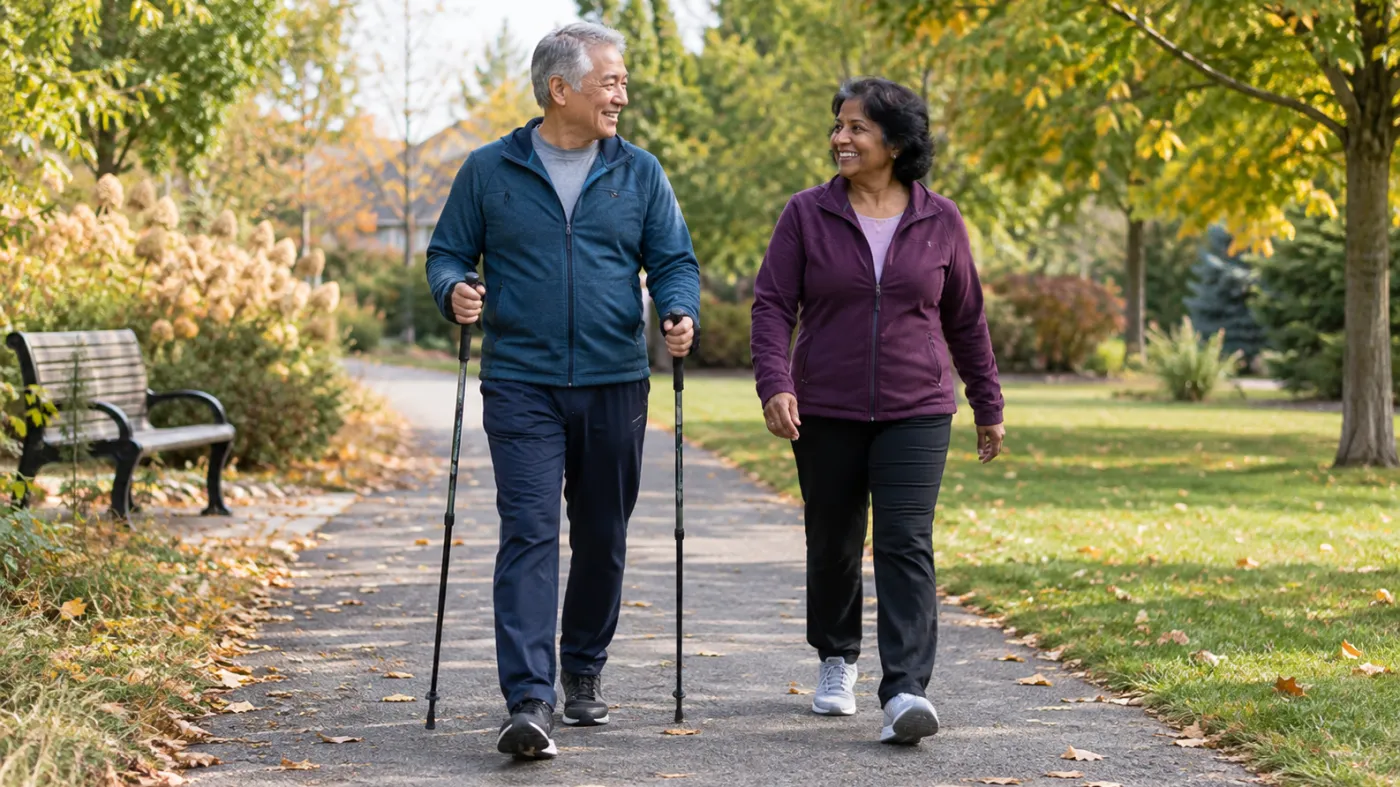
An osteoarthritis diagnosis can sound like an instruction to protect the joint from movement. People may picture cartilage wearing away with every step and begin avoiding stairs, walks or strength training. That response is understandable, but it can reduce the very capacity that makes everyday activity easier.
Osteoarthritis is a whole-joint condition influenced by biology, past injury, muscle capacity, health and many other factors. Symptoms can include activity-related pain, stiffness, swelling and reduced function. The intensity of those symptoms does not always match what appears on an X-ray.
For people living with osteoarthritis in Markham, joint-friendly exercise does not mean exercise so gentle that it never progresses. It means choosing a tolerable entry point, adapting the dose during flares and building strength and endurance over time. Current clinical guidance places therapeutic exercise at the centre of care.
Move beyond the “wear and tear” story
Calling osteoarthritis simple wear and tear suggests that use can only make the joint worse. Joints are living systems, and people with osteoarthritis can adapt to exercise. Stronger muscles, improved fitness and greater confidence can reduce symptoms and support function even when an X-ray does not change.
Pain during activity is not a direct measurement of cartilage loss. Sensitivity, inflammation, sleep, stress and unfamiliar load all influence the experience. This does not make pain imaginary; it explains why symptoms can fluctuate without a new structural event.
The goal of exercise is not to regrow a perfectly youthful joint. It is to improve what the person can do and how the joint responds to ordinary demand.
Osteoarthritis can often be diagnosed clinically
The NICE guideline recommends clinical diagnosis without routine imaging for many people aged 45 or older who have activity-related joint pain and either no morning stiffness or stiffness lasting no longer than 30 minutes. A history and examination can be enough when the presentation is typical.
Imaging may be appropriate when symptoms are unusual, another condition is suspected or surgery is being considered. An X-ray can show joint-space changes and bone features, but severity on the image does not dictate the person’s quality of life.
Avoid repeating imaging solely to check whether conservative care is “working.” Progress is better measured through pain, walking, stairs, sleep and valued activities.
Know when the pattern is atypical
A hot, red and markedly swollen joint with fever requires urgent medical assessment. Sudden inability to bear weight after injury, visible deformity or rapidly increasing swelling also needs prompt care.
Prolonged morning stiffness, multiple swollen joints, systemic illness or rapidly worsening deformity may suggest inflammatory or other joint disease. New calf swelling, chest pain or shortness of breath can indicate a vascular emergency rather than arthritis.
Persistent night pain unrelated to position, unexplained weight loss or a cancer history should be discussed with a physician. These warnings are not typical osteoarthritis flares and should not be exercised through without assessment.
Build a baseline from function
Choose activities that matter: walking to a nearby shop, rising from a chair, gardening, climbing stairs or playing with grandchildren. Record how much can be done before symptoms change and how long recovery takes.
A clinician may assess joint movement, muscle strength, walking, balance and task performance. Health conditions, medication and fall risk should shape the program. The plan for a painful thumb differs from the plan for hip or knee osteoarthritis.
Set a baseline that is repeatable, not an all-out test. The number of comfortable chair rises in 30 seconds, a short walking route or a simple grip task may provide a useful measure.
Expect exercise to require an adjustment period
The NICE guideline advises explaining that pain may initially increase when therapeutic exercise begins. A small temporary increase does not mean the joint is being damaged. Regular, consistent exercise can improve pain, function and quality of life over time.
Use a response rule. Mild discomfort during or after exercise may be acceptable if movement remains controlled and symptoms return near baseline by the next day. A major flare, new swelling or loss of function suggests the dose should be reduced.
Start below maximum capacity. Completing a manageable session and repeating it later in the week builds more adaptation than one exhausting workout followed by avoidance.
Strengthen the muscles that support the joint
For knee or hip osteoarthritis, useful patterns include sit-to-stands, squats to a chair, step-ups, bridges, calf raises and hip exercises. For hand osteoarthritis, the program may involve grip, pinch and finger movement. Shoulder osteoarthritis requires a different range and loading strategy.
Choose exercises that match the joint and the goal. A person who wants to climb stairs needs quadriceps and hip strength; someone who wants to carry groceries also needs upper-body and grip capacity.
Begin with stable support and a comfortable range. Progress by adding repetitions, resistance or range one at a time. Machines, resistance bands, free weights and body weight can all work when the dose is appropriate.
Add aerobic activity for the whole person
Walking, cycling, swimming and other rhythmic activities can improve fitness, energy and general health. The best choice is one the person can access, enjoy and repeat.
Break the target into small bouts. Three ten-minute walks can be more realistic than one 30-minute session. A stationary bike may feel comfortable for knees because load and range can be adjusted, while pool exercise may help someone begin moving with less weight-bearing.
Low impact does not mean zero challenge. Aerobic activity should eventually be enough to improve fitness while still respecting health conditions and joint response. A physician should advise on exercise when there are unstable cardiac, respiratory or other medical concerns.
Include balance and power where appropriate
Osteoarthritis can change how confidently someone steps, especially after a painful flare. Balance practice beside stable support can restore options. Weight shifts, tandem stance and controlled stepping are possible starting points.
Daily life also requires a degree of speed: standing to answer the door, recovering from a trip or crossing a street. Once basic strength is established, a program may include slightly faster but controlled chair rises or step reactions.
Power work is not appropriate for everyone at the outset. It should be introduced by a qualified professional when medical status, joint response and fall risk permit.
Use a flare plan instead of stopping indefinitely
An osteoarthritis flare is a temporary worsening of pain, stiffness or swelling. It may follow unusual activity, illness, poor sleep or have no obvious trigger. A flare does not necessarily mean the disease has suddenly progressed.
Reduce the exercise range, resistance or duration for a few days. Keep comfortable movement and short bouts of activity where possible. Alternate demanding tasks and allow recovery between them.
Once symptoms settle, return to the previous tolerable level before progressing. Starting over from zero after every flare can create a cycle of lost capacity.
Seek assessment when a flare is unusually severe, the joint is hot and red, swelling is dramatic or the pattern differs from previous episodes.
Make walking more adjustable
Choose a predictable level route at first. Markham parks and neighbourhood paths offer options, but surface, weather and access vary. Indoor walking can preserve routine during ice, extreme heat or poor air quality.
Use time rather than distance when that is easier to control. Walk five minutes out and five minutes back. Add one or two minutes when the same-day and next-day response is acceptable.
A walking aid can improve safety and reduce joint load for some people. It should be fitted correctly and used on the appropriate side. A physiotherapist or other qualified professional can teach technique.
Approach stairs as a trainable task
Stairs require more knee and hip force than level walking. Use the rail during an irritable period and slow the pace. A temporary step-to pattern may help, but a reciprocal pattern can be rebuilt as strength returns.
Practise sit-to-stands and low step-ups before tackling repeated flights as exercise. For descent, controlled step-down work prepares the thigh muscles to lower the body.
Carrying smaller loads keeps one hand available for the rail. This is a practical safety choice, not evidence that stairs must be avoided forever.
Choose footwear and devices for function
Comfortable, secure footwear suited to the activity can support walking. No shoe can reverse osteoarthritis. Braces, insoles and taping should not be offered routinely to everyone; current guidance reserves devices for selected situations where instability or loading issues are present and function is likely to improve.
Trial a device with a specific outcome. Does it increase walking time or reduce a limp? If not, its value should be reconsidered. Equipment that is uncomfortable, causes skin problems or reduces confidence is not automatically helpful.
Canes, walkers and grab bars can enable independence. They should be framed around the activity they make possible, not as symbols of decline.
Discuss weight without blame
For some people with lower-limb osteoarthritis who live in a larger body, weight reduction can improve pain and function. The conversation should be respectful, voluntary and supported. Body weight is one factor, not a moral failing or the sole reason a joint hurts.
Exercise provides benefits even when weight does not change. A person should not be denied strengthening, pain care or surgical referral solely because of body size. Nutrition and weight-management support should focus on sustainable health rather than crash dieting.
If weight change is a personal goal, a registered dietitian or medical team can consider medication, health conditions, culture and food access. Generic advice to eat less is not a treatment plan.
Use medication to support, not replace, movement
Medication decisions depend on the joint, medical history and other prescriptions. NICE recommends topical non-steroidal anti-inflammatory medication for many people with knee osteoarthritis and careful consideration of risks with oral options. Canadian prescribing decisions belong with a physician or pharmacist.
Do not combine products or take long courses without advice. Kidney, stomach, cardiovascular and liver risks matter, as do blood thinners and other medication.
An injection may provide short-term relief for selected people and can create an opportunity to participate in exercise. It does not rebuild strength. The expected duration, risks and alternatives should be explained.
Understand the role of manual therapy
Manual therapy may be considered for some people with hip or knee osteoarthritis, but current NICE guidance recommends it only alongside therapeutic exercise. Evidence does not support relying on passive treatment alone.
If hands-on care temporarily improves movement, connect the effect to a functional task or exercise. Avoid explanations that the joint has been put back into alignment or that repeated correction is necessary to prevent damage.
Chiropractic care, physiotherapy and other approaches should all be judged by whether they support meaningful, measurable function and shared decision-making.
Know when surgery becomes a reasonable discussion
Joint replacement may be considered when pain, stiffness or reduced function substantially affects quality of life and appropriate nonsurgical management is ineffective or unsuitable. Referral should be based on clinical need and informed discussion, not a single numerical score.
Seeking a surgical opinion does not commit someone to surgery. It can clarify options, expected outcomes and risks. Conversely, being offered surgery does not mean exercise was pointless; better strength and general health can support preparation and recovery.
Age or body size alone should not automatically exclude someone from referral. Individual health risks need to be discussed rather than assumed.
Build a weekly plan that can last
A balanced week may include two or three strength sessions, several aerobic sessions and brief balance work. The exact schedule depends on symptoms, health and preferences. Recovery days can still include easy movement.
Attach activity to existing routines. Perform sit-to-stands before lunch, walk with a neighbour on set days or attend a suitable community class. Social structure can improve consistency.
Review the program every few weeks. If exercises never become more challenging, capacity may plateau. If every session causes a large flare, the starting dose is too high.
A practical next step in Markham
Choose one joint, one activity and one measure. For example: knee, neighbourhood walking, ten comfortable minutes. Begin with a tolerable dose and add a simple strengthening plan tailored to that goal.
Osteoarthritis does not require a life organized around avoiding load. The joint may need thoughtful pacing, medical support and occasional adjustments, but it can still participate in meaningful movement. Confidence grows when exercise becomes something the body is prepared for, not something imposed in one overwhelming leap.