
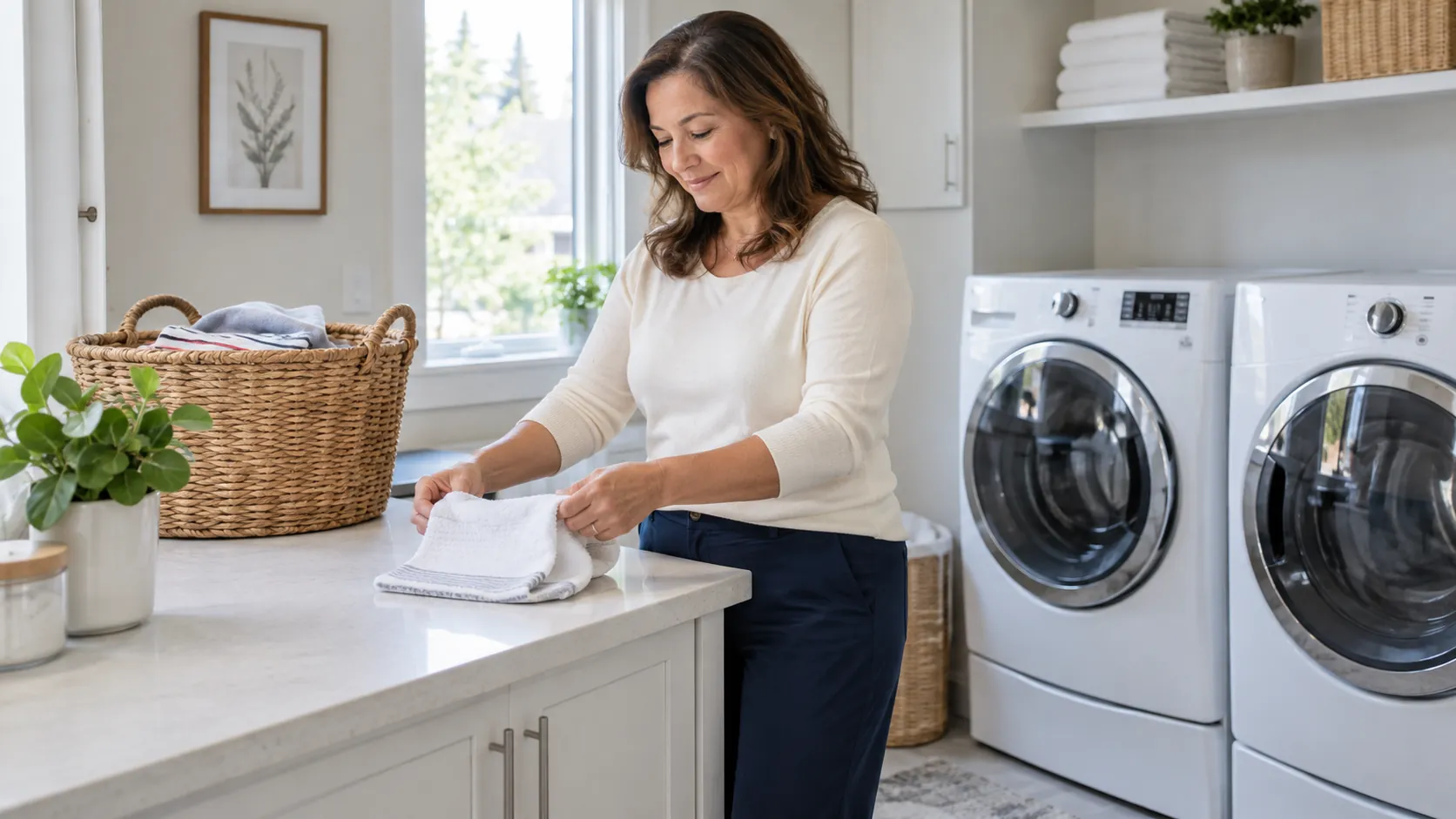
Laundry is rarely one task. It is collecting, sorting, carrying, loading, transferring, drying, folding, and putting away, often with several interruptions in between. The machine may do the washing, but the household still has to move everything around it. When the routine becomes uncomfortable, the answer may lie in one particular stage rather than in doing every movement differently.
Improving laundry-day movement comfort in Markham starts with looking at the route your clothes take. A basement utility room, a compact condominium closet, and a shared laundry facility create different practical demands. The ideas below are ways to examine that routine and try manageable changes. They do not diagnose pain or prescribe a lifting technique for every person and every load.
Follow one load from beginning to end
Choose an ordinary load and trace its journey. Where is it collected? How many times is it set down and picked up? Does it wait in a place that blocks access to something else? You may find that the awkward part is not the washing machine but the temporary pile created while you make room to use it.
Write down the one or two stages that cause difficulty. Be specific: carrying a basket down stairs, reaching a sock at the back of the drum, or standing through a large folding session. This gives you a useful problem to solve. It also provides a clearer account for a clinician if symptoms persist despite practical changes to the routine.
Decide what actually needs to happen today
A full hamper can make every item feel equally urgent. Separate immediate needs from items that can wait, while following care instructions and hygiene requirements. A work uniform needed tomorrow may deserve priority over a large collection of spare linens. A realistic sequence can reduce the pressure to finish every stage in one session.
Consider the time available after the wash cycle, too. Starting several loads shortly before another commitment may leave heavy wet items or unfolded clothing waiting in inconvenient places. The goal is not a perfectly efficient household. It is a routine you can complete without turning the last half hour into a rushed effort to clear the machines and get out the door.
Match the basket to the route
Look at the container as well as its contents. Can you grip it comfortably, see where you are going, and place it down where needed? A large basket may fit a lot of clothing but be awkward through a narrow doorway. A soft bag may be convenient for storage yet difficult to manage when heavily filled.
The Canadian Centre for Occupational Health and Safety’s lifting guidance identifies load weight, shape, grip, travel distance, and the environment as relevant factors. Although written for work settings, those considerations offer useful questions at home. Reduce or reorganize a load that you cannot handle safely, and ask for help rather than using a basket’s capacity as a target you must fill.
Give stairs their own plan
If laundry travels between floors, consider how you will keep the route visible and use the support you need. Do not carry a load that obstructs your view or compromises balance. Arrange assistance if you cannot manage the trip safely, particularly when you already have a mobility restriction or have been advised to use a handrail.
Avoid leaving baskets, detergent, or loose garments on steps while organizing the next trip. A temporary storage place can quickly become an obstacle for someone else. If dividing the task into smaller loads helps, consider the additional trips as well. The useful arrangement is one that fits the whole route and your abilities, not simply the smallest possible container regardless of everything else.
Sort where the next step will be easier
Sorting can happen before a basket reaches the machine, provided there is a suitable space and the household agrees on the system. A few clearly assigned containers may be enough. Avoid building an elaborate arrangement that creates more lifting or occupies the only clear path through a small room.
For a shared household, agree on what belongs in each container and who checks pockets or care labels. Misunderstandings can create extra handling when a load has to be separated again at the machine. A simple system that people actually use is more helpful than a detailed one that only one person understands. Review it if the household’s needs or available space change.
Make machine access less of a scramble
Clear the space you need before opening doors or moving baskets into position. Follow the appliance manufacturer’s loading instructions and keep the machine stable and properly installed. Do not place an appliance on an improvised platform or alter its installation to change the height. Any installation change needs the appropriate approved arrangement and qualified help where required.
If reaching into the drum is difficult, identify exactly which part of the task causes the problem. A clinician or occupational therapist may be able to advise on a suitable approach or aid for your circumstances. Avoid leaning on an open appliance door or balancing on an unstable object to reach farther. A difficult task is a reason to change the plan, not improvise support that may fail.
Treat wet laundry as a different handling task
Items can behave differently after washing. A tangled sheet or a saturated item may be awkward to control even if it was easy to carry when dry. Pause to assess what you are moving and use the machine according to its instructions. Do not yank forcefully on something that appears caught; stop and resolve the appliance issue safely.
If an item is too large or difficult to manage alone, arrange help or an appropriate service. This may be relevant for bulky bedding as well as clothing. Consider the whole process before starting the wash, including transfer and drying space. Discovering halfway through that you cannot handle the wet item safely leaves fewer convenient options than planning for it at the outset.
Choose a folding station you can actually use
You do not have to fold everything beside the machines. Consider a suitable table or counter with enough space for a small working pile. If sitting is more comfortable, use a stable chair and a surface that lets you reach the items without continually stretching across it. If standing works better, leave room to change position.
Try the setup with a few items before committing to a large session. Notice whether the surface height, reach, or available space creates a new difficulty. Keep the task simple: a place for unfolded items, a working area, and somewhere for finished pieces. Do not let the search for an ideal station become a major furniture project before you know which adjustment would help.
Let putting away count as part of the job
Folded laundry still needs a destination. If clean items sit in a basket for days, the final stage may be inconvenient or poorly timed. Consider whether drawers are overfilled, storage is hard to reach, or sorting by person happens too late. A small change to that stage may save repeated handling without changing how you wash anything.
For example, grouping items by their destination during folding can make the last step clearer. Ask household members to take responsibility for their own items where appropriate. Do not stack clean laundry so high that it becomes difficult to carry or see around. The routine is complete when items reach usable storage, not merely when the dryer stops.
Adapt the plan for shared laundry spaces
In an apartment or condominium, laundry may involve doors, elevators, payment systems, and a limited booking window. Prepare the supplies and access information before leaving your unit. Check that any cart or container is suitable for the route and permitted in the building. Keep corridors, entrances, and emergency access clear.
If a booking system creates pressure to move quickly, consider a time when help is available or the task is easier to organize. Follow building rules and respect other users’ access. A practical plan might include fewer loads per visit or assistance with transport. It should fit the actual facility rather than assuming the same setup available in a private laundry room.
Share the whole task, including the planning
When laundry is shared, dividing only the obvious lifting may leave one person responsible for every other step. Talk through collecting, checking labels, remembering cycles, folding, and returning items. A clear division can make the routine more predictable and reduce the need for hurried catch-up sessions when someone assumes another person has finished a stage.
If a household member has pain or a temporary restriction, ask which tasks remain manageable rather than assigning roles solely by habit. Someone who should not carry a basket may still be able to organize a suitable part of the process. Keep the arrangement flexible and respectful. The aim is a workable household routine, not a test of whether everyone can do identical amounts in the same way.
Know when the problem needs more than a new basket
Persistent pain that limits normal tasks deserves assessment, especially if it is worsening or accompanied by other symptoms. The NHS back pain guidance advises seeking help when pain interferes with daily life. Urgent medical assessment is needed for severe rapidly worsening pain or feeling unwell; emergency symptoms include new bladder or bowel changes, numbness around the saddle area, or neurological symptoms in both legs.
Do not assume that symptoms are harmless simply because they began during a familiar chore. Equally, one uncomfortable laundry session does not identify a particular spinal injury. Describe the task, symptoms, and timeline to the clinician. If you already have a treatment plan, ask how household work fits it instead of quietly replacing prescribed restrictions with your own version of taking care.
Keep the changes that make the routine easier
Try one practical adjustment and judge it over ordinary use. Did it make the difficult stage more manageable? Did it create extra work elsewhere? Keep what helps and revise what does not. A useful system can be modest: a better place for a basket, a different folding location, or a clear agreement about who handles the stairs.
Our guide to cleaning-day back comfort in Markham explores other household tasks. You can contact Prime Spine about symptoms that continue to interfere with daily movement. This article provides general planning ideas; individual advice is needed for persistent pain, mobility limitations, or recovery after an injury or procedure.