
The knee may feel fine during a short walk and then ache through a long meeting. At the gym, a deep squat brings the same area to your attention. Those experiences can seem contradictory: how can both sitting still and exercising bother the knee? The answer requires looking at the position, the amount of activity and the particular structures involved, rather than deciding that the joint dislikes all movement.
Kneecap pain in Markham can interrupt a commute, a desk day, a workout or time spent playing on the floor with children. The practical goal is to understand the pattern and regain reliable function in those settings. A programme should help you make sensible adjustments while building capacity, with clear reasons for assessment when the symptoms do not fit an ordinary activity-related pattern.
Describe the front of the knee carefully
Patellofemoral pain commonly refers to discomfort around or behind the kneecap. It may be associated with squatting, stairs, running or prolonged sitting with a bent knee. Several factors can contribute, and other conditions can produce pain in the same region. The AAOS patellofemoral pain guide explains the presentation and clinical assessment.
Point to the area rather than using a diagnosis as your opening description. Is the pain spread around the kneecap, concentrated just below it or located along the inner joint line? Did it begin after a fall, a twist or a gradual change in activity? Does the knee swell, catch or feel unstable? These details help the clinician decide what needs to be examined.
Also explain what happens between episodes. A knee that settles quickly after changing position presents a different story from one that stays painful throughout the night or becomes progressively more swollen. Avoid editing out a symptom because it does not match the condition you expected to have. The unusual details may be the most useful ones.
A long sitting period can be a separate challenge
Think about a typical seated block in your day. You may finish a commute, sit through several meetings and then settle into a car again. Even without a workout, the knee has spent a considerable period in similar positions. If that pattern is uncomfortable, changing the arrangement of the day may be more useful than focusing only on gym technique.
Notice whether the chair leaves room to move the feet and vary the knee angle. Bags, equipment or a low shelf can restrict that space. A practical trial might involve clearing the area, changing position periodically or taking an appropriate movement break between tasks. Discuss persistent symptoms with a clinician rather than trying to solve them by holding one carefully chosen posture all day.
For a longer meeting or event, consider the logistics in advance. An aisle seat may make it easier to stand briefly when permitted. Arriving with enough time can prevent a rushed combination of stairs, carrying and prolonged sitting. These changes do not diagnose or cure knee pain; they make it easier to manage a predictable demand while the underlying problem is addressed.
Squatting is not one fixed exercise
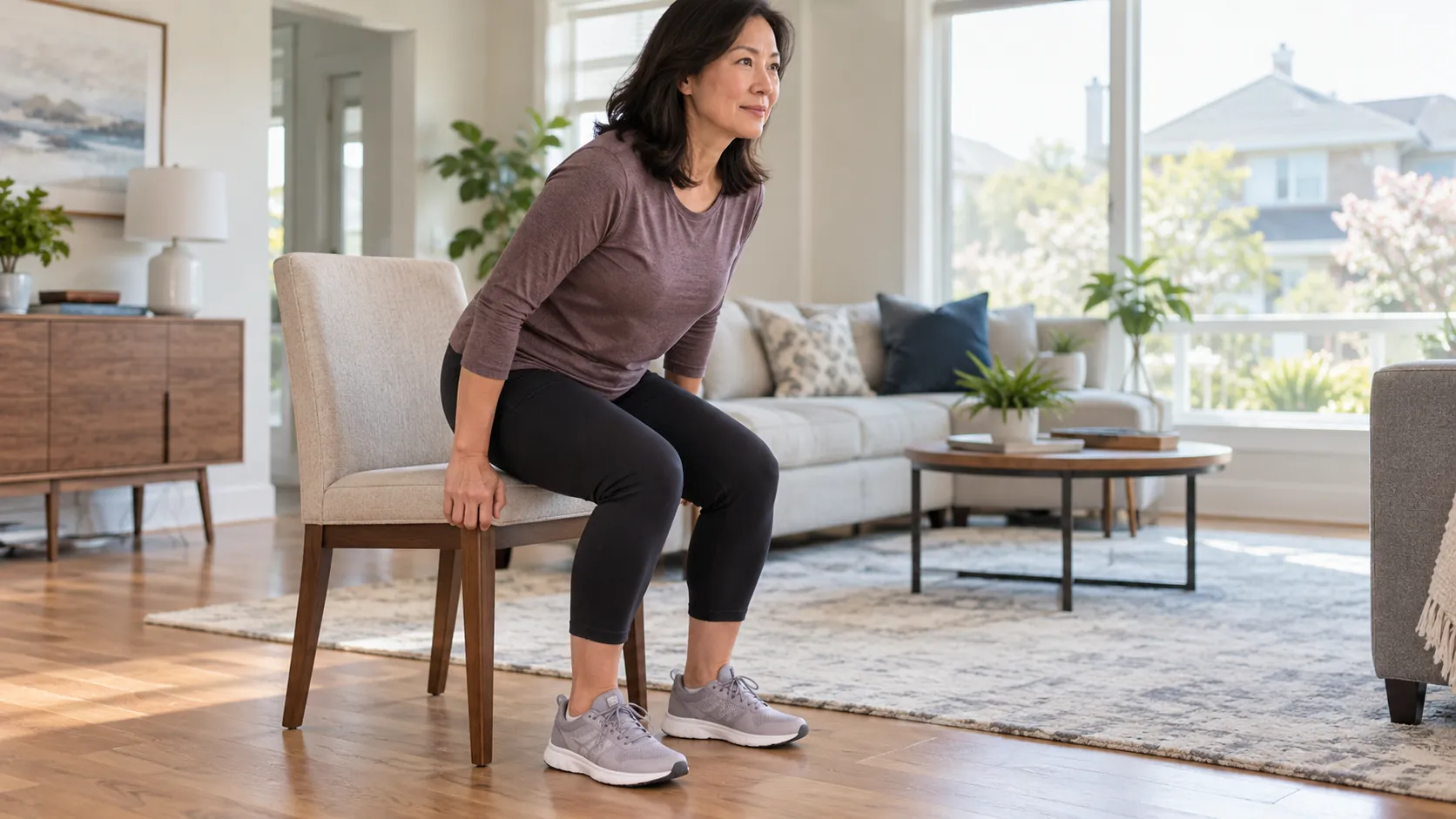
A squat can vary in depth, load, speed, stance and support. Getting up from a chair is not the same task as a heavily loaded gym squat, even though both involve bending and straightening the knees. If one version is uncomfortable, it does not automatically follow that every version must be avoided.
Ask a qualified clinician or exercise professional which features can be adjusted in your situation. A different starting height, reduced range or lighter resistance may make a task more manageable. The appropriate choice depends on the assessment and the response. Do not assume that a technique cue which helped a friend addresses the reason your own knee hurts.
Keep the trial simple enough to interpret. If you change shoes, stance, depth and load together, you may not know what made the difference. Select one agreed modification, practise it with attention and note how the knee behaves afterward. That gives the next conversation a useful piece of evidence rather than a vague sense that squats are either good or bad.
Look for a recent change in the whole week
Training changes are often easier to recognize than changes in daily life. You may remember adding a new class while overlooking an extra shift, more stairs or several evenings of home projects. When symptoms begin, review the week as a whole. The knee does not separate formal exercise from the rest of the activity you perform.
An illustrative example is someone who starts a lunchtime walking routine at the same time as returning to the gym and helping with a move. Each decision is reasonable, but the combined change is much larger than any one activity suggests. Understanding that combination can help identify which demands are flexible and which must be preserved.
Write down the activities that are necessary, the ones you most value and the ones that can temporarily be changed. This is a planning exercise, not a ranking of good and bad movement. A workable approach protects participation in the important parts of life while leaving enough flexibility to adjust the overall demand.
Strengthening should have a starting point you can repeat
Management of patellofemoral pain often includes exercise addressing the knee and hip, alongside changes to aggravating activity. The programme should reflect the person’s findings and goals. It is not possible to identify one universally correct exercise from the location of pain alone. AAOS patient information discusses strengthening within conservative care.
Ask what the first exercise is intended to train and how to tell whether you are doing it as planned. Clarify the amount, the rest between sessions and the response that should lead you to contact the clinician. A routine that you can perform consistently is easier to evaluate than one that requires a special setup you rarely have available.
If the programme feels too easy, report that rather than doubling it immediately. If it leaves you struggling with ordinary tasks later, report that as well. Either response may lead to a useful adjustment. The goal is to find an appropriate challenge, then progress it based on evidence from your function and symptoms.
Stairs deserve their own conversation
Even when this article’s main concern is sitting or squatting, stairs may be a necessary part of the day. Tell the clinician whether going up, coming down or carrying something makes the greater difference. Mention the number of trips and whether a secure handrail is available. Those details shape the practical advice.
During a symptomatic period, avoid turning every stair trip into an extra exercise session. You may already encounter enough stairs through work or home responsibilities. Where feasible, organize tasks so you are not repeatedly going back for forgotten items. This is a temporary way to manage the day’s demands, not a rule that stairs are inherently harmful.
Our separate guide to knee pain on stairs explores that setting in more detail. Bring the two situations together at assessment: a knee that hurts after a long meeting and on the descent afterward may need a plan that considers both parts of the sequence.
Be cautious with quick mechanical explanations
Online advice may claim that every sore kneecap is caused by a single weak muscle, a particular foot shape or a kneecap that needs to be put back in place. Such explanations can sound reassuringly precise while overlooking the history and examination. Ask what evidence supports the explanation offered in your case.
If tape, footwear changes or an insert is proposed, find out the purpose of the trial. What task should become easier? How long will you evaluate it? What happens if it does not help? A temporary aid can be discussed without assuming it permanently corrects the cause of pain or makes exercise unnecessary.
Avoid buying several products at once out of fear that ordinary movement is damaging the knee. A clear assessment can help prioritize what is likely to be useful. It should also leave you with a realistic understanding of uncertainty: the plan may need adjustment as your response provides more information.
Returning to recreation should include the next day
When symptoms improve, enthusiasm can lead to a much larger session than intended. Decide in advance what a trial outing will include and where it will end. For a gym session, that might mean a familiar set of exercises at the agreed level. For a walk, it may mean a route with an easy return rather than a destination that forces you to keep going.
Review the response after the activity and during the following day’s necessary tasks. A session that feels comfortable in the moment but repeatedly disrupts the next morning may need a different amount or structure. Conversely, one mildly awkward attempt does not automatically establish that the activity is unsuitable. Discuss the pattern rather than interpreting a single moment in isolation.
Progress one feature at a time when practical. Duration, resistance, speed and frequency are separate variables. Repeating a manageable session can provide useful confidence and information before adding more. The right pace of progression depends on the person and the activity, not on a universal calendar.
Some symptoms call for a different pathway
A knee that is very painful, cannot bear weight, is markedly swollen or has changed shape needs prompt assessment. A hot red knee with fever, true locking or significant instability also deserves medical attention. The NHS knee pain guidance outlines urgent situations. Do not assume that a new injury or systemic symptom is simply another episode of familiar kneecap pain.
Arrange a non-urgent review when symptoms persist, progressively limit normal activities or do not respond as expected to an agreed plan. Bring your activity notes and explain the most important task you want to regain. A review should examine whether the original explanation still fits, not merely repeat the same exercises indefinitely.
Kneecap pain in Markham is best approached with a clear description, practical adjustments and a programme connected to daily life. If you need help deciding where to begin, book an assessment. The aim is dependable sitting, standing and movement, with enough understanding to make the next activity decision confidently.
This article provides general education. An individual examination is needed to identify the cause of knee pain and choose appropriate rehabilitation.