
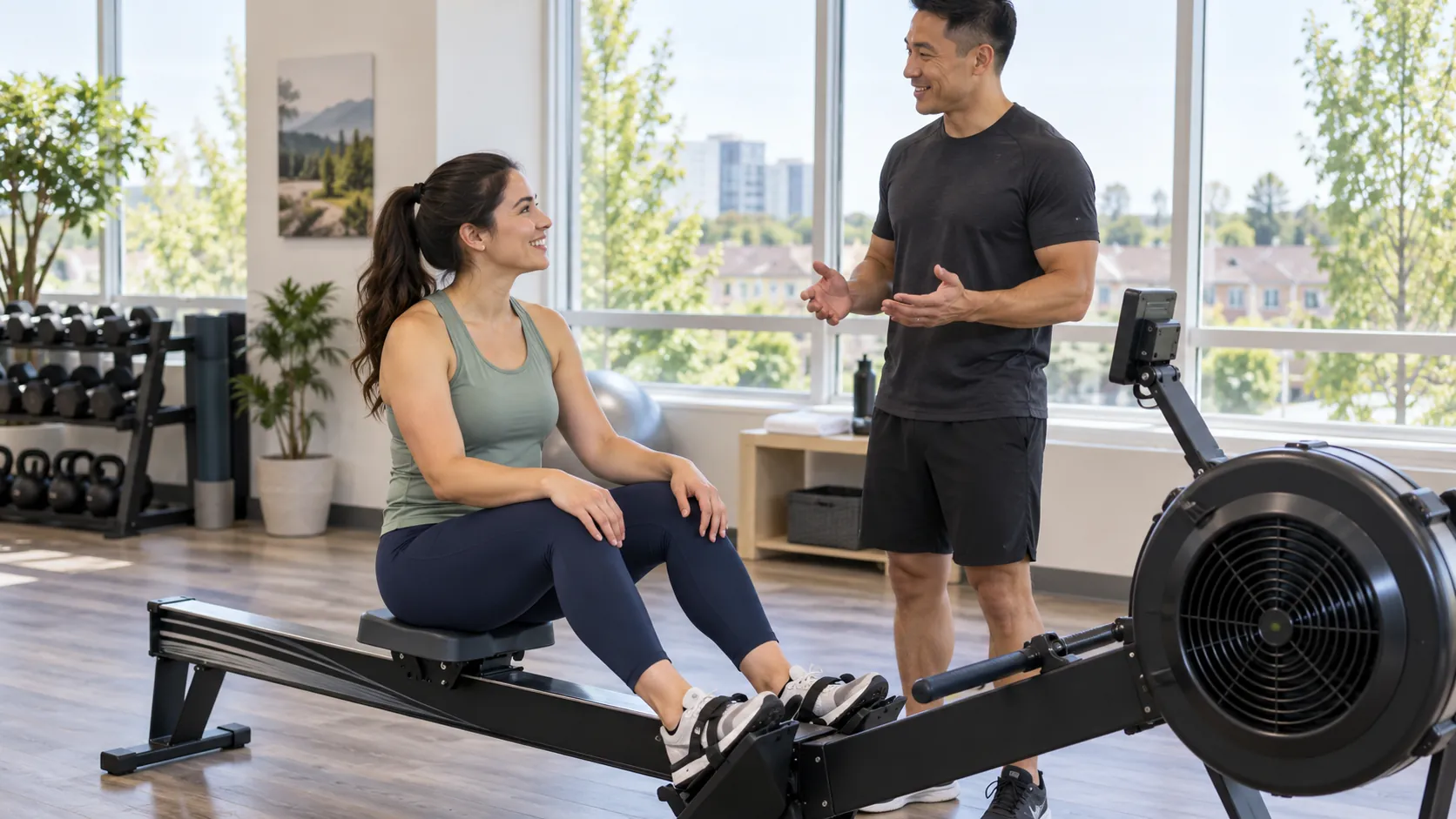
The rowing machine can look straightforward until you sit down and discover how many decisions are involved. There is a sliding seat, a handle, foot straps, a screen full of numbers, and perhaps a lever that the previous user left at its highest setting. It is easy to begin pulling and hope the details will become obvious. A short orientation usually makes the experience much less confusing.
Indoor rowing in Markham may be part of a community gym visit, a group fitness class, or a home routine. Whatever the setting, comfort begins with understanding the machine and choosing a session that suits your experience. This guide explains useful questions about setup, technique, and pacing. It is an introduction to learning the activity, not a prescription for treating back pain or a guarantee that rowing suits every person.
Identify the machine you are using
Rowing machines differ in their resistance systems, adjustments, and displays. Instructions for an air-resistance machine may not apply directly to a magnetic or water-resistance model. Find the manufacturer’s guidance or ask the facility staff for an introduction to the actual machine in front of you. Do not assume that a familiar-looking dial controls the same thing on every model.
Check that the equipment is ready for use according to the facility’s procedures. If a strap is damaged, the seat moves unexpectedly, or a part appears loose, report it rather than trying to repair a shared machine yourself. At home, follow the manufacturer’s assembly, maintenance, and space requirements. Learning to row is easier when you are not simultaneously wondering whether the equipment has been set up correctly.
Make getting on and off part of the introduction
Ask how to sit down securely on the moving seat, place your feet, release the straps, and stand up afterward. These steps may be more important than the workout display during a first visit. If the low seat or transfer is difficult, explain that before beginning. A staff member or qualified instructor can help identify whether the setup is appropriate.
Keep bags, towels, and loose clothing away from the seat rollers and moving parts. Position a water bottle where it will not obstruct the machine or another person’s path. If you need to adjust something during the session, stop safely first. Reaching for a dropped item while the seat is moving creates a problem unrelated to rowing technique and can usually be avoided through a simple setup check.
Adjust the foot support for your own feet
Foot placement should follow the instructions for the particular machine. On a Concept2 RowErg, the manufacturer describes positioning the strap around the forefoot, above the ball of the foot. Its getting-started material demonstrates the basic adjustments. Ask someone to check the fit if you are uncertain, and learn how to release the straps before starting.
Tell the instructor if the setup pinches, allows repeated slipping, or feels difficult to exit. Avoid copying another person’s footplate position without checking how it fits you. The setting they need may differ because of their footwear or proportions. If you are using rowing as part of a rehabilitation plan, confirm whether any specific adjustment or movement limit has been recommended for your circumstances.
Understand the stroke as a sequence
Concept2 describes the working phase as beginning with the legs, followed by movement through the hips and then the arm pull. During the return, the arms extend, the body moves forward from the hips, and the knees bend after the hands clear them. The manufacturer’s rowing technique guide illustrates the sequence and recommends learning the fundamentals before pulling hard.
A qualified instructor can watch how you combine these elements rather than asking you to memorize several positions at once. Request one clear correction at a time. If you are concentrating on the order of movement, choose an effort that allows you to listen and practise. A screen target that forces you to rush can make an already unfamiliar skill harder to understand.
Learn what the damper actually changes
On a Concept2 air rower, the damper controls airflow through the flywheel. A larger number is not a universal measure of a better workout or a setting everyone should eventually reach. The manufacturer explains the relationship between airflow, drag, and feel in its damper-setting guide. Other machine types may use different controls, so keep this explanation specific to the equipment it describes.
Ask the instructor to help choose a suitable starting setup and explain how to record it. If you use a different machine next time, check the adjustments again instead of assuming the previous user left an appropriate setting. Change settings only in the way the manufacturer recommends. There is no advantage in treating a control as a toughness test when its purpose is to shape how the machine behaves.
Give each screen number a job
A display can show elapsed time, distance, pace, power, and stroke rate. Before using those numbers to set goals, ask what they mean on that model and which one matters for the session you are doing. Trying to improve every number simultaneously is confusing, particularly while learning a coordinated movement.
For an introductory session, the instructor may choose a simple learning objective and use the display only to support it. You might be practising a repeatable rhythm or learning how a change in effort affects the reading. Record the context with any result you save. A number without the machine type, session structure, or your experience tells you much less than it first appears to.
Plan the first session around learning
An initial visit can include orientation, supervised practice, pauses for feedback, and a decision about what to try next. It does not have to be a continuous workout or a distance challenge. Ask for a structure that fits your current activity level and any health considerations. If you have been given medical restrictions, bring them into the discussion before the session starts.
Leave time for questions after practising. It is common to understand an explanation while watching and then notice a new question when you attempt the movement yourself. Ask the instructor to watch a short period of ordinary rowing, rather than only a few strokes performed with unusual concentration. This can make the feedback more relevant to what happens when you settle into a session.
Notice effort without assuming every discomfort is a technique problem
Tell the instructor if a position or movement hurts, and stop rather than trying to force your way through it. A technique adjustment may be useful, but pain can have causes that require healthcare assessment. Recurrent pain, numbness, weakness, or symptoms that affect ordinary activity should not be managed solely by changing the monitor settings.
If you experience a medical emergency, such as chest pain with severe breathlessness or fainting, seek emergency assistance. For an ongoing musculoskeletal concern, describe the location and timing of symptoms to a clinician. Explain whether they occur at the beginning of the stroke, near the finish, after a longer session, or outside rowing as well. These details are more informative than assuming the machine has identified a weak body part.
Make a group class work for a beginner
Tell the instructor before class that you are new to the machine. Ask whether there will be time for setup and whether the session allows an appropriate introductory option. Some classes move quickly between exercises, so understanding how to stop, release the straps, and transition matters. Arriving just as the first interval begins may leave little room for that explanation.
Do not let a leaderboard define the first experience. Other participants may have different training histories and goals. Agree on what you will focus on and how to signal that you need help. If the class format does not provide enough instruction, arrange an orientation separately or choose another starting format. A suitable introduction should make the activity clearer, even if the overall workout is less demanding than you expected.
Keep home rowing easy to organize
At home, decide where the machine can remain safely usable and how other people will move around it. Follow the manufacturer’s storage guidance, especially if the machine separates or folds. Children and pets need to be kept away from moving equipment. A room that becomes crowded whenever the machine is set up may make consistent practice difficult.
Keep the basic routine simple. Have the setup instructions available, decide on the session before sitting down, and place necessary items within safe reach. If you use a video or music, set it up before beginning so that you are not leaning sideways to operate a device while rowing. The goal is to reduce interruptions that pull attention away from the movement you are trying to learn.
Review the session with more than a distance total
Afterward, note whether the setup felt secure, which instruction helped, and what remained confusing. Include the planned duration and any changes you made. If you are following clinical advice, record the response in the way your clinician requested. This creates a useful basis for the next session without turning every workout into a detailed performance audit.
Choose the next change deliberately. More time, a different effort, and a new class format are separate decisions. Discuss progression with the appropriate instructor or clinician rather than changing everything because one session felt encouraging. Our guide to returning to the gym in Markham explores the broader challenge of building a repeatable routine around current capacity and everyday commitments.
Let rowing serve the reason you came to exercise
You may want an indoor activity for poor weather, a skill to learn, or another option in a varied fitness routine. Keep that purpose visible when choosing how to practise. There is no requirement to turn every session into a race or to adopt the goals of the person on the next machine.
If pain or a previous injury makes you uncertain about participating, contact Prime Spine to discuss whether a musculoskeletal assessment is appropriate. A healthcare professional can address symptoms and activity suitability, while a rowing instructor can help with the equipment and technique. This article provides general education; an individual plan should reflect your health, experience, and the machine you are using.