
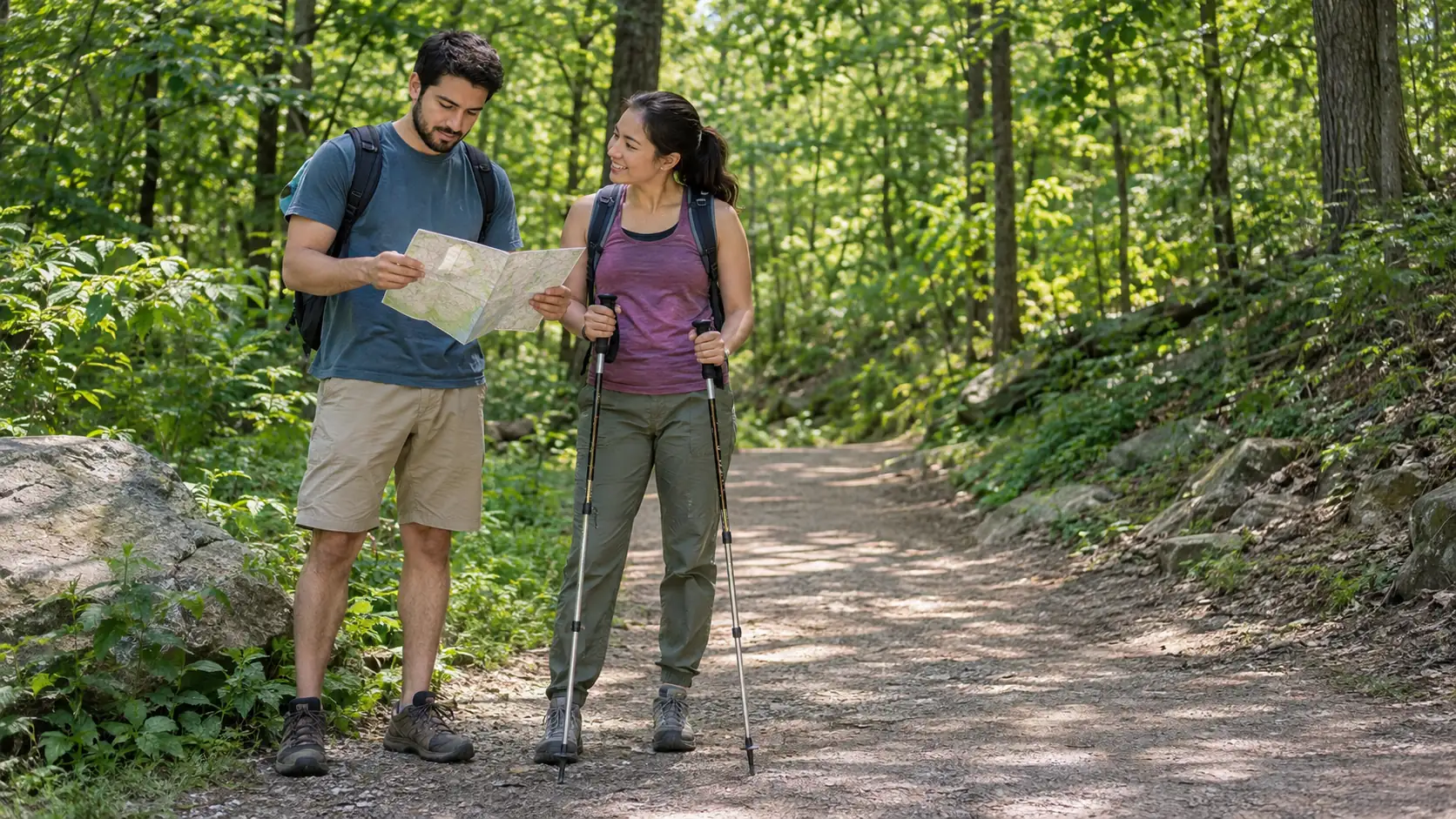
A pleasant trail outing often begins at the kitchen table. That is where you decide how long you want to be out, who is coming, and whether the route fits everyone’s current ability. Those decisions matter just as much as the shoes by the door. A path that looks modest on a map may feel different when the group includes a first-time hiker, a child, or someone returning after an injury.
Hiking preparation in Markham can start with a short local outing rather than an ambitious destination. The aim is to make the experience enjoyable enough that you want to repeat it. Thoughtful planning gives you room to pause, turn back, or choose a different route without treating the change as a failure. It also helps separate an ordinary recreational walk from a trip that requires more experience and equipment.
Read the route before you commit to the distance
The City of Markham cycling and trail maps provide a useful starting point for exploring the local network. Check the map legend carefully so you understand what kind of connection is shown. A route assembled from several lines on a map may include different surfaces and road connections. Confirm current access information with the responsible trail operator before leaving.
When comparing options, ask practical questions. Where does the walk begin? Is there a convenient place to stop? Does the route return to the same entrance, or will you need transportation at the other end? A shorter route with clear access may suit the day better than a longer one that creates a complicated return. Save the relevant information somewhere the group can actually use it during the outing.
Let the least prepared person help set the plan
Parks Canada recommends choosing a hike according to the experience and physical ability of everyone participating, checking conditions and weather, carrying appropriate essentials, and leaving a trip plan with someone who knows when to expect you back. Its hike preparation guide is a useful safety reference. Apply the guidance of the actual place you are visiting, since local urban paths and remote trails have different demands.
Ask each person what they are comfortable with before presenting a finished plan. Someone may be happy with an hour outdoors but uncertain about uneven ground. Another may need regular access to facilities. A private conversation can make it easier to mention these needs without feeling responsible for disappointing the group. Use the answers to shape the route, meeting time, and options for ending early.
Distinguish everyday walking from the planned outing
Walking around the office or completing errands tells you something about your usual activity, but it does not describe every part of a trail day. Think about the longest continuous walk you have recently enjoyed, whether you carried a bag, and what the surface was like. This is a planning reference, not a fitness test you need to pass.
If the proposed outing differs substantially from your routine, choose a more familiar first step. You might explore a short section before committing to the entire route on another day. If a recent injury, unexplained symptoms, or a medical condition raises questions about activity, discuss the plan with your healthcare professional. Give them the intended duration and terrain so the advice can address the actual trip you are considering.
Rehearse the equipment close to home
The first outing with new equipment does not have to happen on the main trip. Put on the socks and footwear you intend to use, load the bag, and take a short familiar walk. Check whether anything rubs, slips, or requires repeated adjustment. You are looking for practical problems while they are still easy to solve.
If a shoe is uncomfortable, do not assume a longer walk will necessarily make it right. Revisit the fit and the intended use. Our article on changing footwear comfortably in Markham offers questions to consider during a transition. Keep the trial simple: changing the shoes, socks, pack, and walking distance all at once makes it harder to identify which change created a problem.
Pack around the day you are actually having
Lay out the items before putting them into a bag. Use the trail operator’s safety guidance to identify essentials, then consider your personal needs, including prescribed medication and any equipment you know how to use. Avoid treating a companion’s bag as an assumed backup without discussing it. People can become separated, and the person carrying a shared item may finish early.
Keep frequently needed items accessible so every pause does not require emptying the entire pack. Test the closures and adjustments at home. If carrying the loaded bag feels troublesome on an ordinary short walk, reconsider unnecessary extras or how the group distributes shared equipment without removing safety essentials. A comfortable arrangement should also let you reach what you need without awkward twisting or asking someone to unpack everything behind you.
Decide whether walking poles suit the outing
Poles introduce another piece of equipment to manage. If you already use them comfortably, check that the locking mechanisms and tips are in good condition. If they are unfamiliar, get instruction and practise on straightforward ground before relying on them during a more demanding trip. They should fit the activity and your ability to handle them.
Ask how to adjust and carry the particular model, including what to do when your hands are needed for another task. Leave space around other walkers and avoid swinging the tips during conversation. Poles are not a substitute for a prescribed mobility aid or an assessment of a new balance problem. If you are considering them because of pain, weakness, or repeated unsteadiness, discuss that reason with a clinician.
Agree on pauses before anyone feels rushed
A group can unintentionally divide into people who set the pace and people who spend the day catching up. Explain at the start that the outing will follow the needs of the whole group. Choose clear opportunities to regroup, and let someone ask for a pause without needing to justify it. This makes the walk more social and makes changing the plan easier.
Allow time for the activities that give the outing its purpose. If you want to photograph plants, watch birds, or walk with children, a schedule based only on distance will miss much of the day. Build those interests into the plan. Otherwise a supposedly relaxed hike can become a race to finish before a reservation, a school pickup, or the return journey home.
Make the return journey part of the first decision
An outward walk is only part of an out-and-back route. Before continuing farther, consider the distance already covered and how everyone feels about the return. Discuss the turnaround plan in advance so the decision is not driven solely by reaching a viewpoint or completing a line on an app.
For a loop, identify the commitment you make by passing the point where turning back is easier. Do not assume an apparent shortcut is a safe or permitted connection. The National Park Service hiking safety guidance emphasizes preparation and realistic decisions during the trip. On any route, follow posted restrictions and the responsible operator’s instructions, even when an older map or another visitor suggests something different.
Leave flexibility for weather and unexpected changes
A plan needs an alternative that everyone can accept. That might mean choosing a different day, replacing the hike with a shorter accessible outing, or meeting indoors instead. Decide this before travel arrangements and expectations make cancellation feel difficult. Check official conditions and forecasts close to departure rather than relying on what was predicted when the invitation was sent.
Keep the alternative practical. If the main purpose is spending time together, there may be several ways to preserve that purpose. Avoid framing a change as wasted preparation; the research and equipment check can still help with a future outing. People are more likely to speak up about concerns when the group has already agreed that finishing the original route is optional.
Notice symptoms without turning the hike into an experiment
An outing is a poor place to test an unexplained injury to its limit. If pain is altering how you walk, a new symptom appears, or you feel unwell, stop and assess the situation rather than assuming that continuing will loosen everything up. Use the appropriate emergency response for severe or urgent symptoms. Follow any personal medical instructions you have been given.
For a known condition under care, ask beforehand what should change the plan and what to do if symptoms return away from home. Carry the information and supplies relevant to that plan. A companion should know any practical assistance you may need, with your permission. This conversation is more useful before departure than after the group has reached a section where leaving is difficult.
Review the outing while the details are fresh
Afterward, note what worked: the route length, the bag arrangement, the meeting time, or the choice to stop for a longer break. Record any equipment problem while you remember exactly where it occurred. Keep the review brief and specific. The goal is to make the next outing easier to organize, not to grade everyone’s performance.
If you are managing an injury, share relevant responses with the clinician overseeing your activity plan. Describe the walk you actually completed, including changes from the original route. Persistent or worsening symptoms deserve assessment rather than repeated attempts at the same outing. You can contact Prime Spine to discuss whether an assessment is appropriate for a musculoskeletal concern. General trail planning cannot determine individual medical readiness.
Make repetition more appealing than escalation
A successful hike does not create an obligation to double the distance next time. You may enjoy returning to the same route with a different friend, at a different pace, or with more time to notice your surroundings. Familiarity can also make it easier to compare how equipment and scheduling choices work for you.
For many Markham residents, the most sustainable outdoor routine is one that fits between ordinary commitments without becoming another demanding project. Start with a clear route, a realistic group agreement, and equipment you understand. Let experience guide the next decision. There is plenty of value in finishing a manageable outing with the energy and interest to plan another one.