
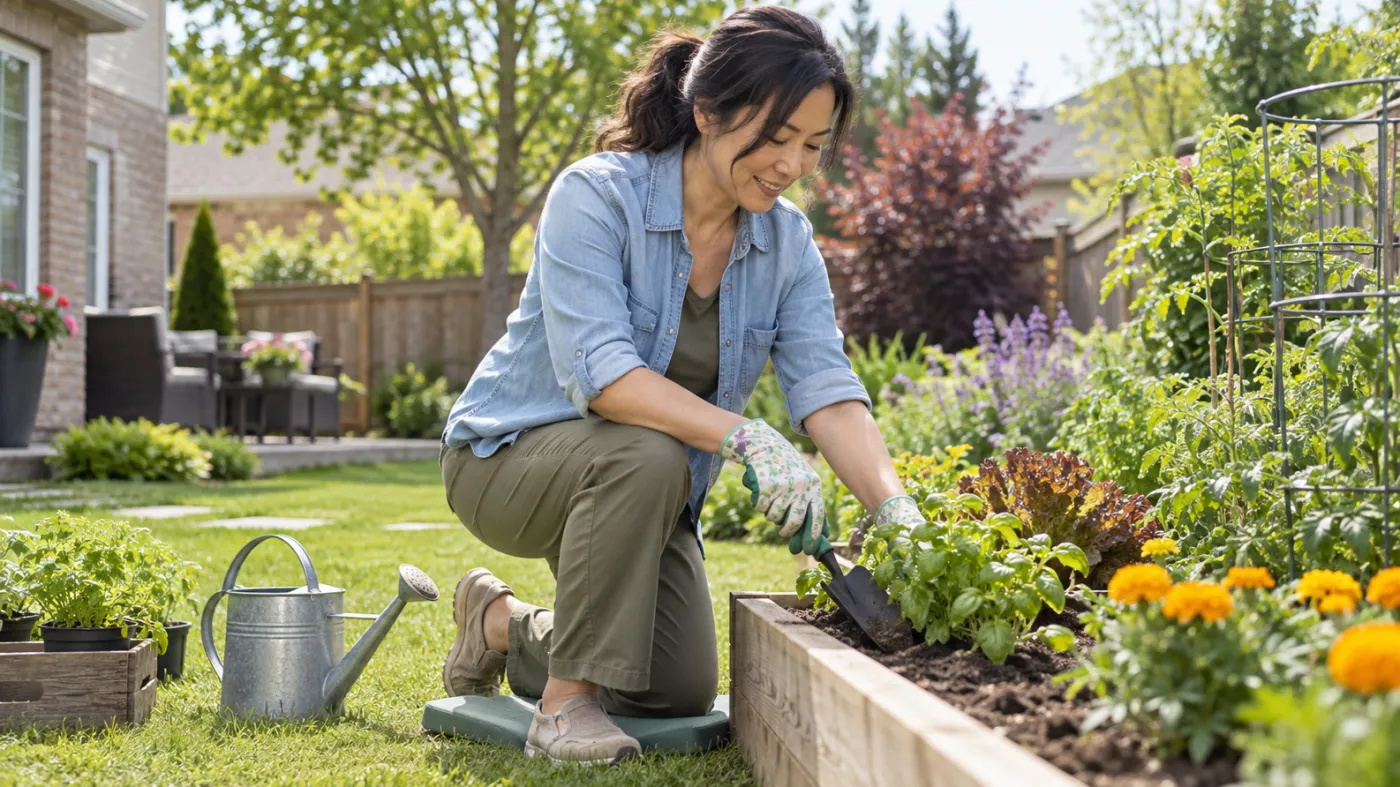
Gardening can be restorative and physically demanding at the same time. An hour in the yard may include squatting, reaching, kneeling, carrying, digging and twisting—often after several months away from those movements. The back is not too fragile for garden work, but the first ambitious weekend of the season can exceed the capacity built during winter.
The answer is not to hold one rigid posture or avoid bending forever. Gardening requires variety. A more useful approach is to plan the work, reduce avoidable load, change positions and build tolerance across the season. That lets the yard become part of an active life rather than a yearly test of endurance.
In Markham, spring cleanup can arrive in a rush, summer heat can change how quickly fatigue develops and autumn leaves can create long sessions of repeated raking and bag handling. Each season has its own workload. These strategies can help you adapt the task without changing the reason you garden.
Treat the first sessions like the start of a program
Enthusiasm is often highest when the weather first improves. Physical preparation may be lowest. If you have not dug, raked or knelt for months, begin with a smaller session than you think you can finish.
Choose one or two priority tasks and leave cosmetic extras for another day. Twenty to thirty minutes of varied work may be enough for the first outing. See how you feel later that day and the next morning before increasing time. A little stiffness can be an ordinary response to unfamiliar effort; a marked flare that disrupts sleep or daily activity suggests the dose was too high.
Progress the same way you would progress exercise. Add time, load or task difficulty gradually instead of increasing all three. Pulling a few weeds and turning light soil is different from moving wet bags, digging compacted ground and lifting patio stones.
Walk the job before starting it
A two-minute survey can prevent unnecessary carrying and awkward improvisation. Identify what needs to move, where it will go and whether the route is clear. Look for wet grass, uneven pavers, hoses and tools that could cause a trip.
Bring supplies close to the work area. Use a garden cart or wheelbarrow for soil, mulch and plants, and make more light trips rather than one overloaded trip. Place tools where you can reach them without repeatedly crossing the yard.
The Canadian Centre for Occupational Health and Safety recommends assessing a load, planning the path, keeping the load close and getting help when an item is too heavy or awkward. Those workplace principles transfer well to landscaping at home. The label on a bag does not tell the whole story: moisture, shape, distance and grip all affect difficulty.
Warm up by beginning gently
You do not need a complicated exercise routine before touching a trowel. Start with easy walking around the yard, light watering or gathering small items. Gradually use larger movements. If you plan to dig, rehearse a few slow hip hinges or shallow squats. If raking is first, make small strokes before reaching farther.
The warm-up should make you feel more ready, not tired. Save forceful stretching for another purpose; it does not guarantee injury prevention. Movement that resembles the coming task is more specific and helps you notice how the body feels that day.
Cold mornings may require a longer gradual start. After driving home with supplies, take a few steps before immediately lifting from the trunk.
Use several positions instead of one “correct” posture
Any position can become tiring when held long enough. Bending is a normal movement, but staying deeply bent while weeding an entire bed asks the back muscles to work continuously. Alternate positions before discomfort forces you to stop.
For low tasks, options include:
- Half-kneeling with one knee on a pad.
- Kneeling on both knees with the work close.
- Sitting on a low stable garden stool.
- Squatting for brief tasks if comfortable.
- Hinged standing with one hand supported on the thigh or bed edge.
- Working at a raised bed or potting bench.
Switch the lead leg when half-kneeling. Stand and take a few steps every several minutes. If getting to the ground is difficult, a sturdy kneeler with handles may help, but it must be stable and used according to its instructions.
Raised beds do not remove every demand. A very wide bed can create long reaches. Keep frequently tended plants within comfortable reach from the edge, or provide access from more than one side.
Bring the work closer
Distance magnifies effort. Holding a plant or bag close to the body generally requires less force than carrying it at arm’s length. The same principle applies while pruning, weeding and potting.
Move your feet instead of leaning across a large area. Set a container beside you for weeds. Place pots on a stable bench while filling them rather than working from ground level for every step. If pruning overhead, use the right long-handled tool within its safe range rather than repeatedly arching and reaching from an unstable position.
Avoid makeshift climbing on buckets or furniture. For work requiring a ladder, follow the ladder instructions, maintain stable contact and ask for help when the task is beyond a safe reach. Professional help may be appropriate for high branches or heavy landscaping.
Lift soil, mulch and planters with a plan
Before lifting, test the object. Rock a bag gently or raise one corner to estimate weight and whether contents shift. If it feels uncertain, divide the load, use a cart or ask another person.
Stand close with a stable base. Bend through the hips and knees as needed, get a secure grip and lift smoothly. Keep the object close and turn by moving the feet rather than planting them and twisting under load. Lower with control to a prepared surface.
There is no magic spine angle that makes every lift safe. Object size, grip, fatigue, frequency and distance all matter. CCOHS notes that risk tends to rise when loads are far from the body, handled below the knees or above the shoulders, lifted frequently or combined with twisting. Change the task when possible rather than relying only on technique.
For bags stored on the ground, first bring them upright, then use an intermediate surface or cart. A bag of soil can often be opened where it lies and transferred in smaller containers. Large decorative planters become surprisingly heavy when wet; empty soil or water before moving them.
Make digging a whole-body task
Digging combines force and repetition. Use a tool sized to your body and the job. Place the blade where you can step onto it without reaching far ahead. Shift weight through the legs and keep the handle close enough to control.
When moving soil, turn the whole body toward the destination rather than repeatedly twisting from the waist. Keep each shovel load modest. A smaller load moved smoothly can be faster over a full session than heavy loads interrupted by fatigue.
Alternate sides periodically if coordination allows. Most people have a preferred stance, but hundreds of repetitions on one side concentrate the demand. Hard, dry or root-filled ground may require a different tool, water and time, or professional equipment.
Stop when technique becomes rushed. Fatigue often appears as jerky movement, overreaching and poor footing before it feels like complete exhaustion.
Rake and sweep with shorter zones
Long raking strokes can combine rotation, pulling and sustained grip. Work in a small zone, step toward the material and move around the pile. Change hand position or direction occasionally instead of planting the feet and reaching across the entire lawn.
The tool handle should allow a comfortable reach without forcing constant deep bending. A handle that is too short may be worth replacing or extending with a purpose-made option. Gloves can improve comfort and grip, but they should fit well enough to control the tool.
Leaf bags create a second task after raking. Do not compress the contents so aggressively that the bag becomes difficult to grip or lift. Use smaller bags, fill them partially or move them with a cart according to local collection rules.
Prune with the shoulder and neck in mind
Pruning asks for precision, grip and sometimes sustained looking upward. Keep blades sharp and use a tool intended for the branch size. Dull tools require more force and invite repeated attempts.
Bring lower branches toward a comfortable position only when they bend safely. For higher work, change location frequently and take visual breaks by looking level. Do not pull forcefully on a branch above your face, and use eye protection when appropriate.
If hand or forearm fatigue develops, pause before grip becomes unreliable. Powered equipment can reduce repetition but adds vibration, weight and safety requirements. Read the manual and use the recommended protective equipment.
Water smarter, not heavier
A full watering can may be manageable for one trip and irritating after twenty. Fill it partially, use two hands or place smaller cans at different garden areas. A lightweight hose can reduce carrying, but drag it along a clear path so it does not become a trip hazard.
Avoid pulling a kinked hose with a sudden jerk. Walk back, release the snag and reposition it. Store hoses where they can be reeled without sustained bent posture. Drip irrigation or a timer may reduce repeated work, though setup and maintenance still require planning.
On hot days, water the gardener too. Work at cooler times, use shade and take breaks before dizziness or excessive fatigue develops. Follow public health advice during heat or poor air-quality events.
Use time as an ergonomic tool
Pacing is not simply resting after pain begins. It means alternating tasks before one region becomes overloaded. Ten minutes of kneeling weeding can be followed by upright watering, then a brief carrying task. This changes the demand without ending the session.
A timer can help when concentration makes hours disappear. Try a check-in every 20 or 30 minutes: Do you need water? Has your grip tightened? Are you repeatedly using one side? Is the next task better saved?
Leave a margin for cleanup. Tools still need to be put away, bags moved and footwear removed. If you work until completely exhausted, these final tasks become the least controlled part of the day.
Respond to a familiar flare-up calmly
Even with good planning, symptoms can increase. A flare does not automatically mean tissue damage. It may reflect a temporary mismatch between the day’s work and current tolerance.
Stop the task that is escalating symptoms and shift to comfortable movement. A short walk, rest in a supported position or gentle range of motion may help. For the next session, reduce duration, lighten loads and avoid stacking demanding yardwork with another unusually hard workout.
Do not stay completely still for days unless a healthcare professional has advised it. Resume ordinary activity within tolerance and rebuild gradually. If you can identify a clear workload jump, use that information rather than blaming one imperfect bend.
Know when to seek care
Seek urgent assessment after a serious fall, for inability to bear weight, new loss of bladder or bowel control, numbness in the saddle area, rapidly progressive weakness, chest pain, severe shortness of breath or other sudden concerning symptoms. A puncture, deep cut, eye injury, heat illness or suspected fracture also needs appropriate first aid and medical attention.
Arrange a non-urgent assessment when pain persists, repeatedly limits gardening, travels into an arm or leg, or is accompanied by ongoing numbness or weakness. An individualized examination can help identify contributing factors and create a graded return to the tasks you value.
Grow capacity along with the garden
General strength and endurance make seasonal tasks easier. Squats or sit-to-stands, step-ups, rows, carries and controlled hip-hinge practice can prepare patterns used in the yard. The best program fits your health, experience and equipment. Start at a level that leaves you able to recover.
Walking and other regular activity between garden sessions also help prevent the yard from being your only demanding movement of the week. Winter is an opportunity to maintain capacity rather than waiting for spring to begin again.
Gardening without a back flare-up in Markham is less about perfect form than good decisions: start below your limit, put tools and materials where they are needed, vary positions, keep loads close and stop before fatigue takes over. The season is long. Leaving some work for tomorrow can be the strategy that lets you enjoy it all.
This article provides general education and is not a diagnosis or individualized treatment plan. Seek urgent care for severe, sudden or progressive symptoms or a serious garden injury.