
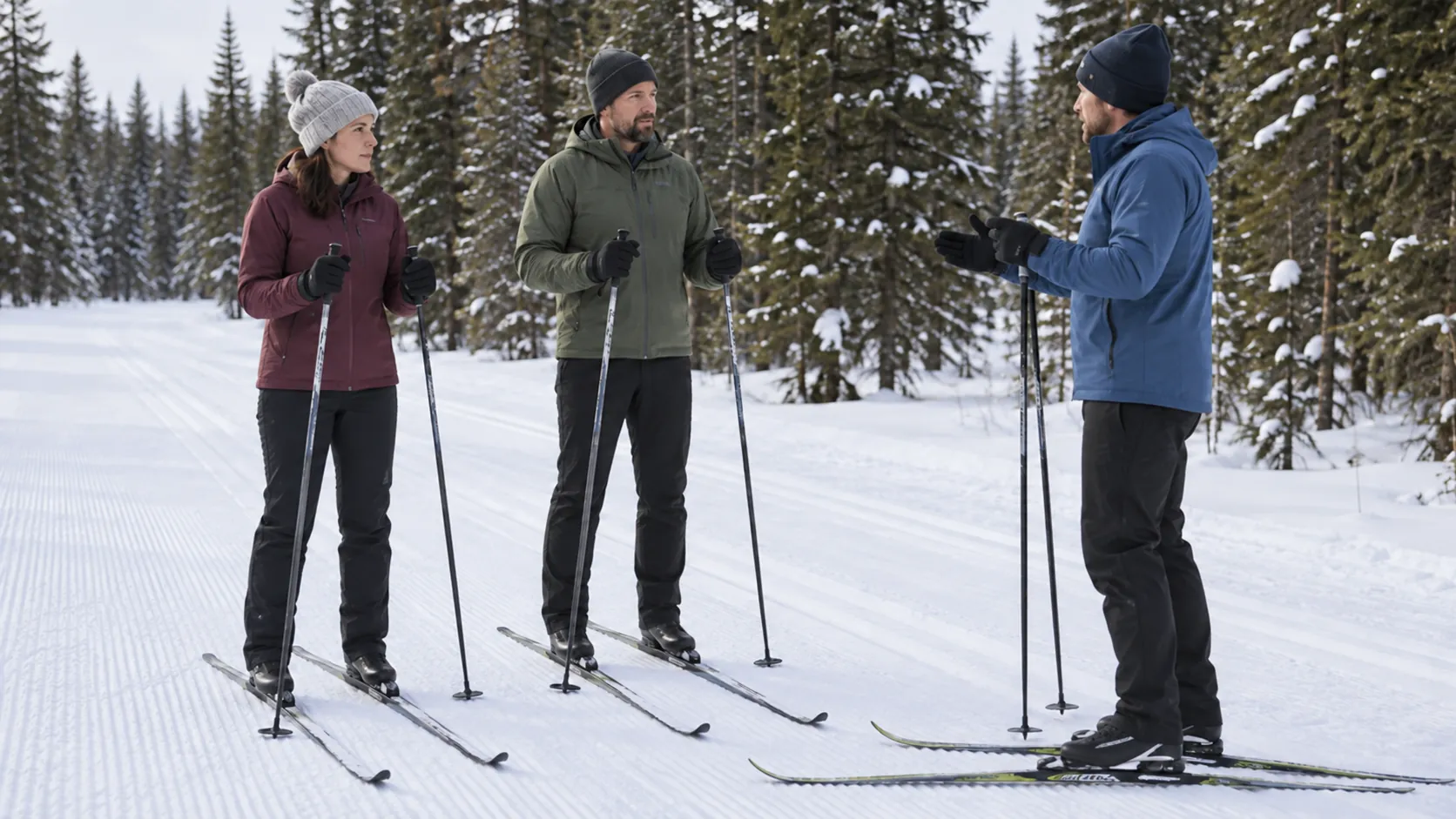
The appeal of cross-country skiing often begins with a simple picture: a quiet trail, fresh air, and an enjoyable reason to spend time outside in winter. The first attempt can feel less simple. There are unfamiliar boots and bindings, poles to manage, different skiing styles, and a trail map that does not necessarily explain how a slope will feel under your feet. A little preparation makes room for learning instead of turning the day into a series of rushed decisions.
For someone preparing in Markham, the actual outing may require travel to a suitable maintained trail. Snow in the neighbourhood does not establish that a ski destination is open, groomed, or appropriate for a beginner. Think of the first day as an introduction with instruction and a flexible schedule. The objective can be learning how to start, stop, and move comfortably in the equipment, without committing to a long route.
Decide which kind of skiing you are booking
Classic and skate skiing use different movement patterns and equipment. Classic skiing commonly uses parallel tracks, while skate skiing involves a skating action on a groomed surface. The Ontario Parks beginner guide explains these distinctions and recommends lessons and rental equipment as useful starting points. Confirm the style when booking so the lesson, skis, boots, and trail are compatible.
Tell the provider that you are new, even if you are comfortable with another winter sport. Skating, downhill skiing, and walking on snow may contribute useful experience, but they do not answer every question about Nordic equipment or trail control. A clear description of your experience helps the instructor place you appropriately and explain the details you actually need.
Ask what the booking includes. Equipment rental, a trail pass, instruction, and access to changing facilities may be separate arrangements. Find out when you should arrive and whether equipment fitting happens before the lesson time. Sorting this out ahead of the trip prevents a late arrival from turning your introduction into a hurried dash from the parking area.
Choose a learning day rather than a distance target
It is easy to select a route because the kilometre count sounds modest compared with a familiar walk. That comparison can be misleading for a beginner. You will also be learning how the skis move, how to use the poles, and how to respond to changes in terrain. Ask the instructor or trail staff which area is appropriate for the skills you have practised that day.
A first outing can be successful without completing a scenic loop. You might spend much of the time on a teaching area, practise a short section, and return before becoming tired. Decide that this is an acceptable outcome before leaving Markham. Otherwise, the time spent driving can create pressure to continue longer simply to make the trip feel worthwhile.
If you are going with friends, agree that different experience levels may require different plans. A confident skier’s favourite route is not automatically a suitable classroom. Friends can still share the journey, lunch, or a meeting point while allowing the beginner to stay with appropriate instruction. Making that arrangement early avoids an awkward decision at a trail junction.
Let equipment fitting be a conversation
When renting, provide accurate information requested by the fitter and explain any previous difficulty with footwear. Ask how the bindings work and practise connecting and releasing them in the designated area. Learn how the equipment should be carried and where it should be placed while you organize yourself. These small skills can remove a surprising amount of stress before the lesson begins.
Check that you understand the intended boot fit and tell staff if there is pressure, rubbing, or numbness. Do not assume that an unfamiliar sensation is an unavoidable part of learning. Bring the socks you intend to wear so the fitting reflects the outing. If something feels wrong after moving around, return to the rental staff rather than improvising a binding or boot modification.
Keep questions specific. “This area presses when I stand in the boot” gives the fitter more information than “these feel strange.” You can also ask what to do if a problem develops on the trail and where assistance is available. Knowing the process ahead of time makes it easier to address an issue before it dominates the day.
Prepare your ordinary week sensibly
The days before a first ski lesson are not the time to invent an intense conditioning challenge. Consider how the outing fits alongside your usual exercise, work, and travel. Leave enough room that you are not arriving after an unusually demanding week with an expectation of spending all day on the snow. The plan should make learning easier, not create another performance deadline.
If you have an injury, ongoing pain, a health condition affecting exercise, or concerns about balance, discuss participation with an appropriate healthcare professional. Explain the activity accurately: unfamiliar equipment, outdoor conditions, and a lesson on snow. Ask whether there are restrictions or preparations relevant to you. General online advice cannot supply individual clearance.
Tell the instructor about relevant limitations before the lesson starts. You do not need to disclose a complete medical history to the group, but the instructor should know about a difficulty that affects teaching or participation. Ask how breaks are handled and whether the session can be adapted. A short conversation before departure is easier than trying to solve a mismatch halfway through the lesson.
Pack around transitions, not just trail time
Your day includes a car journey, equipment fitting, active movement, pauses, and the trip home. Clothing that feels comfortable in the parking area may feel different once you begin skiing. Ontario Parks recommends adjustable layers and clothing suited to winter activity in its beginner guidance. Think through how you will add or remove a layer and where you will keep it when it is not being worn.
Put small essentials somewhere you can reach without emptying a bag into the snow. Separate items needed during the lesson from those that can stay at the base or in the vehicle, following the provider’s arrangements. Before leaving home, check that gloves, spare clothing, and other planned items are actually packed rather than relying on a memory of using them last winter.
A simple departure checklist can be more useful than buying new equipment for every imagined scenario. Include the booking details, directions, contact information, required clothing, and the provider’s stated requirements. If you are uncertain whether something is necessary, ask the venue. The goal is to arrive prepared for the planned setting, not to carry an impractical collection of gear you do not know how to use.
Check the destination, not just the weather at home
Conditions and operating arrangements can change. Review the destination’s official information before travel, including trail openings, lesson status, rentals, and access requirements. The Ontario Parks winter activity information links skiing opportunities with current winter information. Use the relevant operator’s latest report rather than assuming that a previous visit or an old photograph describes today’s conditions.
Build a cancellation or postponement option into the plan. If the lesson is unavailable or conditions are unsuitable, choosing another day preserves the purpose of the outing. You do not need to turn a beginner ski day into an improvised trip on an unmaintained route because everyone is already dressed. An alternative activity can still make the day worthwhile.
Check the travel schedule as well. Allow time to arrive, find the correct building, and ask questions before instruction begins. If several people are sharing a vehicle, agree on the return plan and who needs to be contacted if it changes. These ordinary logistics matter because a rushed start and an inflexible departure can reduce the time available for learning and breaks.
Learn the trail rules before joining traffic
Maintained winter routes may have designated uses and directions. Walking or snowshoeing on groomed ski surfaces can damage them, and stopping in a track can obstruct other users. Ontario Parks explains winter trail etiquette, including reading signs, keeping clear when stopping, and making room for others. Follow the specific rules at your destination and ask staff to explain anything unclear.
Before leaving the teaching area, ask how to respond when another skier approaches, where to pause, and what to do if you need to remove the skis. These are teachable skills, not details you should be embarrassed to ask about. Knowing them can make a shared trail feel less pressured, especially when faster skiers pass nearby.
Stay within the designated route and the conditions of your lesson or outing. Ontario Parks also advises travelling with a companion, sharing your plans with someone else, and avoiding crossings over bodies of water. A beginner day should not depend on deciding whether an unmarked shortcut or frozen surface is safe. Keep the route decision with the established trail information and qualified instruction.
End while the experience is still useful
Take the planned breaks and tell the instructor if you are becoming too tired to follow the lesson. There is no prize for continuing after concentration or comfort has deteriorated. If a fall causes significant pain, an inability to use a limb normally, or concern about injury, stop and seek appropriate help rather than treating it as a required part of the learning process.
Afterward, write down a few practical observations. Was the equipment comfortable? Which skill needs more instruction? Was the schedule generous enough? Would a shorter session or different group arrangement improve the next outing? These questions are more useful for planning than judging yourself against experienced skiers who moved past you on the trail.
Cross-country skiing preparation in Markham can remain straightforward: choose a suitable introduction, confirm the arrangements, and give yourself permission to learn at a manageable pace. Let current conditions and instruction guide the day. A well-organized first outing creates a clearer basis for deciding whether, when, and how you would like to go again.