
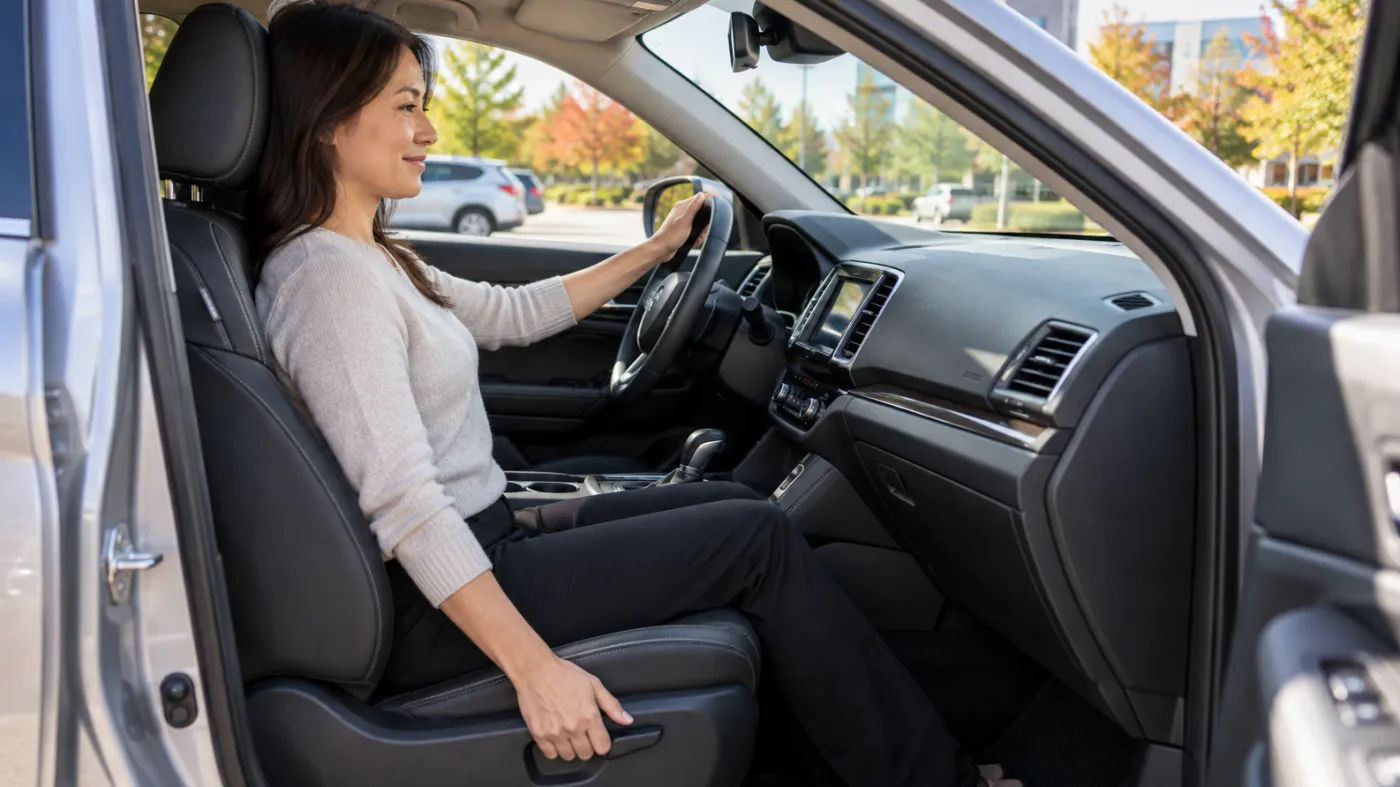
A commute can look physically easy: sit down, steer and arrive. Yet driving combines prolonged sitting, vibration, repeated pedal use, attention demands and relatively few opportunities to change position. Traffic can turn a short trip into a long period of low-level muscle activity. By the time you step out of the car, your neck may feel guarded, your back may feel compressed and your first few steps may be stiff.
Drivers in Markham may move between local roads, Highway 7, Highway 404 and regional destinations, with travel time changing from one day to the next. You cannot control every delay, but you can make the vehicle fit you more closely, reduce unnecessary effort and build movement into the parts of the day you do control.
There is no single “perfect” driving posture that prevents all discomfort. The useful goal is a supported position that gives you clear visibility and full control without making you reach, brace or twist. Just as important, the setup should be paired with regular changes in position outside the vehicle.
Why driving can aggravate symptoms
The body is not harmed simply because it sits. Problems are more likely when one position is held longer than current tolerance, particularly when combined with stress, fatigue or a recent increase in driving. In the car, the legs cannot shift freely, the arms stay directed toward the wheel and the head often remains oriented forward. Road vibration and frequent braking add small repeated demands.
A person may also enter the car already fatigued from desk work. An hour of commuting after a day of sitting is not an isolated hour; it is part of the total daily load. Conversely, someone who performs physical work may find that the transition to a low, fixed seat makes tired hips or a sensitive back more noticeable.
The Canadian Centre for Occupational Health and Safety notes that prolonged driving and an unchanged posture can contribute to discomfort in the lower back, neck and shoulders. It recommends fitting the seat, backrest, head restraint and controls to the driver. These changes cannot remove traffic, but they can reduce avoidable strain.
Set up the car while it is parked
Make adjustments before moving. Trying to find a lever or change a mirror while driving creates a safety risk and encourages rushed compromises. Empty bulky items from your pockets, settle into the seat and work through the setup in a consistent order.
If more than one person uses the vehicle, save your seat position if the car offers memory settings. Otherwise, use a simple reference, such as the number of visible seat-track notches, while still checking the final fit each time.
Start with seat height and distance, then adjust the backrest, steering wheel, head restraint and mirrors. Rechecking mirrors last matters because a mirror position based on slouching can encourage you to return to that slouch throughout the trip.
Find a workable distance from the pedals
Move the seat until you can fully operate the brake and accelerator without sliding the pelvis forward or locking the knee. When the pedal is depressed, the knee should remain slightly bent and the back should stay supported. If you drive a manual vehicle, test the clutch in the same way.
Too far away, and you may reach through the leg and pull away from the backrest. Too close, and the hips and knees can feel crowded. You also need adequate clearance from the steering wheel and dashboard safety systems. Follow the vehicle manufacturer’s instructions for airbag positioning; the driver’s manual is the right reference when controls differ.
After setting the distance, move the right foot between pedals. The motion should feel controlled without twisting the entire pelvis. Footwear affects this relationship. Very thick soles or high heels can change pedal feel, so choose footwear that lets you control the vehicle safely.
Adjust seat height and cushion angle
Raise the seat enough to see the road and instruments clearly while preserving headroom. Your hips may feel better when they are approximately level with, or slightly above, the knees, but vehicle geometry and body proportions vary. Avoid a cushion angle that presses firmly behind the knees, because it may make you slide forward or feel pressure in the legs.
Shorter drivers sometimes move very close to the wheel to gain visibility. If the vehicle offers independent seat height and telescoping steering adjustments, use them together rather than solving everything with forward movement. A manufacturer-approved seat solution may be appropriate in some cases; loose household cushions can shift and may interfere with safe control.
The left foot should have a stable resting place when it is not operating a clutch. Using the dead pedal can help support the pelvis. Avoid tucking one foot under the seat for long periods, which creates an asymmetrical position and delays a quick response.
Support the back without forcing it flat
Recline the backrest enough that the torso is supported while the eyes remain directed toward the road. A very upright seat can feel rigid, while excessive recline makes you reach for the wheel and bring the head forward. The right angle is the one that maintains contact along the back and allows easy control.
Use the built-in lumbar support to fill the natural space behind the lower back, not to create a dramatic arch. Increase it until support is noticeable, then reduce it if there is pressure or if the ribs feel pushed forward. A small purpose-made lumbar roll can be useful in a vehicle with a flat backrest, provided it stays secure and does not change safe control.
People with back pain sometimes brace their abdominal muscles for the entire drive. Constant high tension adds fatigue. Instead, let the seat carry some of your weight. Use only the muscle effort needed for the road conditions.
Bring the wheel to you
Once the lower body is set, adjust the steering wheel so the shoulders can remain in contact with the backrest while the hands reach the wheel with relaxed elbows. If you have to round forward or straighten the arms completely, bring the wheel closer if the vehicle allows. Keep a safe distance from the airbag according to the manufacturer; CCOHS describes a general distance of roughly 25 to 30 centimetres for many drivers, but vehicle guidance takes priority.
The wheel should not block the instrument panel. Keep hands in a safe, comfortable position consistent with current driving guidance and your vehicle’s controls. Avoid gripping harder than necessary during routine travel. A tight grip can spread tension into the forearms, shoulders and jaw.
If one shoulder becomes sore, notice whether you steer mainly with one hand, rest an elbow high on the door or lean toward the centre console. Variation is normal on a brief trip, but a repeated asymmetrical habit can become tiring over a long commute.
Position the head restraint and mirrors
The head restraint is a safety device, not a pillow for pushing the head forward. Adjust it so the upper portion aligns appropriately with the back of the head, following the vehicle manual. If it feels intrusive, check the backrest recline and seat position rather than removing or reversing it.
Then set the rear-view and side mirrors while sitting in the supported position. You should be able to scan them with small eye and head movements instead of repeatedly lifting, craning or rotating the trunk. The exact mirror setup must prioritize a safe field of view and blind-spot management.
A useful self-check is to notice what happens after twenty minutes. If the mirrors seem “wrong” only because you have collapsed away from the starting position, treat that as a cue to resettle and, when safe, plan a movement break.
Treat the phone as a safety issue, not an ergonomic tool
Do not hold or operate a phone while driving. Set navigation, audio and climate preferences before leaving, and use legal hands-free features only when they do not divert attention. A mount should not obstruct the road, mirrors, instruments or airbags. Local laws and your vehicle manual should guide placement and use.
If navigation changes are needed, pull over safely. No posture benefit justifies distracted driving. The same principle applies to stretching in the seat: large trunk twists, reaching to the floor or prolonged head movements belong in a parked vehicle, not moving traffic.
Use pauses before and after the trip
For longer drives, CCOHS suggests taking a break about every hour or two where possible. The appropriate timing depends on fatigue, symptoms, weather and safe stopping options. A break does not need to be a workout. Leave the vehicle in a safe location, walk for a few minutes and let the hips, knees and spine change position.
Daily commuting may not offer a safe mid-trip stop. In that case, use transition moments. Before getting into the car, take a brief walk from the building, roll the shoulders gently or complete a few comfortable hip movements. After parking, avoid replacing the drive immediately with another long seated period. Walk to the next destination at an easy pace.
These bookends can be more reliable than elaborate exercises. They also help your nervous system shift between work concentration and home life.
Getting in and out can be the sensitive part
For some people, the drive itself is tolerable but the first movement out of the car is painful. Make room before entering or exiting. Move the seat back temporarily if needed, bring the legs out with the trunk rather than forcing a deep twist and use stable vehicle surfaces for light support—not the moving door edge.
When placing a bag, laptop or groceries in the vehicle, step close to the load and avoid a long reach combined with rotation. Divide heavy items, use two hands and place frequently used objects where they can be reached after you have parked and exited safely. Do not reach into the back seat while sitting in the driver’s position.
If stiffness is predictable, pause after standing. Take a few easy steps before lifting from the trunk. Speed is rarely necessary in a parking space.
Match the strategy to the symptom pattern
Lower-back discomfort may respond to better lumbar support, a slightly different recline or shorter uninterrupted trips. Neck tension may relate more to wheel reach, mirror use, visual stress or jaw clenching. Hip discomfort may change with cushion angle and pocket contents. Leg symptoms may be influenced by seat-edge pressure, pedal distance or a problem that needs clinical assessment.
Change one factor at a time and test it over several typical trips. Moving every control at once can trade one problem for another. Keep a short note of trip duration, setup change and response. The aim is not to scrutinize every sensation; it is to identify repeatable patterns.
Remember the rest of the day. If symptoms rise only after a long drive following eight hours at a desk, adding movement during work may matter as much as modifying the car.
When driving symptoms deserve assessment
Seek prompt medical attention for chest pain, fainting, sudden severe headache, new facial droop, speech difficulty, significant new weakness, loss of bladder or bowel control, saddle numbness, or symptoms following a serious collision. Do not continue driving if pain, numbness, dizziness, medication effects or restricted movement prevent safe control of the vehicle.
An individual assessment is also sensible when symptoms persist, repeatedly travel into an arm or leg, wake you at night, follow a collision or progressively reduce your ability to check blind spots and operate pedals. A clinician can assess the problem and help distinguish vehicle setup issues from a condition requiring different care.
Build a commute your body can tolerate
Comfortable driving is not achieved by holding a textbook pose. It comes from fitting the vehicle to your body, allowing support, reducing unnecessary reach and changing position often enough across the day. The safest setup always preserves full control, visibility and proper use of restraints and airbags.
For commuters in Markham, begin with the parked-car sequence: pedals, seat height, backrest, wheel, head restraint and mirrors. Then add movement before and after travel. Small changes are easier to test and repeat—and a repeatable routine is more useful than an ideal posture you cannot maintain.
This article is general education, not individualized medical or vehicle-safety advice. Follow your vehicle manual and seek qualified care when symptoms affect safe driving or are severe, new or progressive.