
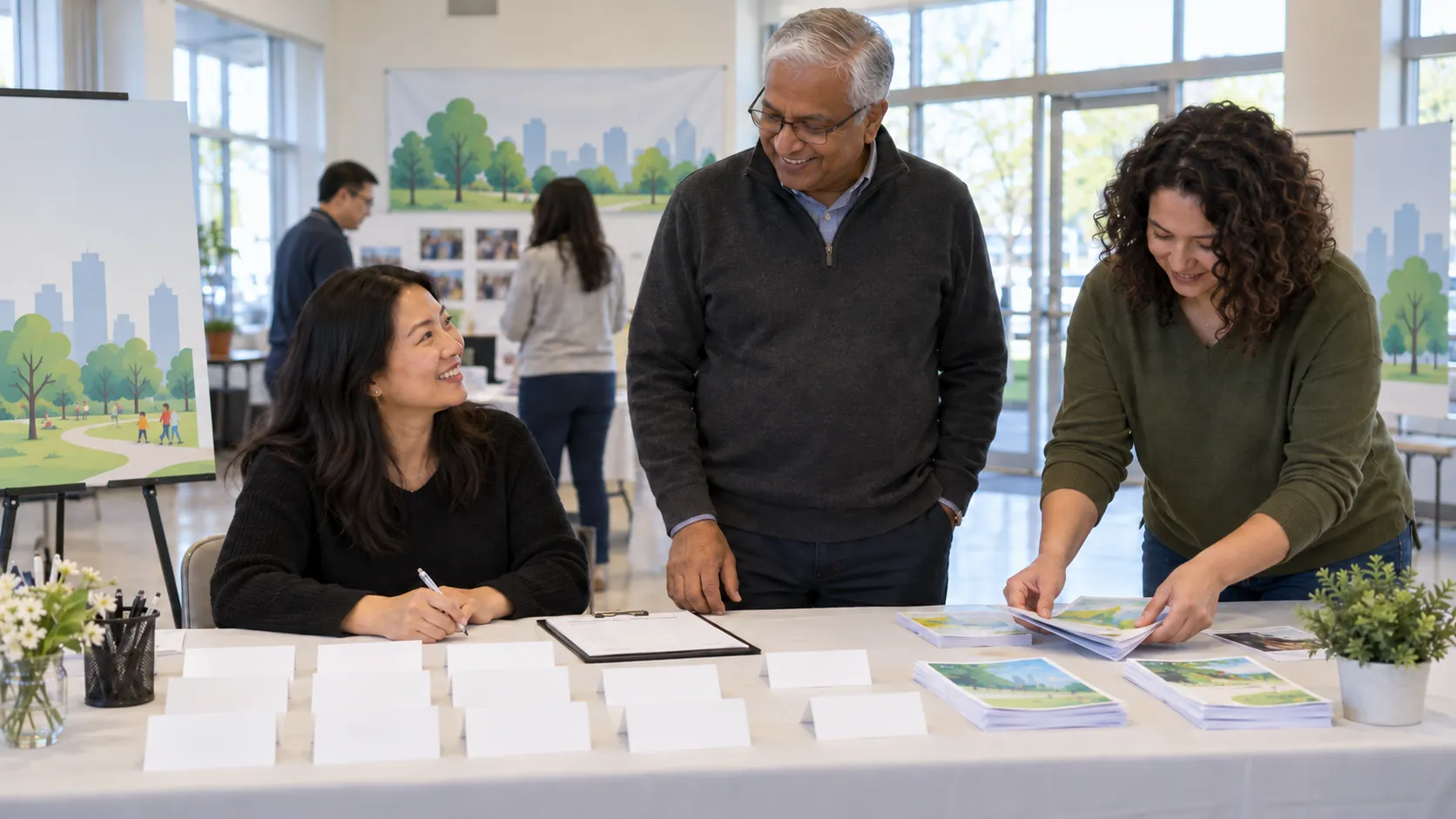
Volunteering often begins with a simple offer: you have a few hours and would like to help. The actual role may turn out to include carrying supplies before opening, standing at a table, guiding visitors, and staying afterward to pack everything away. Those tasks are not necessarily difficult individually, but together they can make the shift very different from the description you first imagined.
For community-event volunteers in Markham, comfort starts with understanding the job before committing to it. A useful role should match your interests, abilities, and current circumstances. You can be enthusiastic about helping while still asking for a clear description, suitable equipment, and a workable break arrangement. Those questions make it easier for organizers to place people well and for volunteers to contribute reliably throughout the event.
Ask what the role looks like in practice
Read the role description, then ask about the details it does not cover. Will you mainly sit, stand, walk, carry, or use a computer? Does the shift include setup and cleanup? Are supplies already at the station, or will you collect them from another part of the building? A title such as registration helper can describe several very different combinations of tasks.
The City of Markham’s volunteering information explains its application and preparation process, while its volunteer opportunities page points to available categories and listings. Use the current information for the organization you want to support. Requirements and opportunities can change, and a role with one organizer may have different expectations from a similarly named role elsewhere.
Describe relevant needs early. You may be comfortable greeting people but unable to lift equipment, or able to help for a shorter shift but not an entire day. You do not need to provide unnecessary personal medical details to explain a functional limitation. Ask whether the role can be arranged appropriately and who will confirm the plan before the event.
Include the hidden hours
An advertised shift may not include travel, orientation, collecting a badge, finding the station, or waiting for the next volunteer to arrive. Ask when you should actually be on site and when you can expect to leave. Add those periods to your own schedule. A two-hour task can occupy much more of the day once the surrounding arrangements are included.
Consider what happens before and after the event. If you have a demanding work shift beforehand or family responsibilities immediately afterward, choose a commitment that leaves room for those needs. There is no advantage in promising a schedule that works only if every part of the day goes perfectly. A realistic commitment helps both you and the organizer plan with fewer last-minute changes.
For a hypothetical weekend event, someone might volunteer for a defined morning role and leave setup or teardown to another team. Another person may prefer preparation work on a quieter day. Both can be useful contributions. The most visible role is not automatically the best match, and a shorter, clearly defined shift can be more dependable than an open-ended offer to do everything.
Design a station that supports the task
Before visitors arrive, look at the station you will use. Can you reach the materials you need without repeatedly stretching across a large table? Is there space to sit or change position where appropriate? Are frequently used items easy to identify? Ask the coordinator before rearranging the setup, particularly where access routes, equipment, or visitor flow are involved.
The Canadian Centre for Occupational Health and Safety discusses the value of task design and opportunities to change position in its guidance on working while standing. Although written for workplaces, those ideas can inform a volunteer station too. The practical question is whether the setup gives you a manageable way to complete the actual task throughout the shift.
Avoid assuming that standing is required simply because the previous volunteer stood. A greeting or information role may allow some seated work, depending on the event and access needs. Ask what is possible. If a chair would block a route or make communication difficult, work with the organizer on another arrangement. The station should function well for volunteers and visitors together.
Separate helping from handling everything
Events can produce unexpected requests to move a table, carry a box, or retrieve equipment. Before agreeing, understand the load, route, and method. Ask whether a trolley or another planned handling arrangement is available and whether you are trained to use it. Do not assume that being a volunteer means every task is suitable for you or that urgency removes the need for a sensible plan.
CCOHS general lifting guidance identifies factors such as load size, weight, grip, repetition, and the environment. These are useful considerations when organizers plan supply handling. A task that is awkward for one person may need to be redesigned, assigned to trained staff, or completed with appropriate equipment. Merely telling people to lift carefully does not resolve every handling problem.
If you have a restriction, state it before the task begins. A clear sentence such as being available for registration but unable to move equipment gives the coordinator information they can act on. Do not demonstrate willingness by attempting one unsuitable lift. You can remain helpful by directing the request to the right person or continuing the role you agreed to perform.
Make breaks an arrangement, not a hope
Ask how breaks are covered and who to contact if you need to step away. A volunteer at a busy station may otherwise feel unable to leave, even when a break was mentioned during orientation. Identify the relief person or the procedure in advance. If the role cannot be left unattended, the organizer needs a plan that does not depend on someone simply waiting until the queue disappears.
Know where drinking water, washrooms, and a suitable rest area are located. Keep personal items where the organization directs and follow any food or hygiene requirements for the role. Do not place a drink where it could spill onto equipment, documents, or a walkway. These details are easier to settle before the event becomes busy and everyone is trying to solve several problems at once.
If the agreed break arrangement is not happening, raise it with the coordinator early. Explain the practical issue and ask for a solution. Quietly continuing until you cannot manage the shift helps neither you nor the event. A brief adjustment may preserve the rest of your participation and reveal a staffing issue the organizer needs to address for other volunteers as well.
Prepare for the setting you will actually use
Indoor and outdoor roles can involve different conditions. Ask about the surface, weather exposure, walking distances, lighting, and any required clothing or equipment. Check the event’s current instructions rather than assuming that last year’s arrangement will be repeated. If conditions change, follow the organizer’s direction and report hazards instead of improvising a solution outside your role.
Choose footwear and clothing suited to the assigned task and any stated requirements. Bring only what you can store and manage appropriately. If you use a mobility aid or other support, discuss access and the station arrangement in advance. The aim is to make the environment workable, not to persuade yourself to manage a known obstacle without the assistance or setup you need.
At an outdoor event, know where to go if weather makes the role unsuitable. A shelter, relocation, or shift change should follow the event plan. Avoid treating persistence as the measure of a good volunteer. Reporting a problem promptly gives the coordinator a chance to make an informed decision for the whole group.
Understand the boundary of your responsibility
Know whom to contact for visitor questions, incidents, and requests outside your training. A volunteer may be the first person someone approaches, but that does not mean you must personally solve every problem. Follow the organization’s reporting and emergency procedures. If someone needs medical help, alert the designated staff or emergency services as appropriate rather than attempting care beyond your training.
The same boundary applies to equipment and access. Do not climb on furniture to adjust a sign, enter a restricted area, or operate unfamiliar equipment because the task appears quick. Ask the responsible person. A delay while the right help is found is easier to manage than a new problem created by an improvised shortcut.
Keep communication simple and factual. Explain what you observed, where it is, and what assistance is needed. If you must leave the station, tell the coordinator and follow the agreed handover process. Clear communication is part of reliable volunteering, especially when several teams share a venue and no single person can see everything happening at once.
Plan around an existing movement concern
If pain or a recent injury affects your participation, discuss the intended duties with the healthcare professional directing your care. Bring the actual role description and any information about standing, walking, or handling. Ask what tasks fit the current plan and what changes are needed. A general statement that volunteering is light work may overlook the most demanding part of the shift.
Do not set aside prescribed restrictions because the event is for a good cause. Ask the organizer about another role or a later opportunity if the current task does not fit. There are many ways to contribute, including preparation or administrative work where available. The suitable choice is the one that respects your needs and the organization’s requirements at the same time.
If new symptoms affect your control, balance, or ability to perform the task safely, stop and tell the coordinator. Seek assessment when symptoms persist or are concerning. An acute injury with severe pain, deformity, or new loss of sensation needs prompt medical care. The event schedule should not determine whether you obtain appropriate help.
Review the experience before the next commitment
After the event, note what worked and what you would change. Was the role description accurate? Were breaks available? Did the station and equipment suit the task? Share useful feedback with the organizer through their normal process. Specific observations can improve the next event more effectively than simply saying the day was tiring or that more volunteers were needed.
If recurring discomfort is limiting the roles you want to take on, contact Prime Spine in Markham to discuss assessment and appropriate support. Describe the tasks and the part of the shift that becomes difficult. A well-matched volunteer role lets you contribute your time and skills with clear expectations, practical support, and a schedule you can sustain.