
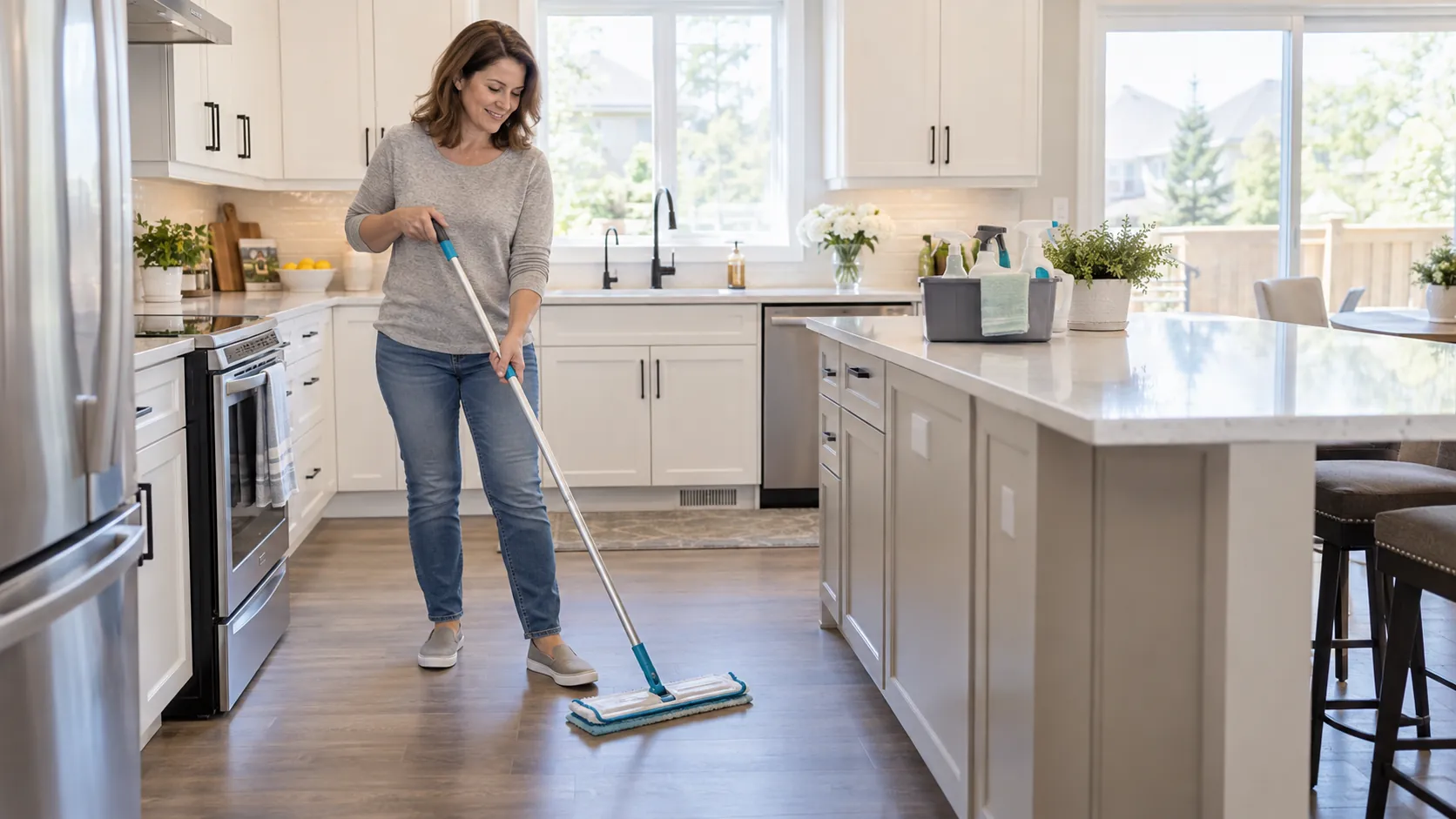
The plan is to clean one room. Then the laundry needs moving, a cupboard needs sorting and the vacuum is already out, so you continue. By late afternoon, the house looks better but the back is making every remaining task feel larger. The problem may be less about one supposedly wrong bend and more about how a series of ordinary jobs accumulated without a clear stopping point.
Cleaning-day back comfort in Markham begins with organizing the work you actually need to do. A household may have limited time, shared responsibilities and rooms that cannot be left unfinished. The useful approach accounts for those constraints while reducing unnecessary carrying, reaching and repetition. You should be able to make the day more manageable without turning every chore into a lesson in perfect posture.
Give the day a smaller definition of finished
Before starting, separate essential cleaning from projects that can wait. Preparing a usable kitchen is different from reorganizing every cupboard in it. Changing bedding is different from moving the bed to clean behind it. If all of those tasks remain in one vague category, it becomes difficult to decide when enough work has been completed.
Choose a realistic endpoint. For example, the day’s aim might be clear floors, one bathroom and the laundry needed for the next workday. The cupboard project can have its own time later. This is an organizational choice, not a claim that a particular number of chores is medically safe for everyone.
Write down the optional tasks as they occur to you rather than immediately adding them to the session. That preserves the idea without allowing it to expand the current workload. A clear list also makes it easier to share jobs with another household member instead of leaving one person to notice and complete everything.
Notice the demands hidden inside each chore
Cleaning includes standing, carrying, pushing, reaching, bending and repeated hand use. Occupational housekeeping guidance identifies these varied demands and the importance of work organization and suitable equipment. The Canadian Centre for Occupational Health and Safety discusses them in a workplace setting; similar task-planning questions can be useful at home.
Take vacuuming as an example. The visible task is moving the vacuum across the floor, but the full job may include carrying it downstairs, moving furniture, reaching around obstacles and repeatedly bending to change attachments. Improving only the push-and-pull motion leaves the rest of the workload unchanged.
Choose the part that is most difficult and address that first. Perhaps another person can move the heavy equipment, or the floor can be cleared before the vacuum comes out. Perhaps a smaller area can be completed without moving furniture. A practical change should remove a real obstacle rather than adding another rule you must remember throughout the day.
Set up the room before carrying supplies into it
Clear an accessible route, remove loose objects and decide where the supplies will sit. Keep frequently used items within a comfortable reach and out of walking paths. Good housekeeping reduces clutter and related slip or trip hazards. The CCOHS housekeeping guide explains these general principles.
Think about the exit as well as the starting point. If you are cleaning a floor, plan the order so you are not repeatedly crossing the wet area to retrieve something forgotten. Keep other household members informed about the space being cleaned. A clear route is particularly important when someone uses a walking aid or has difficulty changing direction quickly.
Gather only what the task needs. A large caddy packed with every product may be convenient for storage but awkward to carry from room to room. A smaller selection can reduce unnecessary handling. Follow product labels and keep supplies safely stored when you pause; organizing the task should not create a new exposure or access problem.
Let the tool reach where you cannot comfortably stand
Handle length, weight and grip influence how a tool is used. A suitable long-handled tool may make a task easier to reach, while a heavy or awkward tool can create another demand. The CCOHS hand-tool design guidance describes how tool features affect handling.
Before buying, identify the exact problem. Is the handle too short, the head difficult to move or the grip uncomfortable? A product marketed as ergonomic may not solve the part that bothers you. If possible, try the relevant movement and consider where the tool will be stored and how it will be carried.
Do not use a longer handle as a reason to reach far across an unstable position. Move closer when practical and keep the task within a range you can control. For high areas, avoid standing on unsuitable furniture. Some jobs need appropriate access equipment or help, and they should be planned separately from routine floor cleaning.
Vacuuming works better with room to move
Clear small obstacles before starting so you are not continually stopping, bending and pulling the machine around them. Check the cord or hose route and follow the equipment instructions. A vacuum that catches on furniture can turn a simple pass across the floor into repeated unexpected tugs.
Work in manageable sections and reposition yourself as needed. There is no need to keep the feet fixed while reaching as far as possible in every direction. If one attachment makes the job awkward, pause to consider whether another is suitable rather than compensating with increasingly uncomfortable effort.
For a multi-level home, include transporting the vacuum in the workload. Do not carry more than you can manage securely, particularly on stairs. Ask for help with that part or organize the cleaning sequence so the equipment is moved fewer times. The most useful adjustment may happen before the vacuum is switched on.
Laundry is a sequence of separate handling tasks
Sorting, loading, transferring, carrying, hanging and folding all place different demands on the body. A basket that is manageable when empty can become awkward when filled with damp items. Review the entire sequence rather than assuming that the only relevant movement is bending to the machine.
Divide loads into amounts you can handle securely and keep the route clear. If folding on a very low surface is uncomfortable, consider a more suitable surface or a seated arrangement that works for you. If reaching to hang items is the difficult part, discuss a different setup or ask another person to handle that step temporarily.
An illustrative household plan might separate carrying from folding so the person who finds stairs difficult can still complete a useful part of the job. Shared work does not need to be divided by entire rooms or entire chores. Splitting the sequence often makes better use of the help available.
Bathroom cleaning benefits from a separate plan
Bathrooms combine restricted space, low surfaces, wet areas and tasks that can require sustained reaching. Decide which parts can be completed comfortably and which need a different tool or assistance. Avoid treating the entire room as one uninterrupted effort that must continue until every surface is finished.
Bring the supplies close enough that you do not repeatedly reach across fixtures. Where a task requires kneeling or a low position, consider whether a suitable support or a different method is appropriate for your body and the surface. Do not adopt a position that creates difficulty getting back up, especially if balance or knee symptoms are present.
Follow cleaning-product directions, including ventilation and surface compatibility, and do not mix products. If the task becomes difficult because of fumes, dizziness or breathing symptoms, leave the area and seek appropriate help. Back comfort is only one part of a manageable cleaning routine; the environment still needs to be safe for everyone using it.
Alternate the type of effort, not just the room
Moving from scrubbing one room to scrubbing another may change the view without changing the demand. Consider the physical character of the next task. A lighter organizing job, a seated task or a genuine pause may provide more variety than continuing the same repeated movement elsewhere.
Plan breaks before the point at which concentration and control are clearly declining. Use the pause to review what remains essential rather than automatically adding another job. If time is limited, reduce the scope instead of trying to fit the original workload into a faster pace.
The right amount depends on the person and the day. A routine that is manageable during a quiet week may be too much after overtime, poor sleep or an increase in other activity. That is useful context, not evidence that your body has become unreliable. Adjust the plan to the circumstances you actually have.
Respond to symptoms without turning the house into a test
If a task repeatedly produces discomfort, stop and examine what can change: the amount, the setup, the tool or the sequence. Do not keep repeating the most difficult movement simply to see whether it still hurts. Persistent or worsening symptoms deserve assessment, particularly when they affect sleep or normal activities away from cleaning.
For many episodes of back pain, staying appropriately active is preferable to prolonged bed rest, while adjusting activities that are difficult. The NHS back-pain guidance discusses general self-care and when to obtain help. An individual clinician can clarify what that means for your symptoms and responsibilities.
Describe the task accurately at the appointment. “Cleaning hurts” is less useful than explaining that discomfort develops after repeated low reaching or while carrying a basket upstairs. Mention how long it lasts and whether symptoms travel into the leg. A clear account helps distinguish a workload problem from a pattern that needs a different investigation.
Recognize symptoms that need urgent attention
Back pain with new bladder or bowel changes, numbness around the groin or significant symptoms affecting both legs requires emergency assessment. Serious trauma, fever with feeling unwell or rapidly worsening symptoms also needs prompt medical attention. These warning signs are described in the NHS back-pain resource. Do not explain them away as a normal result of housework.
For a familiar, non-urgent concern, keep a short record of the task and response so a clinician can help you plan the next attempt. Note what made the job easier as well as what was difficult. A useful review should identify changes you can actually make, not leave you afraid of every bend or reach.
Cleaning-day back comfort in Markham is often improved by making the work more deliberate: a defined endpoint, suitable tools, clear routes and a realistic division of tasks. If symptoms keep disrupting household responsibilities, book an assessment. Our article on moving-house planning offers related ideas for organizing larger carrying and handling jobs.
This article provides general ergonomic education. Persistent pain and individual medical conditions require advice tailored to the person and the task.