
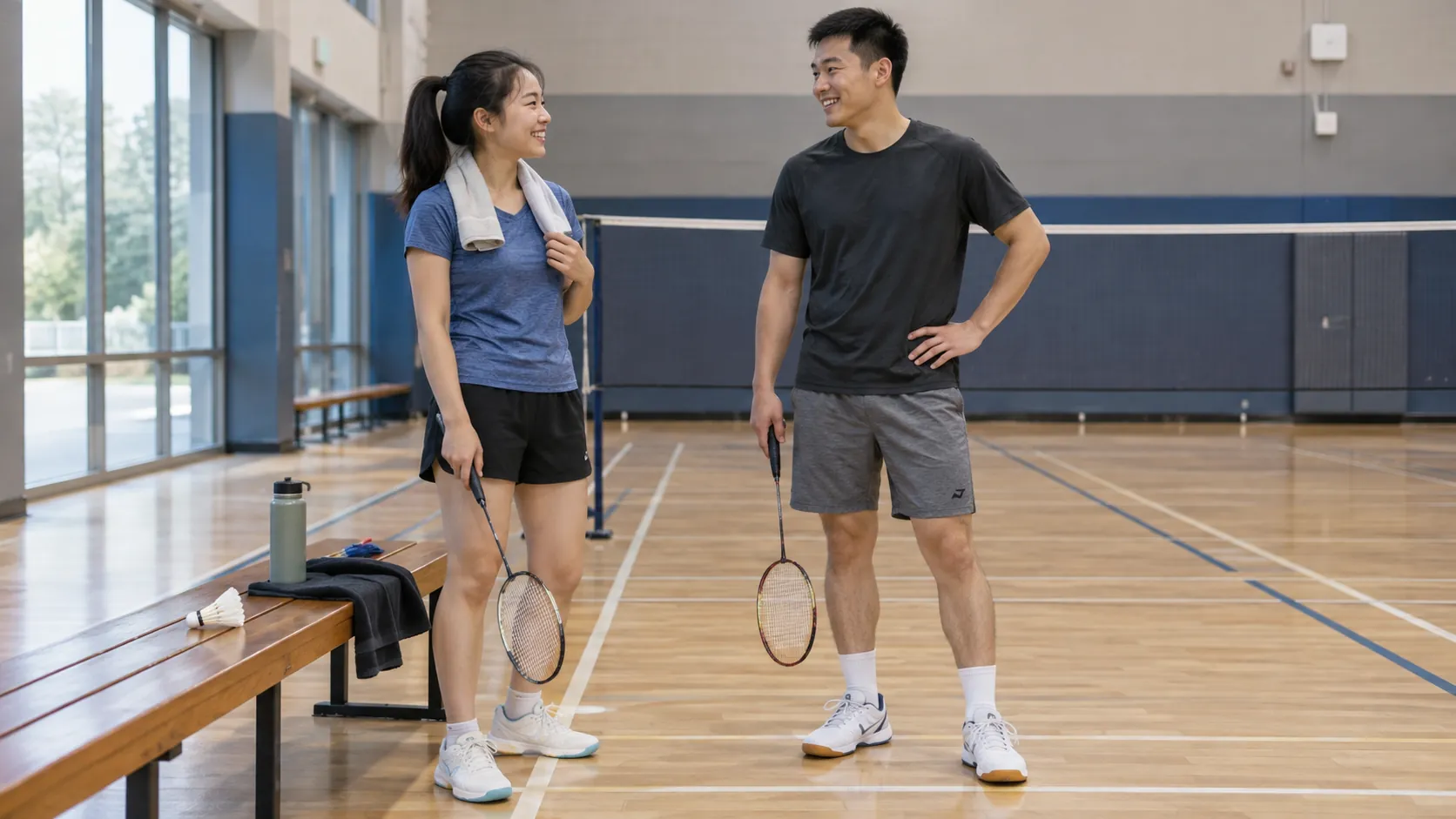
The first rally is easy. By the third game, the shoulder is working harder, the grip has tightened and the next overhead shot feels less comfortable than the last. Because badminton uses a light racquet and often happens in a friendly setting, it is easy to underestimate how demanding an evening can become. Repeated strokes, quick reactions and the wish to keep playing all shape the workload.
For recreational badminton in Markham, a useful plan should protect the part people value most: enjoyable, repeatable participation. That means understanding current capacity, organizing the session and responding sensibly when the shoulder or elbow becomes troublesome. It does not require treating every game as a formal training programme, but it does help to make a few decisions before the score becomes the main focus.
Describe the symptom without diagnosing it from the sport
An ache at the outside of the elbow is sometimes called tennis elbow, even in someone who has never played tennis. The condition can occur with several activities involving the forearm, including racquet sports. However, pain location alone does not identify every elbow problem. The AAOS tennis-elbow guide explains the presentation and assessment.
Tell the clinician whether the discomfort is at the elbow, in the forearm, around the shoulder or travelling between areas. Explain which part of play brings it on: serving, overhead strokes, backhand shots, gripping or reaching late for the shuttle. Mention any symptoms during daily tasks as well. Pain while lifting a mug or reaching into a cupboard may help clarify how far the problem extends beyond the court.
If symptoms followed a fall, collision or sudden forceful movement, describe that event clearly. It is a different starting point from an ache that developed over several weeks of longer sessions. Avoid continuing simply because another player says the same area always hurts after badminton. Similar descriptions do not establish identical injuries.
Give the warm-up a place in the booking
When court time is limited, arriving late often turns the first competitive rally into the warm-up. Plan enough time to get ready and move before the session becomes intense. General exercise guidance supports warming up and building activity gradually. The AAOS safe-exercise resource provides the broader principles behind this approach.
In practical terms, arrange a progression that fits your ability: easy whole-body movement, comfortable practice movements and controlled rallies before demanding play. If you are recovering from an injury, follow the warm-up and activity limits agreed with the treating professional. The purpose is preparation, not an exhausting extra workout before the games begin.
Coordinate with your partner. A few minutes of cooperative practice only works if both people understand the aim. If one player immediately turns every return into a hard shot, the intended preparation disappears. Agree on the pace first, and use that time to notice whether the arm feels ready for the planned session.
Count the character of the games, not just the clock
An hour of relaxed practice with pauses differs from an hour of close matches with little rest. Singles, doubles, skill practice and repeated overhead drills create different experiences. Recording only the booking length can hide the change that explains why one evening was manageable and another was not.
For an illustrative return after time away, you might plan selected practice periods and fewer games, with a clear stopping point. Another player may be ready for the usual format but need to avoid adding an extra session that week. These are examples to discuss according to symptoms and current capacity, not fixed prescriptions for every shoulder or elbow.
Notice when the session changes unexpectedly. A missing player, a competitive opponent or an invitation to stay longer can turn the planned evening into something else. Decide beforehand which changes you are comfortable accepting. It is easier to preserve the plan when the decision does not depend on declining an invitation while already holding the racquet.
Technique feedback should be specific and manageable
A coach can help you examine timing, positioning and racquet use. If a particular stroke repeatedly causes difficulty, explain that rather than asking for a complete overhaul of your game. A focused observation may be easier to practise than several new instructions delivered at once.
Use coaching and clinical assessment for their respective roles. Technical feedback can help with how a shot is performed; an examination can help evaluate pain and decide what activity is appropriate. One should not be treated as a substitute for the other when symptoms persist. A technically skilled player can still need assessment, and a pain-free practice movement does not prove readiness for a full match.
If a change is recommended, ask how to practise it at a manageable intensity. Repeating a new movement forcefully for an entire evening may create more demand than intended. Keep the trial small enough that you can pay attention, then discuss whether it improved control and comfort before adding speed or volume.
Review the racquet without expecting it to solve everything
The racquet’s feel, grip and condition are worth discussing with a knowledgeable coach or equipment professional. Describe the problem you are trying to address rather than shopping for the most expensive replacement. A product change should have a clear purpose and be evaluated alongside the way you play.
Avoid changing several features simultaneously during a symptomatic period. A different racquet, a new grip and an altered string setup introduced together make the response difficult to interpret. If you make a change, record it and keep the rest of the session reasonably familiar where appropriate. The aim is to learn whether the adjustment is useful, not to accumulate increasingly elaborate equipment.
Pay attention to the ordinary details too. A worn or uncomfortable grip may distract you, while a setup you do not trust can lead to unnecessary effort. Ask for help identifying the issue. No equipment choice can guarantee that an existing injury is safe to play through or replace a plan for managing symptoms.
The arm also works between badminton sessions
Your forearm may spend the day using tools, preparing food or completing computer work before the evening games. The shoulder may already have handled lifting, gym exercise or household projects. Include those demands when reviewing why symptoms have increased. The body does not divide effort into separate work and sport accounts.
Look for a recent change in the week. Did badminton increase at the same time as a new strength routine? Did a busy work period reduce opportunities to recover? Did one session become three because friends were available? Identifying the combination can reveal a practical place to adjust without removing every enjoyable activity.
A brief note after play can include the session format, the day’s other major demands and how the arm felt later. This is enough to make a follow-up conversation more precise. You do not need to track every stroke to notice that consecutive demanding days are consistently harder to manage.
Rehabilitation needs a connection to the court
When assessment leads to an exercise programme, ask how it relates to the movements you want to regain. A starting exercise may look simple compared with a fast rally, but it should have a defined purpose. You should also understand the later steps that will connect controlled exercise with more demanding play.
For confirmed lateral elbow tendinopathy, care may include changes to provoking activity and a suitable rehabilitation programme. Other causes of arm pain require different management. The AAOS elbow resource describes conservative treatment options. The diagnosis and response should guide the plan, rather than the general fact that you play a racquet sport.
Clarify how much exercise to do around playing days and what symptoms should lead to a change. If the programme and badminton both increase at once, it can become difficult to identify the source of a setback. A coordinated plan gives you a clear next action instead of leaving you to guess which part to stop.
Make the return social without making it competitive too soon
You may miss the people as much as the sport. If full play is not yet appropriate, discuss whether there is a manageable way to attend, practise selected skills or participate in a modified session. The available option depends on the injury and the advice you have received. Being present does not have to mean accepting every match.
Tell the group what you are ready to do before the session starts. A simple explanation prevents well-meant encouragement from changing the plan. If a partner knows that you are limiting overhead practice or stopping after a selected period, they can help keep the session within those boundaries.
Avoid treating a comfortable first game as proof that the entire evening is cleared. Readiness includes repeatable function and the response after play, not just the first few points. Ask the treating professional which milestones matter for your return, especially if pain has been persistent or the injury involved a sudden event.
Review the evening and the next morning
After play, notice ordinary tasks rather than repeatedly testing the most provocative stroke. Is dressing unchanged? Can you use the arm comfortably at home? Was sleep affected? Does the next workday feel manageable? These questions connect the sport with the life you need to carry on afterward.
Seek prompt assessment for sudden severe shoulder pain, a visible change after injury, inability to move the arm or persistent numbness. Fever with a hot swollen joint also needs urgent medical attention. The NHS shoulder-pain guidance outlines concerning changes. Persistent or worsening symptoms deserve review even when you can still complete a game.
Badminton in Markham can remain an enjoyable part of the week when the plan reflects current capacity and the actual demands of play. If shoulder or elbow discomfort keeps returning, book an assessment and bring details of the session that triggers it. Our guide to tennis elbow and forearm pain offers related questions for understanding grip-related symptoms.
This article provides general education. Individual injuries and persistent symptoms require assessment before selecting rehabilitation or return-to-play activities.